












Reaction mechanism of the dengue virus serine protease: a QM/MM study
文献情報
出版日
2016-06-10
DOI
10.1039/C6CP03209E
インパクトファクター
3.676
著者
M. C. P. Lima, G. M. Seabra
原文を見る
要旨
The dengue virus (DENV) is the causative agent of the viral infection dengue fever. In spite of all the efforts made to prevent the spread of the disease, once it is contracted, there is no specific treatment for dengue and the WHO guidelines are limited to rest and symptomatic treatment. In its reproductive cycle, DENV utilizes the NS2B-NS3pro, a serine protease, to cleave the viral polyprotein into its constituents. This enzyme is essential for the virus lifecycle, and presents an attractive target for the development of specific dengue treatments. Here we used a hybrid Quantum Mechanics and Molecular Mechanics (QM/MM) Molecular Dynamics approach and Umbrella Sampling to study the first step (acylation) of the reaction catalyzed by NS2B-NS3pro, using the Pairwise Distance Directed Gaussian PM3 (PDDG/PM3) semi-empirical Hamiltonian for the QM subsystem, and Amber ff99SB for the MM subsystem. Our results indicate that the nucleophilic attack on the substrate by Ser135 occurs in a stepwise manner, in which a proton transfer to His51 first activates Ser135, which only later attacks the substrate. The rate-determining step is the Ser135 activation, with a barrier of 24.1 kcal mol−1. Water molecules completing the oxyanion hole stabilize the negative charge formed on the carbonyl oxygen of the substrate. The final step in the process is a proton transfer from His51 to the substrate's nitrogen, which happens with a lower barrier of 5.1 kcal mol−1, and leads directly to the breakage of the peptide bond.
関連文献
Fluorescence correlation spectroscopy for multiple-site equilibrium binding: a case of doxorubicin–DNA interaction
Andrzej Poniewierski, Krzysztof Sozański, Ying Zhou, Anna Brzozowska-Elliott, Robert Holyst
2019-01-08
Paper
DOI: 10.1039/C8CP06752J
Ferrocenes with simple chiral substituents: an in-depth theoretical and experimental VCD and ECD study
Angela Patti, Sonia Pedotti, Giuseppe Mazzeo, Giovanna Longhi, Sergio Abbate, Lorenzo Paoloni, Sergio Rampino, Vincenzo Barone
2019-04-10
Paper
DOI: 10.1039/C9CP00437H
Deconstructing the behavior of donor–acceptor copolymers in solution & the melt: the case of PTB7
Sean M. Ryno, Chad Risko
2019-03-26
Paper
DOI: 10.1039/C9CP00777F
A molecular dynamics study on glucose molecular recognition by a non-enzymatic selective sensor based on a conducting polymer
David Zanuy, Carlos A. Ferreira
2019-03-25
Paper
DOI: 10.1039/C9CP00567F
Plasmon-mediated chemical transformation from alkane to alkene on a silver nanoparticle array under 532 nm excitation
Yuki Takeuchi, Tetsuya Fujita, Nobuyuki Takeyasu
2019-03-11
Paper
DOI: 10.1039/C9CP00129H
Theoretical assessment of wettability on silane coatings: from hydrophilic to hydrophobic
Weiliang Wang
2019-03-22
Paper
DOI: 10.1039/C9CP01232J
The electric field modulation of electronic properties in a type-II phosphorene/PbI2 van der Waals heterojunction
Fei Wang, Wenli Zhang, Xiuwen Zhang
2019-03-14
Paper
DOI: 10.1039/C9CP00733D
Pyruvic acid proton and hydrogen transfer reactions in clusters
Milan Ončák, Andriy Pysanenko, Michal Fárník
2019-01-15
Paper
DOI: 10.1039/C8CP07008C
CO2 condensation onto alkanes: unconventional cases of heterogeneous nucleation
Yensil Park
2019-03-28
Paper
DOI: 10.1039/C9CP00967A
Electric charge of nanopatterned silica surfaces
H. Gokberk Ozcelik, Murat Barisik
2019-03-13
Paper
DOI: 10.1039/C9CP00706G
こちらもおすすめ
化合物よくある質問
6- bromo-1-cyclopropyl-1H-benzimidazoleの市場動向や研究トレンドはどうですか?
6- bromo-1-cyclopropyl-1H-benzimidazoleは、抗炎症、抗ウイルス作用を持つことが報告されており、新薬開発の研究対象として注目...
1416713-53-56-Bromo-1-cyclopropy...
化合物よくある質問
環氧プロpanol-d5を取り扱う際の実験室安全事項は何ですか?
取り扱う際には、防護眼鏡と手袋を使用し、ドラフトチャンバー内で操作することを推奨します。漏洩時には適切な手順で処理し、安全データシートを常に参照してください。
1246819-20-4Glycidol-d5
化合物よくある質問
2,2’-ジメチル-3,3’-ビピリジンはどのように合成されますか?
2,2’-ジメチル-3,3’-ビピリジンは、ピリジンと2-メチルアクリルアミドを有機合成反応で合成します。この反応では、ピリジンと2-メチルアクリルアミドを含有...
86156-55-02,2’-Dimethyl-3,3’-b...
化合物よくある質問
6-甲基ピリジン-2-ボリック酸の主な用途は何ですか?
6-甲基ピリジン-2-ボリック酸は、合成化学、医薬品合成、以及研究用途などに広く使用され、特に組換えDNA技術や分子生物学の研究において重要な役割を果たします。
372963-50-3(6-Methyl-2-pyridiny...
化合物よくある質問
(R)-3-(1-甲基-2-氧環己基)プロpano酸メチルは安全ですか?
(R)-3-(1-甲基-2-氧環己基)プロpano酸メチルは一定の安全性がありますが、直接的な皮膚接触や吸入は避けるべきです。使用する際は適切な個々の安全データ...
94089-47-1methyl 3-[(1R)-1-met...
化合物よくある質問
ketorolacはどのように保存すればよいですか?
ketorolacは、密封して遮光容器に保管し、直射日光や高温を避けて保存してください。温度は常温で保存し、湿度をなるべく低く保つことが推奨されます。
74103-06-3rac Ketorolac
化合物よくある質問
L-2,3-二氨基丙酸二盐酸盐を取り扱う際の実験室安全事項は何ですか?
L-2,3-二氨基丙酸二盐酸盐は腐食性が強く、皮膚や粘膜に刺激を与える可能性があります。取り扱う際は、防塵マスク、ゴーグル、手袋を使用し、適切な排気設備を使用し...
19777-68-5(S)-2,3-Diaminopropa...
化合物よくある質問
2-(4-溴ピリジン-2-基)乙腈の物理化学的性質は何ですか?
2-(4-溴ピリジン-2-基)乙腈のCAS番号は312325-73-8です。主に結晶形態で存在し、分子量は159.01 g/molです。この化合物は水に溶けやす...
312325-73-8(4-Bromo-2-pyridinyl...
化合物よくある質問
3-フローロ-[1,1-ベンジレン]-3,4-ジカルボン酸を取り扱う際の実験室安全事項は何ですか?
この化合物は毒性は低いですが、直接的な接触や吸入に注意が必要です。PPE(個人防護具)を着用し、ドラフトチャンバーを使用して操作することを推奨します。また、漏洩...
1261915-32-53'-Fluoro-[1,1'-biph...
化合物よくある質問
3-(1-氧代-1,3-二氢-2H-2-异吲哚)丙酸の主な用途は何ですか?
3-(1-氧代-1,3-二氢-2H-2-异吲哚)丙酸は、薬理学研究や医薬品製造において広く用いられる化合物です。また、工業的な用途でも一部の化学反応の触媒や助剤...
83747-30-23-(1-Oxo-1,3-dihydro...
掲載誌
Physical Chemistry Chemical Physics

CiteScore:
5.5
自己引用率:
10.3%
年間論文数:
3036
Physical Chemistry Chemical Physics (PCCP) is an international journal co-owned by 19 physical chemistry and physics societies from around the world. This journal publishes original, cutting-edge research in physical chemistry, chemical physics and biophysical chemistry. To be suitable for publication in PCCP, articles must include significant innovation and/or insight into physical chemistry; this is the most important criterion that reviewers and Editors will judge against when evaluating submissions. The journal has a broad scope and welcomes contributions spanning experiment, theory, computation and data science. Topical coverage includes spectroscopy, dynamics, kinetics, statistical mechanics, thermodynamics, electrochemistry, catalysis, surface science, quantum mechanics, quantum computing and machine learning. Interdisciplinary research areas such as polymers and soft matter, materials, nanoscience, energy, surfaces/interfaces, and biophysical chemistry are welcomed if they demonstrate significant innovation and/or insight into physical chemistry. Joined experimental/theoretical studies are particularly appreciated when complementary and based on up-to-date approaches.
おすすめ化合物
![[4-(Isobutyrylamino)phenyl]boronic acid structure](https://static.chemtradehub.com/structs/874/874219-50-8-6ab5.webp "[4-(Isobutyrylamino)phenyl]boronic acid structure")
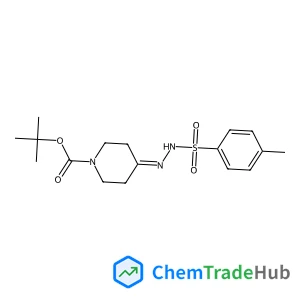
tert-Butyl 4-(2-(p-Tolylsulfonyl)hydrazono)piperidine-1-carboxylate
CAS番号:
1046478-89-0
分子式:
C17H25N3O4S
おすすめサプライヤー





免責事項
このページに表示される学術雑誌情報は、参考および研究目的のみを目的としています。当社は雑誌出版社とは提携しておらず、投稿の取り扱いも行っておりません。出版に関するお問い合わせは、各雑誌出版社に直接ご連絡ください。
表示されている情報に誤りがある場合は、support@chemtradehub.com までご連絡ください。迅速に確認し、対応いたします。