












![[5-fluoro-2-(morpholine-4-carbonyl)phenyl]boronic acid structure](https://static.chemtradehub.com/structs/121/1217501-26-2-505c.webp "[5-fluoro-2-(morpholine-4-carbonyl)phenyl]boronic acid structure")
A computational study on the N-heterocyclic carbene-catalyzed Csp2–Csp3 bond activation/[4+2] cycloaddition cascade reaction of cyclobutenones with imines: a new application of the conservation principle of molecular orbital symmetry
文献情報
出版日
2016-07-04
DOI
10.1039/C6CP03180C
インパクトファクター
3.676
著者
Yang Wang, Bohua Wu, Haoyang Zhang, Donghui Wei, Mingsheng Tang
原文を見る
要旨
A comprehensive density functional theory (DFT) investigation has been performed to interrogate the mechanisms and stereoselectivities of the Csp2–Csp3 single bond activation of cyclobutenones and their [4+2] cycloaddition reaction with imines via N-heterocyclic carbene (NHC) organocatalysis. According to our calculated results, the fundamental reaction pathway contains four steps: nucleophilic addition of NHC to cyclobutenone, C–C bond cleavage for the formation of an enolate intermediate, [4+2] cycloaddition of the enolate intermediate with isatin imine, and the elimination of the NHC catalyst. In addition, the calculated results also reveal that the second reaction step is the rate-determining step, whereas the third step is the regio- and stereo-selectivity determining step. For the regio- and stereo-selectivity determining step, all four possible attack modes were considered. The addition of the CN bond in isatin imine to the dienolate intermediate is more energy favorable than the addition of the CO bond to a dienolate intermediate. Moreover, the Re face addition of the CN bond in isatin imine to the Re face of the dienolate intermediate leading to the SS configuration N-containing product was demonstrated to be most energy favorable, which is mainly due to the stronger second-order perturbation energy value in the corresponding transition state. Furthermore, by tracking the frontier molecular orbital (FMO) changes in the rate-determining C–C bond cleavage step, we found that the reaction obeys the conservation principle of molecular orbital symmetry. We believe that the present work would provide valuable insights into this kind of reaction.
関連文献
Synthetic approach to kendomycin: preparation of the C-glycosidic core
Tetsuya Sengoku, Daisuke Uemura
2004-04-23
Communication
DOI: 10.1039/B402391A
The first X-ray crystal structure determination of a dinuclear complex trapped in the [low spin–high spin] state: [FeII2(PMAT)2](BF4)4·DMF
Marco H. Klingele, Boujemaa Moubaraki, John D. Cashion, Keith S. Murray, Sally Brooker
2005-01-04
Communication
DOI: 10.1039/B415891A
Mannich-type reactions in water using a hydrophobic polymer-supported sulfonic acid catalyst
Shinya Iimura, Daisuke Nobutou, Kei Manabe, Shū Kobayashi
2003-06-18
Communication
DOI: 10.1039/B304343F
Electrosynthesis of hydrogen peroxide in room temperature ionic liquids and in situepoxidation of alkenes
Michael Chi-Yung Tang, Kwok-Yin Wong, Tak Hang Chan
2005-01-19
Communication
DOI: 10.1039/B416837B
Simple preparation of monodisperse hollow silica particles without using templates
Hoe Jin Hah, Jung Soo Kim, Byung Jun Jeon, Sang Man Koo, Yong Eun Lee
2003-06-13
Communication
DOI: 10.1039/B301521A
Efficient protein–ligand interaction by guaranteeing mesospacing between immobilized biotins
Young-Seo Choi, Chang Won Yoon, Hae Dong Lee, Minyoung Park, Joon Won Park
2004-05-10
Communication
DOI: 10.1039/B403797A
A novel one-pot three-component tandem Michael/aldol/Horner–Wadsworth–Emmons (HWE) reaction of lithium alkylselenolates with 1-alkynylphosphine oxides and aldehydes: facile synthesis of selenium-substituted allenes
Zheng-Chang Xiong
2003-06-11
Communication
DOI: 10.1039/B304527G
Synthesis and X-ray structure of a three dimensional calixphyrin
Christophe Bucher, Rebecca S. Zimmerman, Vincent Lynch, Jonathan L. Sessler
2003-06-11
Communication
DOI: 10.1039/B302508J
Unexpected effect of Ru-substitution in lightly doped manganites
Lorenzo Malavasi, M. Cristina Mozzati, Cristina Tealdi, M. Rosa Pascarelli, Carlo B. Azzoni, Giorgio Flor
2004-05-17
Communication
DOI: 10.1039/B403733B
Heck arylation of cyclic enol ethers with aryldiazonium salts: regio- and stereoselective synthesis of arylated oxacycles
2003-06-05
Communication
DOI: 10.1039/B305142K
こちらもおすすめ
化合物よくある質問
2-メトキシ-4-(メチルスルフィニル)アミンの主な用途は何ですか?
2-メトキシ-4-(メチルスルフィニル)アミンは、主に医薬品および農薬の製造に使用されます。また、合成化学の一部として研究用材料としても利用されます。
41608-73-52-Methoxy-4-(methyls...
118684-13-24-(Bromomethyl)-3-me...
化合物よくある質問
4,6-二氯-N-甲基ピラミジンアミンの代替品はありますか?
代替品としては、4,6-二クロロピラミジンアミンや他のピラミジン系化合物が考えられます。ただし、目的と用途によって最適な代替品は異なります。
10397-15-64,6-Dichloro-N-methy...
化合物よくある質問
6-氯-4-甲基-1H-吲哚を含む廃棄物はどのように処理すべきですか?
6-氯-4-甲基-1H-吲哚の廃棄物は、適切な容器に収集し、密閉して保管します。温度は常温、湿度は低く、直射日光を避けて保管することを推奨します。廃棄処理は専門...
885520-84-36-chloro-4-methyl-1H...
化合物よくある質問
2-フローユロ-4-(トリフルオロメチル)ベンゾイドについて「に適用される法規ガイドラインは何ですか」
2-フローユロ-4-(トリフルオロメチル)ベンゾイドのCAS番号は207974-08-1です。この化合物はGHS分類で毒性物質と有害な反応物質として分類されます...
207974-08-1[2-Fluoro-4-(trifluo...
化合物よくある質問
4-ニトロフェニルN-[(ベンゼルオキシルカーボンイル]グリシングリシングリシン酸はどのように保存すればよいですか?
4-ニトロフェニルN-[(ベンゼルオキシルカーボンイル]グリシングリシングリシン酸は、室温で暗所に保管し、乾燥した環境で保存することを推奨します。容器は密閉性の...
19811-64-44-Nitrophenyl N-[(be...
化合物よくある質問
イソデスロラタドリンの代替品はありますか?
イソデスロラタドリンの代替品としては、デスロラタドリンや他の抗ヒスタミン薬が挙げられます。具体的には、デスロラタドリン、ラセカミド、フェルタドリンなどが、症状や...
183198-49-4Iso Desloratadine
化合物よくある質問
5-甲氧基-1,2,3,4-四氢异喹啉盐酸盐はどのように合成されますか?
5-甲氧基-1,2,3,4-四氢异喹啉盐酸盐の一般的な合成方法は、メタノール中で5-メトキシ-1,2,3,4-四ヒュドロイソキシンを塩酸で塩化します。この反応で...
103030-69-95-Methoxy-1,2,3,4-te...
化合物よくある質問
4-アミノ-5-メトキシ-2-トルエンサルホニック酸についての法規ガイドラインは何ですか?
CAS番号6471-78-9の4-アミノ-5-メトキシ-2-トルエンサルホニック酸は、GHS分類では corrosive(腐食性)と識別されます。EUのREAC...
6471-78-94-Amino-5-Methoxy-2-...
化合物よくある質問
甲基孕酮を取り扱う際の実験室安全事項は何ですか?
甲基孕酮の取り扱いは、PPE(個人保護具)の使用が必要な重要な安全事項を伴います。防塵マスク、ゴーグル、手袋を着用することが推奨されます。ドラフトチャンバーを使...
204063-33-22-[(Diphenylmethyl)a...
掲載誌
Physical Chemistry Chemical Physics

CiteScore:
5.5
自己引用率:
10.3%
年間論文数:
3036
Physical Chemistry Chemical Physics (PCCP) is an international journal co-owned by 19 physical chemistry and physics societies from around the world. This journal publishes original, cutting-edge research in physical chemistry, chemical physics and biophysical chemistry. To be suitable for publication in PCCP, articles must include significant innovation and/or insight into physical chemistry; this is the most important criterion that reviewers and Editors will judge against when evaluating submissions. The journal has a broad scope and welcomes contributions spanning experiment, theory, computation and data science. Topical coverage includes spectroscopy, dynamics, kinetics, statistical mechanics, thermodynamics, electrochemistry, catalysis, surface science, quantum mechanics, quantum computing and machine learning. Interdisciplinary research areas such as polymers and soft matter, materials, nanoscience, energy, surfaces/interfaces, and biophysical chemistry are welcomed if they demonstrate significant innovation and/or insight into physical chemistry. Joined experimental/theoretical studies are particularly appreciated when complementary and based on up-to-date approaches.
おすすめ化合物
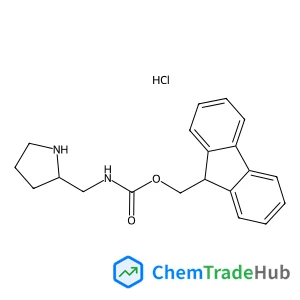
(S)-(9H-Fluoren-9-yl)methyl (pyrrolidin-2-ylmethyl)carbamate hydrochloride
CAS番号:
1217813-15-4
分子式:
C20H23ClN2O2
![2-(7,7-Difluorobicyclo[4.1.0]hept-1-yl)ethanamine structure](https://static.chemtradehub.com/structs/209/2098065-08-6-ff24.webp "2-(7,7-Difluorobicyclo[4.1.0]hept-1-yl)ethanamine structure")
おすすめサプライヤー




免責事項
このページに表示される学術雑誌情報は、参考および研究目的のみを目的としています。当社は雑誌出版社とは提携しておらず、投稿の取り扱いも行っておりません。出版に関するお問い合わせは、各雑誌出版社に直接ご連絡ください。
表示されている情報に誤りがある場合は、support@chemtradehub.com までご連絡ください。迅速に確認し、対応いたします。