


Low temperature synthesis of hierarchical TiO2 nanostructures for high performance perovskite solar cells by pulsed laser deposition
文献情報
出版日
2016-06-10
DOI
10.1039/C6CP02896A
インパクトファクター
3.676
著者
Bin Yang, Masoud Mahjouri-Samani, Christopher M. Rouleau, David B. Geohegan, Kai Xiao
原文を見る
要旨
A promising way to advance perovskite solar cells is to improve the quality of the electron transport material – e.g., titanium dioxide (TiO2) – in a direction that increases electron transport and extraction. Although dense TiO2 films are easily grown in solution, efficient electron extraction suffers due to a lack of interfacial contact area with the perovskites. Conversely, mesoporous films do offer high surface-area-to-volume ratios, thereby promoting efficient electron extraction, but their morphology is relatively difficult to control via conventional solution synthesis methods. Here, a pulsed laser deposition method was used to assemble TiO2 nanoparticles into TiO2 hierarchical architectures exhibiting an anatase crystal structure, and prototype solar cells employing these structures yielded power conversion efficiencies of ∼14%. Our approach demonstrates a way to grow high aspect-ratio TiO2 nanostructures for improved interfacial contact between TiO2 and perovskite materials, leading to high electron–hole pair separation and electron extraction efficiencies for superior photovoltaic performance. Compared to previous pulsed laser deposition-synthesized TiO2 mesoporous crystalline networks that needed post-thermal annealing at 500 °C to form mesoporous crystalline networks, our relatively low temperature (300 °C) TiO2 processing method may promote reduced energy-consumption during device fabrication, as well as enable compatibility with flexible polymer substrates such as polyimide.
おすすめジャーナル

Nature Medicine

Chemistry Education Research and Practice

Organic Process Research & Development

Journal of Saudi Chemical Society

Russian Journal of Organic Chemistry

Journal of Natural Medicines

Acta Materialia

Russian Journal of General Chemistry

Current Opinion in Colloid & Interface Science

Saudi Pharmaceutical Journal
関連文献
Alkali metal cation binding affinities of cytosine in the gas phase: revisited
Bo Yang, M. T. Rodgers
2014-06-13
Paper
DOI: 10.1039/C4CP01128G
Confined platinum nanoparticle in carbon nanotube: structure and oxidation
Guang-Feng Wei, Cheng Shang, Zhi-Pan Liu
2014-11-19
Paper
DOI: 10.1039/C4CP04145C
The Crystal-T algorithm: a new approach to calculate the SLE of lipidic mixtures presenting solid solutions
Guilherme J. Maximo, Mariana C. Costa, Antonio J. A. Meirelles
2014-06-18
Paper
DOI: 10.1039/C4CP01529K
Determination of protein binding affinities within hydrogel-based molecularly imprinted polymers (HydroMIPs)
Hazim F. EL-Sharif, Daniel M. Hawkins, Derek Stevenson, Subrayal M. Reddy
2014-06-16
Paper
DOI: 10.1039/C4CP01798F
Influence of counter-anions during electrochemical deposition of ZnO on the charge transport dynamics in dye-sensitized solar cells
Christoph Richter, Max Beu, Derck Schlettwein
2014-11-26
Paper
DOI: 10.1039/C4CP00723A
The roughness of the protein energy landscape results in anomalous diffusion of the polypeptide backbone
Martin Volk, Lilia Milanesi, Christopher A. Hunter, Godfrey S. Beddard
2014-11-07
Perspective
DOI: 10.1039/C4CP03058C
Deactivation mechanism of a novel AIE-active naphthalimide derivative in more polar solutions
Yunqing Chen, Yi Wang, Yuan Yuan, Yan Jiao, Xuemei Pu, Zhiyun Lu
2014-11-03
Paper
DOI: 10.1039/C4CP04213A
Photoelectrocatalytic degradation of rhodamine B on TiO2 photonic crystals
Xiuzhen Zheng, Danzhen Li, Xiaofang Li, Linhui Yu, Peng Wang, Xiaoyun Zhang, Jialin Fang, Yu Shao, Yi Zheng
2014-06-09
Paper
DOI: 10.1039/C4CP01888E
An efficient method to enhance the stability of sulphide semiconductor photocatalysts: a case study of N-doped ZnS
Yansong Zhou, Gang Chen, Yaoguang Yu, Yujie Feng, Yi Zheng, Fang He, Zhonghui Han
2014-11-27
Paper
DOI: 10.1039/C4CP03736G
1064 nm SERS of NIR active hollow gold nanotags
H. Kearns, N. C. Shand, W. E. Smith, K. Faulds, D. Graham
2014-11-27
Paper
DOI: 10.1039/C4CP04281F
こちらもおすすめ
化合物よくある質問
4'-ブロモビフェニル-3-メトークシーディ.ActionBarはどのように保存すればよいですか?
4'-ブロモビフェニル-3-メトークシーディ.ActionBarは、冷暗所で、直射日光を避け、密栓の容器に保存し、遠隔場所に保管してください。温度は常温(0〜2...
149506-25-24'-Bromo-biphenyl-3-...
2947-60-6(3-Methylphenyl)acet...
化合物よくある質問
2-異丙基フェニルヒドラジン塩酸塩とは何ですか?
2-異丙基フェニルヒドラジン塩酸塩は、CAS番号58928-82-8を有する化合物で、構造式はC11H14N2HClです。これは塩基性化合物であり、水に溶けやす...
58928-82-8(2-Isopropylphenyl)h...
化合物よくある質問
5-(4-クロロフェニル)-4H-1,2,4-三氮唑-3-アミンを取り扱う際の実験室安全事項は何ですか?
5-(4-クロロフェニル)-4H-1,2,4-三氮唑-3-アミンは取り扱いに注意が必要です。PPEとして防塵マスク、ゴーグル、手袋を使用し、ドラフトチャンバーを...
98554-00-85-(4-Chlorophenyl)-1...
化合物よくある質問
去甲基雷贝拉唑硫醚はどのように合成されますか?
去甲基雷贝拉唑硫醚は、ベンジミダゾール硫化物と3-メチル-4-ピリジノールの反応によって合成されます。具体的には、2-チオキシドベンジミダゾールと3-メチル-4...
117976-91-73-({2-[(1H-Benzimida...
化合物よくある質問
2-ブロモ-5-フロロ-N-(2-フェノールメチル)ベンゼンウレアは安全ですか?
2-ブロモ-5-フロロ-N-(2-フェノールメチル)ベンゼンウレアは、毒性や刺激性の実験データに基づき、適切な取扱いと防護措置を講じることで安全に使用できます。...
923722-86-52-Bromo-5-fluoro-N-(...
化合物よくある質問
対甲苯磺酸酯-四聚乙二醇-四氢吡喃醚の物理化学的性質は何ですか?
対甲苯磺酸酯-四聚乙二醇-四氢吡喃醚のCAS番号は86259-89-4です。この化合物は無色の液体で、分子量は約724.8です。高濃度では溶血性が報告されており...
86259-89-42-(2-{2-[2-(Tetrahyd...
化合物よくある質問
2-(3-(二氟甲基)-4-氟苯基)-4,4,5,5-四甲基-1,3,2-二噁硼戊環はどのように保存すればよいですか?
2-(3-(二氟甲基)-4-氟苯基)-4,4,5,5-四甲基-1,3,2-二噁硼戊環は、室温で暗い場所に保管し、直射日光から遠ざけ、容器は密閉状態で保存してくだ...
445303-65-12-[3-(difluoromethyl...
化合物よくある質問
6-アミノ-5-クロロ-2-シクロプロピルピリミジンカルボン酸の代替品はありますか?
この化合物の代替品には、ピロリミジン酸やその類似物、またピロリミジンカルボン酸の他の異性体があります。これらの代替品は、特定の化学反応や目的に応じて選択すること...
858956-08-86-Amino-5-chloro-2-c...
化合物よくある質問
5-クロロベンゾ[1,3]二オキセイン-4-アミンに適用される法規ガイドラインは何ですか?
5-クロロベンゾ[1,3]二オキセイン-4-アミンはCAS番号379228-45-2に該当します。この化合物はGHS分類でH314(接触により急性毒性がある)と...
379228-45-25-Chloro-1,3-benzodi...
掲載誌
Physical Chemistry Chemical Physics

CiteScore:
5.5
自己引用率:
10.3%
年間論文数:
3036
Physical Chemistry Chemical Physics (PCCP) is an international journal co-owned by 19 physical chemistry and physics societies from around the world. This journal publishes original, cutting-edge research in physical chemistry, chemical physics and biophysical chemistry. To be suitable for publication in PCCP, articles must include significant innovation and/or insight into physical chemistry; this is the most important criterion that reviewers and Editors will judge against when evaluating submissions. The journal has a broad scope and welcomes contributions spanning experiment, theory, computation and data science. Topical coverage includes spectroscopy, dynamics, kinetics, statistical mechanics, thermodynamics, electrochemistry, catalysis, surface science, quantum mechanics, quantum computing and machine learning. Interdisciplinary research areas such as polymers and soft matter, materials, nanoscience, energy, surfaces/interfaces, and biophysical chemistry are welcomed if they demonstrate significant innovation and/or insight into physical chemistry. Joined experimental/theoretical studies are particularly appreciated when complementary and based on up-to-date approaches.
おすすめ化合物
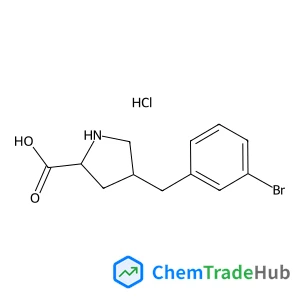
(2S,4R)-4-(3-Bromobenzyl)pyrrolidine-2-carboxylic acid hydrochloride
CAS番号:
1049734-10-2
分子式:
C12H15BrClNO2
![3-[4-(difluoromethoxy)phenyl]-2-({[(9H-fluoren-9-yl)methoxy]carbonyl}amino)propanoic acid structure](https://static.chemtradehub.com/structs/149/1496564-27-2-952e.webp "3-[4-(difluoromethoxy)phenyl]-2-({[(9H-fluoren-9-yl)methoxy]carbonyl}amino)propanoic acid structure")
![Heptadecanoic Acid 3-[2-[4-(6-Fluoro-1,2-benzisoxazol-3-yl)-1-piperidinyl]ethyl]-6,7,8,9-tetrahydro-2-methyl-4-oxo-4H-pyrido[1,2-a]pyrimidin-9-yl Ester structure](https://static.chemtradehub.com/structs/140/1404053-62-8-9da4.webp "Heptadecanoic Acid 3-[2-[4-(6-Fluoro-1,2-benzisoxazol-3-yl)-1-piperidinyl]ethyl]-6,7,8,9-tetrahydro-2-methyl-4-oxo-4H-pyrido[1,2-a]pyrimidin-9-yl Ester structure")
おすすめサプライヤー





免責事項
このページに表示される学術雑誌情報は、参考および研究目的のみを目的としています。当社は雑誌出版社とは提携しておらず、投稿の取り扱いも行っておりません。出版に関するお問い合わせは、各雑誌出版社に直接ご連絡ください。
表示されている情報に誤りがある場合は、support@chemtradehub.com までご連絡ください。迅速に確認し、対応いたします。