


Modulating carrier dynamics through perovskite film engineering
文献情報
出版日
2016-06-13
DOI
10.1039/C6CP02640K
インパクトファクター
3.676
著者
Ankur Solanki, Herlina Arianita Dewi, Tze Chien Sum
原文を見る
要旨
Precise morphological control in perovskite films is key to high performance photovoltaic and light emitting devices. However, a clear understanding of the interplay of morphological effects from substrate/perovskite antisolvent treatments on the charge dynamics is still severely lacking. Through detailed ultrafast optical spectroscopy, we correlate the morphology-kinetics relationship in a combination of substrate/film treated samples (i.e., plasma-cleaned vs. piranha-etched substrates and solvent (toluene)-engineered (or toluene anti-solvent treated) perovskite films). Our findings reveal that toluene-dripped treatment has a more pronounced influence on the morphology of perovskite films prepared on plasma-cleaned substrates over those on piranha-etched substrates. Surprisingly, the highly effective toluene-dripping/washing approach reported in the literature increases the surface trap densities of perovskite films. Despite the marked improvements in the surface morphology of the toluene-dripped films, there is only a slight improvement in the carrier relaxation lifetimes – likely due to the competition between the morphology improvements and the increased surface trap densities. In addition, the injection of photoexcited holes to spiro-OMeTAD from toluene-dripped films on piranha-etched substrates is inhibited, possibly due to a realignment of the energy bands. Nonetheless, piranha-etching of the substrates could possibly offer an approach to improve the balance between the electron and hole diffusion lengths in the perovskite film. Importantly, our findings would help unravel the complex relationship of substrate/film treatments on the morphology and charge kinetics in perovskite thin films.
おすすめジャーナル

Current Opinion in Colloid & Interface Science

Crystallography Reports

Drug Discovery Today

Russian Journal of Coordination Chemistry

Russian Journal of Organic Chemistry

Organic Process Research & Development

Russian Chemical Bulletin

Russian Journal of Bioorganic Chemistry

New Journal of Chemistry

Russian Journal of General Chemistry
関連文献
Microsolvation of 2-azetidinone: a model for the peptide group–water interactions
Juan C. López, Raquel Sánchez, Susana Blanco, José L. Alonso
2014-12-05
Paper
DOI: 10.1039/C4CP04577G
Evidence of benzenoid domains in nanographenes
Matteo Baldoni, Francesco Mercuri
2014-11-24
Paper
DOI: 10.1039/C4CP04848B
Structural band-gap tuning in g-C3N4
Sebastian Zuluaga, Li-Hong Liu, Natis Shafiq, Sara M. Rupich, Jean-François Veyan, Yves J. Chabal, Timo Thonhauser
2014-11-13
Paper
DOI: 10.1039/C4CP05164E
Molecular simulation of gas adsorption and diffusion in a breathing MOF using a rigid force field
E. García-Pérez, P. Serra-Crespo, S. Hamad, F. Kapteijn, J. Gascon
2014-06-11
Paper
DOI: 10.1039/C3CP55416C
Influence of counter-anions during electrochemical deposition of ZnO on the charge transport dynamics in dye-sensitized solar cells
Christoph Richter, Max Beu, Derck Schlettwein
2014-11-26
Paper
DOI: 10.1039/C4CP00723A
A nitride based polarization-engineered photocathode for water splitting without a p-type semiconductor
Akihiro Nakamura, Katsushi Fujii, Masakazu Sugiyama, Yoshiaki Nakano
2014-06-09
Paper
DOI: 10.1039/C4CP01599A
Theoretical studies on the effect of a bithiophene bridge with different substituent groups (R = H, CH3, OCH3 and CN) in donor–π–acceptor copolymers for organic solar cell applications
Zhiyong Fu, Wei Shen, Rongxing He, Xiaorui Liu, Huili Sun, Wanqiang Yin, Ming Li
2014-11-26
Paper
DOI: 10.1039/C4CP04103H
A facile synthesis of highly stable and luminescent Ag clusters: a steady-state and time-resolved spectroscopy study
Nabin Kumar Pal, Carola Kryschi
2014-11-24
Paper
DOI: 10.1039/C4CP03683B
Enhanced performance of polymer solar cells by employing a ternary cascade energy structure
Qiaoshi An, Fujun Zhang, Lingliang Li, Zuliang Zhuo, Jian Zhang, Weihua Tang, Feng Teng
2014-05-15
Paper
DOI: 10.1039/C4CP01411A
From zeolite nets to sp3 carbon allotropes: a topology-based multiscale theoretical study
Igor A. Baburin, Vladimir A. Saleev, Alexandra V. Shipilova
2014-11-12
Paper
DOI: 10.1039/C4CP04569F
こちらもおすすめ
化合物よくある質問
4'-ブロモビフェニル-3-メトークシーディ.ActionBarはどのように保存すればよいですか?
4'-ブロモビフェニル-3-メトークシーディ.ActionBarは、冷暗所で、直射日光を避け、密栓の容器に保存し、遠隔場所に保管してください。温度は常温(0〜2...
149506-25-24'-Bromo-biphenyl-3-...
2947-60-6(3-Methylphenyl)acet...
化合物よくある質問
2-異丙基フェニルヒドラジン塩酸塩とは何ですか?
2-異丙基フェニルヒドラジン塩酸塩は、CAS番号58928-82-8を有する化合物で、構造式はC11H14N2HClです。これは塩基性化合物であり、水に溶けやす...
58928-82-8(2-Isopropylphenyl)h...
化合物よくある質問
5-(4-クロロフェニル)-4H-1,2,4-三氮唑-3-アミンを取り扱う際の実験室安全事項は何ですか?
5-(4-クロロフェニル)-4H-1,2,4-三氮唑-3-アミンは取り扱いに注意が必要です。PPEとして防塵マスク、ゴーグル、手袋を使用し、ドラフトチャンバーを...
98554-00-85-(4-Chlorophenyl)-1...
化合物よくある質問
去甲基雷贝拉唑硫醚はどのように合成されますか?
去甲基雷贝拉唑硫醚は、ベンジミダゾール硫化物と3-メチル-4-ピリジノールの反応によって合成されます。具体的には、2-チオキシドベンジミダゾールと3-メチル-4...
117976-91-73-({2-[(1H-Benzimida...
化合物よくある質問
2-ブロモ-5-フロロ-N-(2-フェノールメチル)ベンゼンウレアは安全ですか?
2-ブロモ-5-フロロ-N-(2-フェノールメチル)ベンゼンウレアは、毒性や刺激性の実験データに基づき、適切な取扱いと防護措置を講じることで安全に使用できます。...
923722-86-52-Bromo-5-fluoro-N-(...
化合物よくある質問
対甲苯磺酸酯-四聚乙二醇-四氢吡喃醚の物理化学的性質は何ですか?
対甲苯磺酸酯-四聚乙二醇-四氢吡喃醚のCAS番号は86259-89-4です。この化合物は無色の液体で、分子量は約724.8です。高濃度では溶血性が報告されており...
86259-89-42-(2-{2-[2-(Tetrahyd...
化合物よくある質問
2-(3-(二氟甲基)-4-氟苯基)-4,4,5,5-四甲基-1,3,2-二噁硼戊環はどのように保存すればよいですか?
2-(3-(二氟甲基)-4-氟苯基)-4,4,5,5-四甲基-1,3,2-二噁硼戊環は、室温で暗い場所に保管し、直射日光から遠ざけ、容器は密閉状態で保存してくだ...
445303-65-12-[3-(difluoromethyl...
化合物よくある質問
6-アミノ-5-クロロ-2-シクロプロピルピリミジンカルボン酸の代替品はありますか?
この化合物の代替品には、ピロリミジン酸やその類似物、またピロリミジンカルボン酸の他の異性体があります。これらの代替品は、特定の化学反応や目的に応じて選択すること...
858956-08-86-Amino-5-chloro-2-c...
化合物よくある質問
5-クロロベンゾ[1,3]二オキセイン-4-アミンに適用される法規ガイドラインは何ですか?
5-クロロベンゾ[1,3]二オキセイン-4-アミンはCAS番号379228-45-2に該当します。この化合物はGHS分類でH314(接触により急性毒性がある)と...
379228-45-25-Chloro-1,3-benzodi...
掲載誌
Physical Chemistry Chemical Physics

CiteScore:
5.5
自己引用率:
10.3%
年間論文数:
3036
Physical Chemistry Chemical Physics (PCCP) is an international journal co-owned by 19 physical chemistry and physics societies from around the world. This journal publishes original, cutting-edge research in physical chemistry, chemical physics and biophysical chemistry. To be suitable for publication in PCCP, articles must include significant innovation and/or insight into physical chemistry; this is the most important criterion that reviewers and Editors will judge against when evaluating submissions. The journal has a broad scope and welcomes contributions spanning experiment, theory, computation and data science. Topical coverage includes spectroscopy, dynamics, kinetics, statistical mechanics, thermodynamics, electrochemistry, catalysis, surface science, quantum mechanics, quantum computing and machine learning. Interdisciplinary research areas such as polymers and soft matter, materials, nanoscience, energy, surfaces/interfaces, and biophysical chemistry are welcomed if they demonstrate significant innovation and/or insight into physical chemistry. Joined experimental/theoretical studies are particularly appreciated when complementary and based on up-to-date approaches.
おすすめ化合物
![Ethyl ({[(2-methyl-2-propanyl)oxy]carbonyl}amino)(2-pyridinyl)acetate structure](https://static.chemtradehub.com/structs/313/313490-90-3-dd15.webp "Ethyl ({[(2-methyl-2-propanyl)oxy]carbonyl}amino)(2-pyridinyl)acetate structure")
Ethyl ({[(2-methyl-2-propanyl)oxy]carbonyl}amino)(2-pyridinyl)acetate
CAS番号:
313490-90-3
分子式:
C14H20N2O4
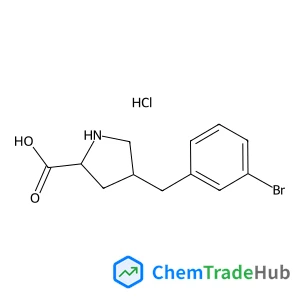
(2S,4R)-4-(3-Bromobenzyl)pyrrolidine-2-carboxylic acid hydrochloride
CAS番号:
1049734-10-2
分子式:
C12H15BrClNO2
おすすめサプライヤー




免責事項
このページに表示される学術雑誌情報は、参考および研究目的のみを目的としています。当社は雑誌出版社とは提携しておらず、投稿の取り扱いも行っておりません。出版に関するお問い合わせは、各雑誌出版社に直接ご連絡ください。
表示されている情報に誤りがある場合は、support@chemtradehub.com までご連絡ください。迅速に確認し、対応いたします。