












![4-{2-[4-(2-Methyl-2-propanyl)phenyl]ethoxy}quinazoline structure](https://static.chemtradehub.com/structs/120/120928-09-8-d3db.webp "4-{2-[4-(2-Methyl-2-propanyl)phenyl]ethoxy}quinazoline structure")
A time to search: finding the meaning of variable activation energy
文献情報
出版日
2016-05-03
DOI
10.1039/C6CP02491B
インパクトファクター
3.676
著者
原文を見る
要旨
This review deals with the phenomenon of variable activation energy frequently observed when studying the kinetics in the liquid or solid phase. This phenomenon commonly manifests itself through nonlinear Arrhenius plots or dependencies of the activation energy on conversion computed by isoconversional methods. Variable activation energy signifies a multi-step process and has a meaning of a collective parameter linked to the activation energies of individual steps. It is demonstrated that by using appropriate models of the processes, the link can be established in algebraic form. This allows one to analyze experimentally observed dependencies of the activation energy in a quantitative fashion and, as a result, to obtain activation energies of individual steps, to evaluate and predict other important parameters of the process, and generally to gain deeper kinetic and mechanistic insights. This review provides multiple examples of such analysis as applied to the processes of crosslinking polymerization, crystallization and melting of polymers, gelation, and solid–solid morphological and glass transitions. The use of appropriate computational techniques is discussed as well.
関連文献
Reactivity of the free and (5,5)-carbon nanotube-supported AuPt bimetallic clusters towards O2 activation: a theoretical study
Fazel Shojaei, Masoumeh Mousavi, Francesc Illas
2014-12-12
Paper
DOI: 10.1039/C4CP05109B
Controlled direct growth of Al2O3-doped HfO2 films on graphene by H2O-based atomic layer deposition
Li Zheng, Xinhong Cheng, Yuehui Yu, Yahong Xie, Xiaolong Li, Zhongjian Wang
2014-12-11
Paper
DOI: 10.1039/C4CP04957H
Self-assembly polymorphism of 2,7-bis-nonyloxy-9-fluorenone: solvent induced the diversity of intermolecular dipole–dipole interactions
Lihua Cui, Xinrui Miao, Li Xu, Yi Hu, Wenli Deng
2014-12-09
Paper
DOI: 10.1039/C4CP04773G
Aggregation induced emission enhancement of 4,4′-bis(diethylamino)benzophenone with an exceptionally large blue shift and its potential use as glucose sensor
Prativa Mazumdar, Debasish Das, Gobinda Prasad Sahoo, Guillermo Salgado-Morán, Ajay Misra
2014-11-26
Paper
DOI: 10.1039/C4CP03772C
Molecular dynamics simulation of spin–lattice NMR relaxation in poly-l-lysine dendrimers: manifestation of the semiflexibility effect
Denis A. Markelov, Stanislav G. Falkovich, Maxim Yu. Ilyash, Vladimir V. Matveev, Erkki Lähderanta, Petri Ingman
2014-12-08
Paper
DOI: 10.1039/C4CP04825C
Structural heterogeneity and dynamics of dyes on TiO2: implications for charge transfer across organic–inorganic interfaces
Jeffrey R. Christianson, J. R. Schmidt
2014-12-18
Paper
DOI: 10.1039/C4CP04814H
Li/Ag ratio dependent structure and upconversion photoluminescence of LixAg1−xYb0.99(MoO4)2:0.01Er3+ phosphors
Fangrui Cheng, Xiping Jing, Ziyuan Wang
2014-12-18
Paper
DOI: 10.1039/C4CP03950E
Ruthenium based nanostructures driven by morphological controls as efficient counter electrodes for dye-sensitized solar cells
Jeesoo Seok, Ka Yeon Ryu, Jin Ah Lee, Nam-Suk Lee, Jeong Min Baik, Joo Gon Kim, Min Jae Ko, Kyungkon Kim, Myung Hwa Kim
2014-12-18
Communication
DOI: 10.1039/C4CP04506H
A quantitative prediction of the viscosity of ionic liquids using Sσ-profile molecular descriptors
Xiangping Zhang, Suojiang Zhang
2014-12-17
Paper
DOI: 10.1039/C4CP04712E
Carbon nanoscroll from C4H/C4F-type graphene superlattice: MD and MM simulation insights
Yehan Tao, Xiaofang Li, Tiantian Wu, Yakang Jin, Zhongyang Zhang
2014-12-04
Paper
DOI: 10.1039/C4CP04102J
こちらもおすすめ
化合物よくある質問
2-ブロモ-9,9-ジフェニル-9H-フルオレンの主な用途は何ですか?
2-溴-9,9-二苯基芴は、医薬品、工業材料、有機合成の研究分野で応用されます。特に、レーザー材料や機能性ポリマーの合成に使用されることがあります。また、蛍光色...
474918-32-62-Bromo-9,9-diphenyl...
化合物よくある質問
四氯化铱の市場動向や研究トレンドはどうですか?
四氯化铱の市場は研究開発分野で注目されており、特にナノ技術や金属有機框架(MOFs)の分野での需要が増加傾向にあります。価格は安定しており、中国や韓国での生産が...
207399-11-9Tetrachloroiridium h...
882-06-44-Nitrocinnamic acid
化合物よくある質問
1-(4-溴-3-氟苯基)-2-氯乙酮を含む廃棄物はどのように処理すべきですか?
1-(4-溴-3-氟苯基)-2-氯乙酮 (CAS番号: 1260857-14-4) の廃棄物は専門的な廃棄処理が必要です。まず、廃棄物は密閉された容器に収集し、...
1260857-14-41-(4-Bromo-3-fluorop...
化合物よくある質問
苦参酚Kとは何ですか?
苦参酚Kは、CAS番号101236-49-1を持つ化合物で、主に天然由来の生薬から抽出されます。この化合物は、抗炎症作用や抗癌作用を持つことが報告されています。
101236-49-1Kushenol K
化合物よくある質問
POTASSIUM (1-(TERTBUTOXYCARBONYL)AZETIDIN-3-YL)TRIFLUOROBORATE を含む廃棄物はどのように処理すべきですか?
POTASSIUM (1-(TERTBUTOXYCARBONYL)AZETIDIN-3-YL)TRIFLUOROBORATE を含む廃棄物は、まず安全なエント...
1430219-73-0Potassium (1-(tert-b...
化合物よくある質問
4-庚基-4’-联苯羧酸の市場動向や研究トレンドはどうですか?
4-庚基-4’-聯苯羧酸は、特殊化学品や合成化学の分野で用いられる化学物質ですが、市場動向としては、研究開発の進展とともに需要が増加しています。また、環境配慮型...
58573-94-74'-Heptyl-4-biphenyl...
化合物よくある質問
6-ブロモ-3-メトキシ-1-フェニル-1H-インドゾールを含む廃棄物はどのように処理すべきですか?
6-ブロモ-3-メトキシ-1-フェニル-1H-インドゾールを含む廃棄物は、適切な化学廃棄処理が必要です。通常、廃棄物は密閉容器に収集され、専門の廃棄処理業者に引...
1332527-03-36-Bromo-3-methoxy-1-...
化合物よくある質問
4,4-二甲基-2-吡咯烷酮はどの業界で使用されていますか?
4,4-二甲基-2-吡咯烷酮は医薬、ポリマー、センサー、半導体などの業界で広く使用されています。特に溶媒としての性能が高く評価されています。
66899-02-34,4-dimethylpyrrolid...
51312-42-6Sodium Phosphotungst...
掲載誌
Physical Chemistry Chemical Physics

CiteScore:
5.5
自己引用率:
10.3%
年間論文数:
3036
Physical Chemistry Chemical Physics (PCCP) is an international journal co-owned by 19 physical chemistry and physics societies from around the world. This journal publishes original, cutting-edge research in physical chemistry, chemical physics and biophysical chemistry. To be suitable for publication in PCCP, articles must include significant innovation and/or insight into physical chemistry; this is the most important criterion that reviewers and Editors will judge against when evaluating submissions. The journal has a broad scope and welcomes contributions spanning experiment, theory, computation and data science. Topical coverage includes spectroscopy, dynamics, kinetics, statistical mechanics, thermodynamics, electrochemistry, catalysis, surface science, quantum mechanics, quantum computing and machine learning. Interdisciplinary research areas such as polymers and soft matter, materials, nanoscience, energy, surfaces/interfaces, and biophysical chemistry are welcomed if they demonstrate significant innovation and/or insight into physical chemistry. Joined experimental/theoretical studies are particularly appreciated when complementary and based on up-to-date approaches.
おすすめ化合物
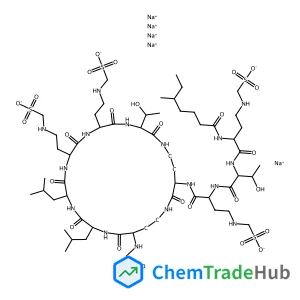
![1-Naphthalenesulfonic acid, 2-[(2-hydroxy-1-naphthalenyl)azo]-, bariumsalt (2:1) structure](https://static.chemtradehub.com/structs/110/1103-38-4-0b33.webp "1-Naphthalenesulfonic acid, 2-[(2-hydroxy-1-naphthalenyl)azo]-, bariumsalt (2:1) structure")
1-Naphthalenesulfonic acid, 2-[(2-hydroxy-1-naphthalenyl)azo]-, bariumsalt (2:1)
CAS番号:
1103-38-4
分子式:
C20H14BaN2O4S
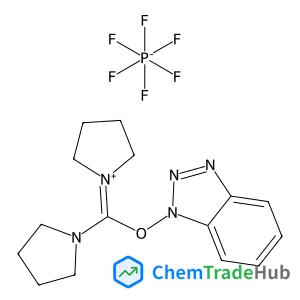
(1H-Benzotriazol-1-yloxy)(di-1-pyrrolidinyl)methylium hexafluorophosphate
CAS番号:
105379-24-6
分子式:
C15H21F6N5OP
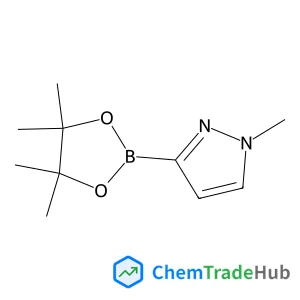
1-Methyl-3-(4,4,5,5-tetramethyl-1,3,2-dioxaborolan-2-yl)-1H-pyrazole
CAS番号:
1020174-04-2
分子式:
C10H17BN2O2
おすすめサプライヤー




免責事項
このページに表示される学術雑誌情報は、参考および研究目的のみを目的としています。当社は雑誌出版社とは提携しておらず、投稿の取り扱いも行っておりません。出版に関するお問い合わせは、各雑誌出版社に直接ご連絡ください。
表示されている情報に誤りがある場合は、support@chemtradehub.com までご連絡ください。迅速に確認し、対応いたします。