












Enhancement of encaged electron concentration by Sr2+ doping and improvement of Gd3+ emission through controlling encaged anions in conductive C12A7 phosphors
文献情報
出版日
2016-03-31
DOI
10.1039/C6CP02026G
インパクトファクター
3.676
著者
Meng Zhang, Yuxue Liu, Hancheng Zhu, Duanting Yan, Jian Yang, Xinyang Zhang, Chunguang Liu, Changshan Xu
原文を見る
要旨
Conductive C12A7:0.1%Gd3+,y%Sr2+ powders with different Sr2+ doping concentrations have been prepared in a H2 atmosphere by a solid state method in combination with subsequent UV-irradiation. The encaged electron concentration could be modulated through tuning Sr2+ doping and its maximum value reaches 2.3 × 1019 cm−3. This is attributed to the competition between enhanced uptake and the release of the encaged anions during their formation and diffusion processes and the suppression of encaged electrons generation due to the increased encaged OH− anions and the decreased encaged O2− anions. Although there exists encaged electrons and different encaged anions (O2−, H− and OH−) in C12A7 conductive powders prepared through the hydrogen route, a dominant local environment around Gd3+ could be observed using electron spin resonance (ESR) detection. It can be ascribed to the stronger coupling of the encaged OH− to the framework of C12A7 than those of the encaged electrons, O2− and H− anions. In addition, emission of Gd3+ ions is enhanced under UV or low voltage electron beam excitation and a new local environment around Gd3+ ions appears through the thermal annealing in air because of the decrease of the encaged OH− anions and the increase of the encaged O2− anions. Our results suggested that Sr2+ doping in combination with thermal annealing in air is an effective strategy for increasing the conductive performance and enhancing the emission of rare earth ions doped into C12A7 conductive phosphors for low-voltage field emission displays (FEDs).
関連文献
Relaxation of a hydrophilic polymer induced by moisture desorption through the glass transition
2014-12-11
Paper
DOI: 10.1039/C4CP04966G
Adsorbate-driven morphological changes on Cu(111) nano-pits
F. M. Hoffmann, J. Hrbek, I. Waluyo, J. A. Boscoboinik, D. J. Stacchiola
2014-12-09
Paper
DOI: 10.1039/C4CP05088F
Photocatalytic enhancement of hybrid C3N4/TiO2 prepared via ball milling method
Mo Zhang, Yongfa Zhu
2014-12-09
Paper
DOI: 10.1039/C4CP05173D
Topological states modulation of Bi and Sb thin films by atomic adsorption
Hongmei Liu, Xiaoli Wang, Guangliang Cui, Pinhua Zhang, Dapeng Zhao, Shuaihua Ji
2014-12-10
Paper
DOI: 10.1039/C4CP04502E
Nanometer-sized dynamic entities in an aqueous system
E. Mamontov, P. Zolnierczuk, M. Ohl
2015-01-05
Paper
DOI: 10.1039/C4CP05081A
A mechanistic study of hydrogen gas sensing by PdO nanoflake thin films at temperatures below 250 °C
Yu-Ju Chiang, Kuang-Chung Li, Yi-Chieh Lin, Fu-Ming Pan
2014-12-09
Paper
DOI: 10.1039/C4CP04527K
Remarkable improvement in microwave absorption by cloaking a micro-scaled tetrapod hollow with helical carbon nanofibers
Xiangnan Chen, Zuowan Zhou, Gang Li, Man Jiang, Xiaoling Xu, Jun Lu, Qiming Li, Yong Wang, Jihua Gou, David Hui
2014-11-28
Paper
DOI: 10.1039/C4CP04849K
Explicit calculation of the excited electronic states of the photosystem II reaction centre
2014-12-15
Paper
DOI: 10.1039/C4CP04468A
Aggregation induced emission enhancement of 4,4′-bis(diethylamino)benzophenone with an exceptionally large blue shift and its potential use as glucose sensor
Prativa Mazumdar, Debasish Das, Gobinda Prasad Sahoo, Guillermo Salgado-Morán, Ajay Misra
2014-11-26
Paper
DOI: 10.1039/C4CP03772C
7Li in situ 1D NMR imaging of a lithium ion battery
K. Zick, T. Oerther, F. M. Schappacher, G. Brunklaus
2015-01-05
Paper
DOI: 10.1039/C4CP05021E
こちらもおすすめ
化合物よくある質問
2-ブロモ-9,9-ジフェニル-9H-フルオレンの主な用途は何ですか?
2-溴-9,9-二苯基芴は、医薬品、工業材料、有機合成の研究分野で応用されます。特に、レーザー材料や機能性ポリマーの合成に使用されることがあります。また、蛍光色...
474918-32-62-Bromo-9,9-diphenyl...
化合物よくある質問
四氯化铱の市場動向や研究トレンドはどうですか?
四氯化铱の市場は研究開発分野で注目されており、特にナノ技術や金属有機框架(MOFs)の分野での需要が増加傾向にあります。価格は安定しており、中国や韓国での生産が...
207399-11-9Tetrachloroiridium h...
882-06-44-Nitrocinnamic acid
化合物よくある質問
1-(4-溴-3-氟苯基)-2-氯乙酮を含む廃棄物はどのように処理すべきですか?
1-(4-溴-3-氟苯基)-2-氯乙酮 (CAS番号: 1260857-14-4) の廃棄物は専門的な廃棄処理が必要です。まず、廃棄物は密閉された容器に収集し、...
1260857-14-41-(4-Bromo-3-fluorop...
化合物よくある質問
苦参酚Kとは何ですか?
苦参酚Kは、CAS番号101236-49-1を持つ化合物で、主に天然由来の生薬から抽出されます。この化合物は、抗炎症作用や抗癌作用を持つことが報告されています。
101236-49-1Kushenol K
化合物よくある質問
POTASSIUM (1-(TERTBUTOXYCARBONYL)AZETIDIN-3-YL)TRIFLUOROBORATE を含む廃棄物はどのように処理すべきですか?
POTASSIUM (1-(TERTBUTOXYCARBONYL)AZETIDIN-3-YL)TRIFLUOROBORATE を含む廃棄物は、まず安全なエント...
1430219-73-0Potassium (1-(tert-b...
化合物よくある質問
4-庚基-4’-联苯羧酸の市場動向や研究トレンドはどうですか?
4-庚基-4’-聯苯羧酸は、特殊化学品や合成化学の分野で用いられる化学物質ですが、市場動向としては、研究開発の進展とともに需要が増加しています。また、環境配慮型...
58573-94-74'-Heptyl-4-biphenyl...
化合物よくある質問
6-ブロモ-3-メトキシ-1-フェニル-1H-インドゾールを含む廃棄物はどのように処理すべきですか?
6-ブロモ-3-メトキシ-1-フェニル-1H-インドゾールを含む廃棄物は、適切な化学廃棄処理が必要です。通常、廃棄物は密閉容器に収集され、専門の廃棄処理業者に引...
1332527-03-36-Bromo-3-methoxy-1-...
化合物よくある質問
4,4-二甲基-2-吡咯烷酮はどの業界で使用されていますか?
4,4-二甲基-2-吡咯烷酮は医薬、ポリマー、センサー、半導体などの業界で広く使用されています。特に溶媒としての性能が高く評価されています。
66899-02-34,4-dimethylpyrrolid...
51312-42-6Sodium Phosphotungst...
掲載誌
Physical Chemistry Chemical Physics

CiteScore:
5.5
自己引用率:
10.3%
年間論文数:
3036
Physical Chemistry Chemical Physics (PCCP) is an international journal co-owned by 19 physical chemistry and physics societies from around the world. This journal publishes original, cutting-edge research in physical chemistry, chemical physics and biophysical chemistry. To be suitable for publication in PCCP, articles must include significant innovation and/or insight into physical chemistry; this is the most important criterion that reviewers and Editors will judge against when evaluating submissions. The journal has a broad scope and welcomes contributions spanning experiment, theory, computation and data science. Topical coverage includes spectroscopy, dynamics, kinetics, statistical mechanics, thermodynamics, electrochemistry, catalysis, surface science, quantum mechanics, quantum computing and machine learning. Interdisciplinary research areas such as polymers and soft matter, materials, nanoscience, energy, surfaces/interfaces, and biophysical chemistry are welcomed if they demonstrate significant innovation and/or insight into physical chemistry. Joined experimental/theoretical studies are particularly appreciated when complementary and based on up-to-date approaches.
おすすめ化合物
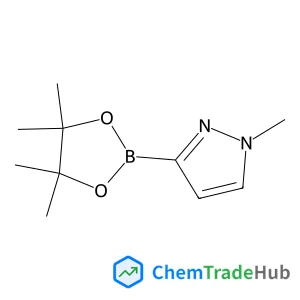
1-Methyl-3-(4,4,5,5-tetramethyl-1,3,2-dioxaborolan-2-yl)-1H-pyrazole
CAS番号:
1020174-04-2
分子式:
C10H17BN2O2
![N-[(Benzyloxy)carbonyl]serine structure](https://static.chemtradehub.com/structs/276/2768-56-1-77f7.webp "N-[(Benzyloxy)carbonyl]serine structure")
![4-{2-[4-(2-Methyl-2-propanyl)phenyl]ethoxy}quinazoline structure](https://static.chemtradehub.com/structs/120/120928-09-8-d3db.webp "4-{2-[4-(2-Methyl-2-propanyl)phenyl]ethoxy}quinazoline structure")
おすすめサプライヤー





免責事項
このページに表示される学術雑誌情報は、参考および研究目的のみを目的としています。当社は雑誌出版社とは提携しておらず、投稿の取り扱いも行っておりません。出版に関するお問い合わせは、各雑誌出版社に直接ご連絡ください。
表示されている情報に誤りがある場合は、support@chemtradehub.com までご連絡ください。迅速に確認し、対応いたします。