












![(1R)-N-((1R)-1-Phenylethyl)-1-[4-(tert-butyldimethylsilyloxymethyl)cyclohexyl]ethan-1-amine structure](https://static.chemtradehub.com/structs/672/672314-45-3-47ef.webp "(1R)-N-((1R)-1-Phenylethyl)-1-[4-(tert-butyldimethylsilyloxymethyl)cyclohexyl]ethan-1-amine structure")
On the gas phase fragmentation of protonated uracil: a statistical perspective
文献情報
出版日
2016-05-05
DOI
10.1039/C6CP01657J
インパクトファクター
3.676
著者
Emilio Martínez-Núñez
原文を見る
要旨
The potential energy surface of protonated uracil has been explored by an automated transition state search procedure, resulting in the finding of 1398 stationary points and 751 reactive channels, which can be categorized into isomerizations between pairs of isomers, unimolecular fragmentations and bimolecular reactions. The use of statistical Rice–Ramsperger–Kassel–Marcus (RRKM) theory and Kinetic Monte Carlo (KMC) simulations allowed us to determine the relative abundances of each fragmentation channel as a function of the ion's internal energy. The KMC/RRKM product abundances are compared with novel mass spectrometry (MS) experiments in the collision energy range 1–6 eV. To facilitate the comparison between theory and experiments, further dynamics simulations are carried out to determine the fraction of collision energy converted into the ion's internal energy. The KMC simulations show that the major fragmentation channels are isocyanic acid and ammonia losses, in good agreement with experiments. The third predominant channel is water loss according to both theory and experiments, although the abundance obtained in the KMC simulations is very low, suggesting that non-statistical dynamics might play an important role in this channel. Isocyanic acid (HNCOH+) is also an important product in the KMC simulations, although its abundance is only significant at internal energies not accessible in the MS experiments.
関連文献
Impact of concentration self-quenching on the charge generation yield of fullerene based donor–bridge–acceptor compounds in the solid state
Safa Shoaee, Agustín Molina-Ontoria, Andreas Gouloumis, James R. Durrant
2010-12-20
Paper
DOI: 10.1039/C0CP02107E
Rheo-attenuated total reflectance infrared spectroscopy: a new tool to study biopolymers
Maxime Boulet-Audet, Fritz Vollrath, Chris Holland
2011-01-17
Paper
DOI: 10.1039/C0CP02599B
Ground-state proton-transfer dynamics governed by configurational optimization
Sun-Young Park, Young-Shin Lee, Du-Jeon Jang
2010-12-20
Paper
DOI: 10.1039/C0CP01977A
Adsorptive behavior of CO2, CH4 and their mixtures in carbon nanospace: a molecular simulation study
Jeremy C. Palmer, Joshua D. Moore, Thomas J. Roussel, John K. Brennan, Keith E. Gubbins
2011-01-14
Paper
DOI: 10.1039/C0CP02281K
Scattering methods applied to soft matter
Sandra Engelskirchen, Chandrashekhar V. Kulkarni
2011-02-02
Editorial
DOI: 10.1039/C1CP90008K
Water-supported organized structures based on wedge-shaped amphiphilic derivatives of dipyrrolyldiketone boron complexes
Nazuki Eifuku, Yohei Haketa, Yoshihiro Ito
2011-01-05
Paper
DOI: 10.1039/C0CP02294B
Boosting theoretical zeolitic framework generation for the determination of new materials structures using GPU programming
Laurent A. Baumes, Frederic Kruger, Santiago Jimenez, Pierre Collet, Avelino Corma
2011-01-31
Paper
DOI: 10.1039/C0CP02833A
Polymer-induced recovery of nanoparticles from microemulsions
Olesya Myakonkaya, Julian Eastoe, Kevin J. Mutch, Isabelle Grillo
2010-09-30
Paper
DOI: 10.1039/C0CP00736F
Simple model for the growth behaviour of mixed lecithin–bile salt micelles
Dilek Madenci, Peter Schurtenberger, Jan Skov Pedersen
2010-12-07
Paper
DOI: 10.1039/C0CP01700K
The influence of the potassium promoter on the kinetics and thermodynamics of CO adsorption on a bulk iron catalyst applied in Fischer–Tropsch synthesis: a quantitative adsorption calorimetry, temperature-programmed desorption, and surface hydrogenation study
Barbara Graf, Martin Muhler
2010-12-17
Paper
DOI: 10.1039/C0CP01875A
こちらもおすすめ
化合物よくある質問
4'-ブロモビフェニル-3-メトークシーディ.ActionBarはどのように保存すればよいですか?
4'-ブロモビフェニル-3-メトークシーディ.ActionBarは、冷暗所で、直射日光を避け、密栓の容器に保存し、遠隔場所に保管してください。温度は常温(0〜2...
149506-25-24'-Bromo-biphenyl-3-...
2947-60-6(3-Methylphenyl)acet...
化合物よくある質問
2-異丙基フェニルヒドラジン塩酸塩とは何ですか?
2-異丙基フェニルヒドラジン塩酸塩は、CAS番号58928-82-8を有する化合物で、構造式はC11H14N2HClです。これは塩基性化合物であり、水に溶けやす...
58928-82-8(2-Isopropylphenyl)h...
化合物よくある質問
5-(4-クロロフェニル)-4H-1,2,4-三氮唑-3-アミンを取り扱う際の実験室安全事項は何ですか?
5-(4-クロロフェニル)-4H-1,2,4-三氮唑-3-アミンは取り扱いに注意が必要です。PPEとして防塵マスク、ゴーグル、手袋を使用し、ドラフトチャンバーを...
98554-00-85-(4-Chlorophenyl)-1...
化合物よくある質問
去甲基雷贝拉唑硫醚はどのように合成されますか?
去甲基雷贝拉唑硫醚は、ベンジミダゾール硫化物と3-メチル-4-ピリジノールの反応によって合成されます。具体的には、2-チオキシドベンジミダゾールと3-メチル-4...
117976-91-73-({2-[(1H-Benzimida...
化合物よくある質問
2-ブロモ-5-フロロ-N-(2-フェノールメチル)ベンゼンウレアは安全ですか?
2-ブロモ-5-フロロ-N-(2-フェノールメチル)ベンゼンウレアは、毒性や刺激性の実験データに基づき、適切な取扱いと防護措置を講じることで安全に使用できます。...
923722-86-52-Bromo-5-fluoro-N-(...
化合物よくある質問
対甲苯磺酸酯-四聚乙二醇-四氢吡喃醚の物理化学的性質は何ですか?
対甲苯磺酸酯-四聚乙二醇-四氢吡喃醚のCAS番号は86259-89-4です。この化合物は無色の液体で、分子量は約724.8です。高濃度では溶血性が報告されており...
86259-89-42-(2-{2-[2-(Tetrahyd...
化合物よくある質問
2-(3-(二氟甲基)-4-氟苯基)-4,4,5,5-四甲基-1,3,2-二噁硼戊環はどのように保存すればよいですか?
2-(3-(二氟甲基)-4-氟苯基)-4,4,5,5-四甲基-1,3,2-二噁硼戊環は、室温で暗い場所に保管し、直射日光から遠ざけ、容器は密閉状態で保存してくだ...
445303-65-12-[3-(difluoromethyl...
化合物よくある質問
6-アミノ-5-クロロ-2-シクロプロピルピリミジンカルボン酸の代替品はありますか?
この化合物の代替品には、ピロリミジン酸やその類似物、またピロリミジンカルボン酸の他の異性体があります。これらの代替品は、特定の化学反応や目的に応じて選択すること...
858956-08-86-Amino-5-chloro-2-c...
化合物よくある質問
5-クロロベンゾ[1,3]二オキセイン-4-アミンに適用される法規ガイドラインは何ですか?
5-クロロベンゾ[1,3]二オキセイン-4-アミンはCAS番号379228-45-2に該当します。この化合物はGHS分類でH314(接触により急性毒性がある)と...
379228-45-25-Chloro-1,3-benzodi...
掲載誌
Physical Chemistry Chemical Physics

CiteScore:
5.5
自己引用率:
10.3%
年間論文数:
3036
Physical Chemistry Chemical Physics (PCCP) is an international journal co-owned by 19 physical chemistry and physics societies from around the world. This journal publishes original, cutting-edge research in physical chemistry, chemical physics and biophysical chemistry. To be suitable for publication in PCCP, articles must include significant innovation and/or insight into physical chemistry; this is the most important criterion that reviewers and Editors will judge against when evaluating submissions. The journal has a broad scope and welcomes contributions spanning experiment, theory, computation and data science. Topical coverage includes spectroscopy, dynamics, kinetics, statistical mechanics, thermodynamics, electrochemistry, catalysis, surface science, quantum mechanics, quantum computing and machine learning. Interdisciplinary research areas such as polymers and soft matter, materials, nanoscience, energy, surfaces/interfaces, and biophysical chemistry are welcomed if they demonstrate significant innovation and/or insight into physical chemistry. Joined experimental/theoretical studies are particularly appreciated when complementary and based on up-to-date approaches.
おすすめ化合物
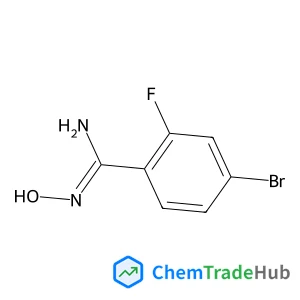
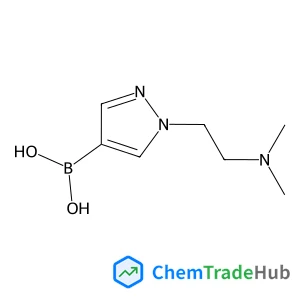
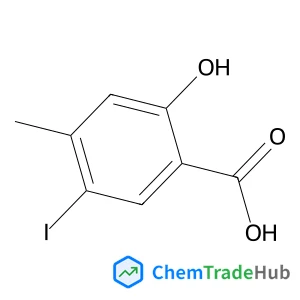
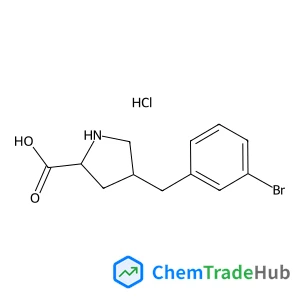
(2S,4R)-4-(3-Bromobenzyl)pyrrolidine-2-carboxylic acid hydrochloride
CAS番号:
1049734-10-2
分子式:
C12H15BrClNO2
おすすめサプライヤー





免責事項
このページに表示される学術雑誌情報は、参考および研究目的のみを目的としています。当社は雑誌出版社とは提携しておらず、投稿の取り扱いも行っておりません。出版に関するお問い合わせは、各雑誌出版社に直接ご連絡ください。
表示されている情報に誤りがある場合は、support@chemtradehub.com までご連絡ください。迅速に確認し、対応いたします。