













How molecular is the chemisorptive bond?
文献情報
出版日
2016-06-13
DOI
10.1039/C6CP01394E
インパクトファクター
3.676
著者
I. Tranca
原文を見る
要旨
Trends in adsorption energies as a function of transition metal differ for adsorbates that are attached atop a surface atom or are adsorbed onto a high coordination site. When adsorption onto early and late transition metals is compared variation in relative bond energies of adsorbates attached to different sites is large. A theoretical understanding is provided based on the analysis of the electronic structure of the respective chemical bonds. The electronic structure analysis is based on partial density of states (PDOS) and bond order overlap population densities from crystal orbital Hamiltonian population (COHP) calculations available from DFT electronic structure computations. This is complemented by calculations of Bader charge densities and electron density topology properties. Variation of the respective bond energies depends on the symmetry of the molecular orbitals that form the chemical bond. The key electronic structure parameters are the position of the Fermi level in the bonding or antibonding molecular orbital partial density of states region of the chemical bond and chemical bond polarity. These are very different for adsorbates adsorbed onto the same transition metal surface, but which have different coordination with surface metal atoms. The adsorption energies and the respective electronic structures of adatoms H, C and O and molecular fragments CHx (x = 1–3) are compared with those of the analogous molecules that contain a single transition metal atom. When adsorbed atop, trends in bond energies are remarkably similar to those of the corresponding molecules. The difference in bond energies of adsorbates and transition metal molecules, i.e. the embedding energy, is shown to consist of three contributions: quenching of the sometimes high molecular spin states, weakening of the adsorbate–surface interaction energy and weakening of the metal–metal atom bond energies next to the adsorbate. Conventional scaling rules of the interaction energies of adsorbed CHx (0 < x ≤ 3) fragments are satisfied only for adsorbates in high coordination sites. For the early transition metals a breaking of this rule is found for C and CH or N and NH when adsorbed atop a transition metal surface or when they are part of a transition metal molecule. The M–C bond energy is found to be only stronger than that of the M–CH bond as long as the Fermi level or the HOMO is located in the antibonding molecular orbital partial density of states of the chemical bond.
関連文献
Kinetics stabilized doping: computational optimization of carbon-doped anatase TiO2 for visible-light driven water splitting
Yi-Yang Sun, Shengbai Zhang
2015-12-15
Paper
DOI: 10.1039/C5CP07109G
Theoretical study of the coordination behavior of formate and formamidoximate with dioxovanadium(v) cation: implications for selectivity towards uranyl
Nada Mehio, J. Casey Johnson, Vyacheslav S. Bryantsev
2015-10-28
Paper
DOI: 10.1039/C5CP06165B
Measurement and prediction of quantum coherence effects in biological processes
Aurélien de la Lande, Vicent Moliner, Dennis Salahub
2015-09-17
Editorial
DOI: 10.1039/C5CP90134K
Very fast bulk Li ion diffusivity in crystalline Li1.5Al0.5Ti1.5(PO4)3 as seen using NMR relaxometry
Qianli Ma, Eva-Maria Hammer
2015-11-10
Communication
DOI: 10.1039/C5CP05337D
A simulation study of the electrostriction effects in dielectric elastomer composites containing polarizable inclusions with different spatial distributions
Hartmut Löwen, Lei Zhu
2015-11-13
Paper
DOI: 10.1039/C5CP05522A
Molecular design of electron transport with orbital rule: toward conductance-decay free molecular junctions
Tomofumi Tada, Kazunari Yoshizawa
2015-10-30
Perspective
DOI: 10.1039/C5CP05423K
Photodissociation of medium-sized argon cluster cations in the visible region‡
Martin Stachoň, Aleš Vítek, René Kalus
2015-11-12
Paper
DOI: 10.1039/C5CP05257B
Localised and delocalised excitons in star-like squaraine homo- and heterotrimers
Harald Ceymann, Moritz Balkenhohl, Alexander Schmiedel, Marco Holzapfel, Christoph Lambert
2015-12-18
Paper
DOI: 10.1039/C5CP06917C
The fabrication of In2O3/In2S3/Ag nanocubes for efficient photoelectrochemical water splitting
Rui Xu, Haohua Li, Wenwen Zhang, Zepeng Yang, Guiwu Liu, Ziwei Xu, Haicheng Shao
2015-12-17
Paper
DOI: 10.1039/C5CP05833C
こちらもおすすめ
化合物よくある質問
3-(5-フェニル-2-ファイル)-プロパン酸の市場動向や研究トレンドはどうですか?
この化合物の市場動向は不明ですが、類似化合物の需要は化学繊維、医薬品、農薬分野で安定しています。研究トレンドとしては、該当化合物の生物学的活性の評価や、その他の...
3465-61-03-(5-Phenyl-2-furyl)...
化合物よくある質問
3- Chloro-1H-indazol-5-olはどのように保存すればよいですか?
3- チロロ-1H-吲唑-5-醇は遮光し、直射日光を避けて、温度は室温を推奨し、密閉容器に保存してください。
885519-34-63-Chloro-1H-indazol-...
849924-76-11,2,3,4,5-Cyclopenta...
化合物よくある質問
L-(1-~13~C)メチオニンの市場動向や研究トレンドはどうですか?
L-(1-~13~C)メチオニンは、医薬品やバイオテクノロジー分野での研究が増加しており、その価格は安定しています。新興研究分野では、代謝解析や遺伝子機能解析で...
81202-04-2L-(1-~13~C)Methionin...
化合物よくある質問
1,3-フェニレンビスメチレンビスアクリレートは安全ですか?
1,3-フェニレンビスメチレンビスアクリレートは一般的に安全ですが、直接皮膚に触れる場合は保護用具を使用することを推奨します。高濃度の蒸気が吸入された場合は呼吸...
22757-16-01,3-Phenylenebis(met...
化合物よくある質問
丹参醇Aはどのように保存すればよいですか?
丹参醇Aは、直射日光を避けて室温で保存し、密栓容器に入れることをお勧めします。適切な保存条件は、安定性を保ち、安全性を確保する上で重要です。
189308-08-5Danshenol A
化合物よくある質問
4-メチル-2-(1,1,1-三フロロ-2-メチルプロパニル)ピリドインとは何ですか?
CAS番号1378865-93-0の4-メチル-2-(1,1,1-三フロロ-2-メチルプロパニル)ピリドインは、合成化学分野で用いられる有機化合物の一種です。こ...
1378865-93-04-Methyl-2-(1,1,1-tr...
化合物よくある質問
N-フェニルベンジル-2-クロロ酢氨を取り扱う際の実験室安全事項は何ですか?
N-フェニルベンジル-2-クロロ酢氨は毒性があり、皮膚や粘膜に刺激を与えます。取り扱う際には、保護眼鏡、手袋、ゴーグルを着用することを強く推奨します。ドラフトチ...
2653-14-7N-benzyl-2-chloro-N-...
化合物よくある質問
UCN-02を取り扱う際の実験室安全事項は何ですか?
UCN-02は毒性は低いですが、人体への直接的な接触は避けるべきです。PPE要件はグローブと顔面保護具を着用することです。ドラフトチャンバーを使用して漏洩を処理...
121569-61-7UCN-02
化合物よくある質問
N-[3-[2-(二甲基氨基)乙氧基]-4-甲氧基苯基]-2'-甲基-4'-(5-甲基-1,2,4-恶二唑-3-基)-[1,1'-联苯]-4-甲酰胺を取り扱う際の実験室安全事項は何ですか?
手袋と保護眼鏡を着用し、漏洩時には吸気防止装置を使用してください。室温、乾燥した場所に保管し、直日光から隔離してください。SDS(安全データシート)を参照してく...
170230-39-4N-{3-[2-(Dimethylami...
掲載誌
Physical Chemistry Chemical Physics

CiteScore:
5.5
自己引用率:
10.3%
年間論文数:
3036
Physical Chemistry Chemical Physics (PCCP) is an international journal co-owned by 19 physical chemistry and physics societies from around the world. This journal publishes original, cutting-edge research in physical chemistry, chemical physics and biophysical chemistry. To be suitable for publication in PCCP, articles must include significant innovation and/or insight into physical chemistry; this is the most important criterion that reviewers and Editors will judge against when evaluating submissions. The journal has a broad scope and welcomes contributions spanning experiment, theory, computation and data science. Topical coverage includes spectroscopy, dynamics, kinetics, statistical mechanics, thermodynamics, electrochemistry, catalysis, surface science, quantum mechanics, quantum computing and machine learning. Interdisciplinary research areas such as polymers and soft matter, materials, nanoscience, energy, surfaces/interfaces, and biophysical chemistry are welcomed if they demonstrate significant innovation and/or insight into physical chemistry. Joined experimental/theoretical studies are particularly appreciated when complementary and based on up-to-date approaches.
おすすめ化合物
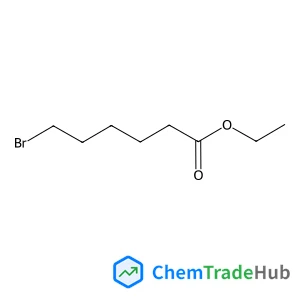
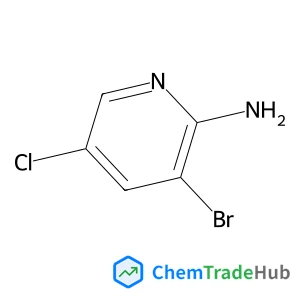

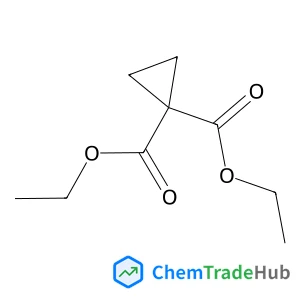
おすすめサプライヤー




免責事項
このページに表示される学術雑誌情報は、参考および研究目的のみを目的としています。当社は雑誌出版社とは提携しておらず、投稿の取り扱いも行っておりません。出版に関するお問い合わせは、各雑誌出版社に直接ご連絡ください。
表示されている情報に誤りがある場合は、support@chemtradehub.com までご連絡ください。迅速に確認し、対応いたします。