












![5-Acetyl-2,3-dihydrobenzo[b]furan structure](https://static.chemtradehub.com/structs/908/90843-31-5-eea4.webp "5-Acetyl-2,3-dihydrobenzo[b]furan structure")
One-dimensional ionic self-assembly in a fluorous solution: the structure of tetra-n-butylammonium tetrakis[3,5-bis(perfluorohexyl)phenyl]borate in perfluoromethylcyclohexane by small-angle neutron scattering (SANS)
文献情報
出版日
2016-03-03
DOI
10.1039/C6CP00393A
インパクトファクター
3.676
著者
Philippe Bühlmann, Thomas C. Allison
原文を見る
要旨
Fluorous liquids are the least polarizable condensed phases known, and their nonpolar members form solutions with conditions the closest to being in vacuo. A soluble salt consisting of a large fluorophilic anion, tetrakis[3,5-bis(perfluorohexyl)phenyl]borate, and its counterion, tetra-n-butylammonium, dissolved in perfluoromethylcyclohexane produces ionic solutions with extremely low conductivity. These solutions were subjected to small-angle neutron scattering (SANS) to ascertain the solute structure. At concentrations of 9% mass fraction, the fluorophilic electrolyte forms straight, long (>160 Å) self-assembled structures that are, in essence, long, homogeneous cylinders. Molecular models were made assuming a requirement for electroneutrality on the shortest length scale possible. This shows a structure formed from a stack of alternating anions and cations, and the structures fit the experimental scattering well. At the lower concentration of 1%, the stacks of ion pairs are shorter and eventually break up to form solitary ion pairs in the solution. These characteristics suggest such conditions provide an interesting new way to form long, self-assembling ionic nanostructures with single-molecule diameters in free solution onto which various moieties could be attached.
関連文献
Polyamides containing a biorenewable aromatic monomer based on coumalate esters: from synthesis to evaluation of the thermal and mechanical properties
Jurrie Noordijk, Bert Gebben, Monique H. M. Meeusen-Wierts, Katrien V. Bernaerts
2021-03-23
Paper
DOI: 10.1039/D1PY00005E
Facile construction of noncovalent graft copolymers with triple stimuli-responsiveness for triggered drug delivery
Lei Xu, Hairong Wang, Hongrui Tian, Mingzu Zhang, Jinlin He, Peihong Ni
2021-03-12
Paper
DOI: 10.1039/D1PY00135C
Engineering of pH-triggered nanoplatforms based on novel poly(2-methyl-2-oxazoline)-b-poly[2-(diisopropylamino)ethyl methacrylate] diblock copolymers with tunable morphologies for biomedical applications
Peter Černoch, Alessandro Jager, Zulfiya Černochová, Vladimir Sincari, Lindomar J. C. Albuquerque, Rafal Konefal, Ewa Pavlova, Fernando C. Giacomelli, Eliezer Jager
2021-04-14
Paper
DOI: 10.1039/D1PY00141H
Novel carbazole-acridine-based hole transport polymer for low turn-on voltage of green quantum dot light-emitting diodes
Chai Won Kim, Ji Hye Lee, Seunguk Cho, Hyung Jong Kim, Jinhyo Hwang, Yong Woo Kim, Dae Hyuk Choi, Min Ju Cho, Kwangyeol Lee, Dong Hoon Choi
2021-07-26
Paper
DOI: 10.1039/D1PY00497B
Improved enantioselectivity in thiol–ene photopolymerization of sulphur-containing polymers with circularly polarized luminescence
Chen-Lu He, Zeyu Feng, Yan Li, Manman Zhou, Liyang Zhao, Sizhen Shan, Mengqiao Wang, Xin Chen, Xi-Sheng Wang, Gang Zou
2021-03-31
Paper
DOI: 10.1039/D1PY00082A
Polyolefin graft copolymers through a ring-opening metathesis grafting through approach
Huiqun Wang, Sebla Onbulak, Steven Weigand, Frank S. Bates, Marc A. Hillmyer
2021-03-15
Paper
DOI: 10.1039/D0PY01728K
Structural design of pyrene-functionalized TEMPO-containing polymers for enhanced electrochemical storage performance
Hatice Mutlu, Hongjiao Li, Wolfgang Wenzel
2021-04-06
Paper
DOI: 10.1039/D0PY01421D
Multicolor mechanochromism of a multinetwork elastomer that can distinguish between low and high stress
Haoxiang Wang, Lei Shen
2021-06-11
Paper
DOI: 10.1039/D1PY00637A
こちらもおすすめ
化合物よくある質問
2-ブロモ-9,9-ジフェニル-9H-フルオレンの主な用途は何ですか?
2-溴-9,9-二苯基芴は、医薬品、工業材料、有機合成の研究分野で応用されます。特に、レーザー材料や機能性ポリマーの合成に使用されることがあります。また、蛍光色...
474918-32-62-Bromo-9,9-diphenyl...
化合物よくある質問
四氯化铱の市場動向や研究トレンドはどうですか?
四氯化铱の市場は研究開発分野で注目されており、特にナノ技術や金属有機框架(MOFs)の分野での需要が増加傾向にあります。価格は安定しており、中国や韓国での生産が...
207399-11-9Tetrachloroiridium h...
882-06-44-Nitrocinnamic acid
化合物よくある質問
1-(4-溴-3-氟苯基)-2-氯乙酮を含む廃棄物はどのように処理すべきですか?
1-(4-溴-3-氟苯基)-2-氯乙酮 (CAS番号: 1260857-14-4) の廃棄物は専門的な廃棄処理が必要です。まず、廃棄物は密閉された容器に収集し、...
1260857-14-41-(4-Bromo-3-fluorop...
化合物よくある質問
苦参酚Kとは何ですか?
苦参酚Kは、CAS番号101236-49-1を持つ化合物で、主に天然由来の生薬から抽出されます。この化合物は、抗炎症作用や抗癌作用を持つことが報告されています。
101236-49-1Kushenol K
化合物よくある質問
POTASSIUM (1-(TERTBUTOXYCARBONYL)AZETIDIN-3-YL)TRIFLUOROBORATE を含む廃棄物はどのように処理すべきですか?
POTASSIUM (1-(TERTBUTOXYCARBONYL)AZETIDIN-3-YL)TRIFLUOROBORATE を含む廃棄物は、まず安全なエント...
1430219-73-0Potassium (1-(tert-b...
化合物よくある質問
4-庚基-4’-联苯羧酸の市場動向や研究トレンドはどうですか?
4-庚基-4’-聯苯羧酸は、特殊化学品や合成化学の分野で用いられる化学物質ですが、市場動向としては、研究開発の進展とともに需要が増加しています。また、環境配慮型...
58573-94-74'-Heptyl-4-biphenyl...
化合物よくある質問
6-ブロモ-3-メトキシ-1-フェニル-1H-インドゾールを含む廃棄物はどのように処理すべきですか?
6-ブロモ-3-メトキシ-1-フェニル-1H-インドゾールを含む廃棄物は、適切な化学廃棄処理が必要です。通常、廃棄物は密閉容器に収集され、専門の廃棄処理業者に引...
1332527-03-36-Bromo-3-methoxy-1-...
化合物よくある質問
4,4-二甲基-2-吡咯烷酮はどの業界で使用されていますか?
4,4-二甲基-2-吡咯烷酮は医薬、ポリマー、センサー、半導体などの業界で広く使用されています。特に溶媒としての性能が高く評価されています。
66899-02-34,4-dimethylpyrrolid...
51312-42-6Sodium Phosphotungst...
掲載誌
Physical Chemistry Chemical Physics

CiteScore:
5.5
自己引用率:
10.3%
年間論文数:
3036
Physical Chemistry Chemical Physics (PCCP) is an international journal co-owned by 19 physical chemistry and physics societies from around the world. This journal publishes original, cutting-edge research in physical chemistry, chemical physics and biophysical chemistry. To be suitable for publication in PCCP, articles must include significant innovation and/or insight into physical chemistry; this is the most important criterion that reviewers and Editors will judge against when evaluating submissions. The journal has a broad scope and welcomes contributions spanning experiment, theory, computation and data science. Topical coverage includes spectroscopy, dynamics, kinetics, statistical mechanics, thermodynamics, electrochemistry, catalysis, surface science, quantum mechanics, quantum computing and machine learning. Interdisciplinary research areas such as polymers and soft matter, materials, nanoscience, energy, surfaces/interfaces, and biophysical chemistry are welcomed if they demonstrate significant innovation and/or insight into physical chemistry. Joined experimental/theoretical studies are particularly appreciated when complementary and based on up-to-date approaches.
おすすめ化合物
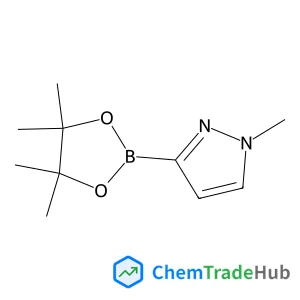
1-Methyl-3-(4,4,5,5-tetramethyl-1,3,2-dioxaborolan-2-yl)-1H-pyrazole
CAS番号:
1020174-04-2
分子式:
C10H17BN2O2
おすすめサプライヤー


免責事項
このページに表示される学術雑誌情報は、参考および研究目的のみを目的としています。当社は雑誌出版社とは提携しておらず、投稿の取り扱いも行っておりません。出版に関するお問い合わせは、各雑誌出版社に直接ご連絡ください。
表示されている情報に誤りがある場合は、support@chemtradehub.com までご連絡ください。迅速に確認し、対応いたします。