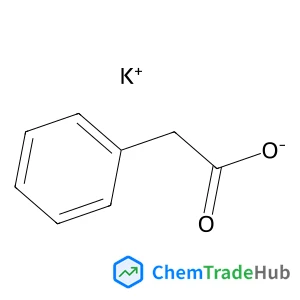
![9H-Fluoren-9-ylmethyl [(2S)-1-hydroxy-3-(1H-indol-3-yl)-2-propanyl]carbamate structure](https://static.chemtradehub.com/structs/153/153815-60-2-a67d.webp "9H-Fluoren-9-ylmethyl [(2S)-1-hydroxy-3-(1H-indol-3-yl)-2-propanyl]carbamate structure")
9H-Fluoren-9-ylmethyl [(2S)-1-hydroxy-3-(1H-indol-3-yl)-2-propanyl]carbamate
CAS番号:
153815-60-2
分子式:
C26H24N2O3
Yuanqin Yu, Yuxi Wang, Naiyin Hu, Ke Lin, Xiaoguo Zhou, Shilin Liu
The development of potential probes to identify molecular conformation is essential in organic and biological chemistry. In this work, we investigated a site-specific C–H stretching vibration as a conformational probe for a model compound, 1,1,3,3,3-deuterated n-propanol (CD3CH2CD2OH), using stimulated photoacoustic Raman spectroscopy in the gas phase and conventional spontaneous Raman spectroscopy in the liquid state. Along with quantum chemistry calculations, the experiment shows that the CH2 symmetric stretching mode at the β-carbon position is very sensitive to the conformational structure of n-propanol and can serve as a new probe for all five of its conformers. Compared with the O–H stretching vibration, a well-established conformational sensor for n-propanol, the Cβ–H stretching vibration presented here shows better conformational resolution in the liquid state. Furthermore, using this probe, we investigated the conformational preference of n-propanol in pure liquid and in dilute water solution. It is revealed that in pure liquid, n-propanol molecules prefer the trans-OH conformation, and in dilute water solution, this preference is enhanced, indicating that the water molecules play a role of further stabilizing the trans-OH n-propanol conformers. This leads to conformational evolution that n-propanol molecules with gauche-OH structure are transferred to the trans-OH structure upon diluting with water. These results not only provide important information on structures of n-propanol in different environments, but also demonstrate the potential of the C–H stretching vibration as a new tool for conformational analysis. This is especially important when considering that hydrocarbon chains are structural units in organic and biological molecules.
Debabrata Maity, Alba Gigante, Pedro A. Sánchez-Murcia, Eline Sijbesma, Mao Li, David Bier, Stefanie Mosel, Shirley Knauer, Carsten Schmuck
DOI: 10.1039/C9OB00620F
Artem A. Golubev, Ilia A. Smetanin, Anastasiya V. Agafonova, Nikolai V. Rostovskii, Alexander F. Khlebnikov, Galina L. Starova, Mikhail S. Novikov
DOI: 10.1039/C9OB01301F
Zhenzhen Zhan, Haojie Ma, Xinfeng Cui, Pengbo Jiang, Jinghong Pu, Yixin Zhang, Guosheng Huang
DOI: 10.1039/C9OB00531E
Kun Huang, Fabio Parmeggiani, Helene Ledru, Kristian Hollingsworth, Jordi Mas Pons, Andrea Marchesi, Peter Both, Ashley P. Mattey, Edward Pallister, Gregory S. Bulmer, Jolanda M. van Munster, W. Bruce Turnbull, M. Carmen Galan, Sabine L. Flitsch
DOI: 10.1039/C9OB01089K
Julien Malassis, Jean-Baptiste Vendeville, Qui-Hien Nguyen, Marie Boujon, Quentin Gaignard-Gaillard, Mark Light, Bruno Linclau
DOI: 10.1039/C9OB00707E
Jian-Yun Lin, Juan-Juan Gao, Xin-Yan Wu
DOI: 10.1039/C9OB00736A
Shasha Zheng, Gu Lingyue, Michelle Jui Hsien Ong, Denis Jacquemin, Jean-Alexandre Richard, Rajavel Srinivasan
DOI: 10.1039/C9OB00568D
Mengjun Qiao, Ling Chen, Fengyi Zhou, Yali Zhang, Lingfei Zhou
DOI: 10.1039/C9OB00336C
2,5-二羧基氟苯の市場は、主に医薬品および農薬の研究開発において伸長しています。一方、環境への影響や安全性の懸念から、その使用は一定の制限が置かれています。今...
8-甲基-2-噻吩-2-基-喹啉-4-羧酸を含む廃棄物は専門的な廃棄処理が必要です。具体的には、廃棄物は密閉の容器に収集し、適切な危険物対策を講じて専門業者に引...
CAS番号24295-04-3の2-(1,3-二氧杂烷-2-基)噻唑は、結晶形態により白色粉末を呈します。分子量は208.23 g/molであり、水に溶けにくい...
L-beta-高酪氨酸塩酸塩自体は毒性は低く、しかし使用する際は適切な個人保護具を使用し、誤飲や皮膚への接触を避けることが推奨されます。
睡茄灯笼草素Cは、シクラメンケチャナfromaceaeから抽出する方法や、化学合成法で合成することができます。典型的な化学合成法では、3β,22-二オキシエクス...
4-(嘧啶-2-基)哌嗪-1-羧酸叔丁酯は直射日光を避けて、室温で保存するのが良いです。湿度を避けて密閉容器に入れて保管し、未使用の状態で長期保存することができ...
NBI-74330は主に薬理学研究および医療用途に使用されています。その主な用途は抗がん作用を有するため、がん治療の研究に使用されています。
6-トリフルオロメチル-2-クロロピリジン-4-ボリリック酸は、6-トリフルオロメチル-2-クロロピリジンとボリルリチウムを触媒なしで反応させることで合成するこ...

Physical Chemistry Chemical Physics (PCCP) is an international journal co-owned by 19 physical chemistry and physics societies from around the world. This journal publishes original, cutting-edge research in physical chemistry, chemical physics and biophysical chemistry. To be suitable for publication in PCCP, articles must include significant innovation and/or insight into physical chemistry; this is the most important criterion that reviewers and Editors will judge against when evaluating submissions. The journal has a broad scope and welcomes contributions spanning experiment, theory, computation and data science. Topical coverage includes spectroscopy, dynamics, kinetics, statistical mechanics, thermodynamics, electrochemistry, catalysis, surface science, quantum mechanics, quantum computing and machine learning. Interdisciplinary research areas such as polymers and soft matter, materials, nanoscience, energy, surfaces/interfaces, and biophysical chemistry are welcomed if they demonstrate significant innovation and/or insight into physical chemistry. Joined experimental/theoretical studies are particularly appreciated when complementary and based on up-to-date approaches.
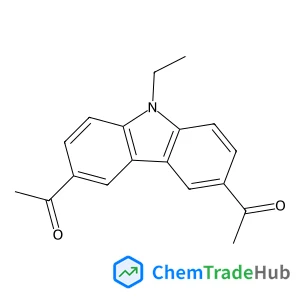
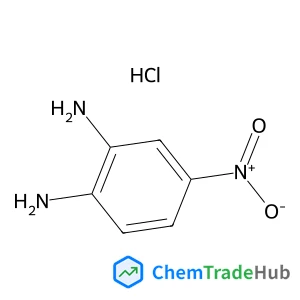
![2-Methyl-2-propanyl 1,6-diazaspiro[3.4]octane-6-carboxylate structure](https://static.chemtradehub.com/structs/115/1158749-79-1-81ee.webp "2-Methyl-2-propanyl 1,6-diazaspiro[3.4]octane-6-carboxylate structure")