












Using the GVB Ansatz to develop ensemble DFT method for describing multiple strongly correlated electron pairs
文献情報
出版日
2016-03-01
DOI
10.1039/C6CP00236F
インパクトファクター
3.676
著者
Michael Filatov, Kwang S. Kim
原文を見る
要旨
Ensemble density functional theory (DFT) furnishes a rigorous theoretical framework for describing the non-dynamic electron correlation arising from (near) degeneracy of several electronic configurations. Ensemble DFT naturally leads to fractional occupation numbers (FONs) for several Kohn–Sham (KS) orbitals, which thereby become variational parameters of the methodology. The currently available implementation of ensemble DFT in the form of the spin-restricted ensemble-referenced KS (REKS) method was originally designed for systems with only two fractionally occupied KS orbitals, which was sufficient to accurately describe dissociation of a single chemical bond or the singlet ground state of biradicaloid species. To extend applicability of the method to systems with several dissociating bonds or to polyradical species, more fractionally occupied orbitals must be included in the ensemble description. Here we investigate a possibility of developing the extended REKS methodology with the help of the generalized valence bond (GVB) wavefunction theory. The use of GVB enables one to derive a simple and physically transparent energy expression depending explicitly on the FONs of several KS orbitals. In this way, a version of the REKS method with four electrons in four fractionally occupied orbitals is derived and its accuracy in the calculation of various types of strongly correlated molecules is investigated. We propose a possible scheme to ameliorate the partial size-inconsistency that results from perfect spin-pairing. We conjecture that perfect pairing natural orbital (NO) functionals of reduced density matrix functional theory (RDMFT) should also display partial size-inconsistency.
関連文献
Non-stabilized enolates – versatile nucleophiles in transition metal-catalysed allylic alkylations
2016-08-23
Review Article
DOI: 10.1039/C6QO00192K
An easy access to carboxylic acids via Pd-catalyzed hydrocarboxylation of olefins with HCOOLi as a CO surrogate under mild conditions
Yang Wang, Yongming Zeng, Bangyu Yang
2016-07-18
Research Article
DOI: 10.1039/C6QO00187D
γ-Lactams and furan bispyrrolidines via iodine mediated cyclisation of homoallylamines
Mariwan A. Hama Salih, Louise Male, Neil Spencer, John S. Fossey
2015-08-27
Research Article
DOI: 10.1039/C5QO00183H
A thermally stable pH-responsive “supramolecular buckle” based on the encapsulation of 4-(4-aminophenyl)-N-methylpyridinium by cucurbit[8]uril
Tian-You Zhou, Qiao-Yan Qi, Ying Zhang, Xiao-Na Xu, Xin Zhao
2015-07-06
Research Article
DOI: 10.1039/C5QO00168D
Speciation and kinetic study of iron promoted sugar conversion to 5-hydroxymethylfurfural (HMF) and levulinic acid (LA)
Guannan Li, Dong Han, Jeffrey T. Miller
2015-08-17
Research Article
DOI: 10.1039/C5QO00194C
α-Regioselective [3 + 2] annulations with Morita–Baylis–Hillman carbonates of isatins and 2-nitro-1,3-enynes
Guang-Yao Ran, Pan Wang, Wei Du
2016-05-16
Research Article
DOI: 10.1039/C6QO00118A
Solvent-controlled nucleophilic trifluoromethylthiolation of Morita–Baylis–Hillman carbonates: dual roles of DABCO in activating the Zard's trifluoromethylthiolation reagent and the MBH carbonates
Hai-Bin Yang, Xing Fan, Yin Wei, Min Shi
2015-07-20
Research Article
DOI: 10.1039/C5QO00198F
Enantioselective β-alkylation of pyrroles with the formation of an all-carbon quaternary stereocenter
Qiao Ma, Lei Gong
2016-08-18
Research Article
DOI: 10.1039/C6QO00273K
こちらもおすすめ
化合物よくある質問
3-(5-フェニル-2-ファイル)-プロパン酸の市場動向や研究トレンドはどうですか?
この化合物の市場動向は不明ですが、類似化合物の需要は化学繊維、医薬品、農薬分野で安定しています。研究トレンドとしては、該当化合物の生物学的活性の評価や、その他の...
3465-61-03-(5-Phenyl-2-furyl)...
化合物よくある質問
3- Chloro-1H-indazol-5-olはどのように保存すればよいですか?
3- チロロ-1H-吲唑-5-醇は遮光し、直射日光を避けて、温度は室温を推奨し、密閉容器に保存してください。
885519-34-63-Chloro-1H-indazol-...
849924-76-11,2,3,4,5-Cyclopenta...
化合物よくある質問
L-(1-~13~C)メチオニンの市場動向や研究トレンドはどうですか?
L-(1-~13~C)メチオニンは、医薬品やバイオテクノロジー分野での研究が増加しており、その価格は安定しています。新興研究分野では、代謝解析や遺伝子機能解析で...
81202-04-2L-(1-~13~C)Methionin...
化合物よくある質問
1,3-フェニレンビスメチレンビスアクリレートは安全ですか?
1,3-フェニレンビスメチレンビスアクリレートは一般的に安全ですが、直接皮膚に触れる場合は保護用具を使用することを推奨します。高濃度の蒸気が吸入された場合は呼吸...
22757-16-01,3-Phenylenebis(met...
化合物よくある質問
丹参醇Aはどのように保存すればよいですか?
丹参醇Aは、直射日光を避けて室温で保存し、密栓容器に入れることをお勧めします。適切な保存条件は、安定性を保ち、安全性を確保する上で重要です。
189308-08-5Danshenol A
化合物よくある質問
4-メチル-2-(1,1,1-三フロロ-2-メチルプロパニル)ピリドインとは何ですか?
CAS番号1378865-93-0の4-メチル-2-(1,1,1-三フロロ-2-メチルプロパニル)ピリドインは、合成化学分野で用いられる有機化合物の一種です。こ...
1378865-93-04-Methyl-2-(1,1,1-tr...
化合物よくある質問
N-フェニルベンジル-2-クロロ酢氨を取り扱う際の実験室安全事項は何ですか?
N-フェニルベンジル-2-クロロ酢氨は毒性があり、皮膚や粘膜に刺激を与えます。取り扱う際には、保護眼鏡、手袋、ゴーグルを着用することを強く推奨します。ドラフトチ...
2653-14-7N-benzyl-2-chloro-N-...
化合物よくある質問
UCN-02を取り扱う際の実験室安全事項は何ですか?
UCN-02は毒性は低いですが、人体への直接的な接触は避けるべきです。PPE要件はグローブと顔面保護具を着用することです。ドラフトチャンバーを使用して漏洩を処理...
121569-61-7UCN-02
化合物よくある質問
N-[3-[2-(二甲基氨基)乙氧基]-4-甲氧基苯基]-2'-甲基-4'-(5-甲基-1,2,4-恶二唑-3-基)-[1,1'-联苯]-4-甲酰胺を取り扱う際の実験室安全事項は何ですか?
手袋と保護眼鏡を着用し、漏洩時には吸気防止装置を使用してください。室温、乾燥した場所に保管し、直日光から隔離してください。SDS(安全データシート)を参照してく...
170230-39-4N-{3-[2-(Dimethylami...
掲載誌
Physical Chemistry Chemical Physics

CiteScore:
5.5
自己引用率:
10.3%
年間論文数:
3036
Physical Chemistry Chemical Physics (PCCP) is an international journal co-owned by 19 physical chemistry and physics societies from around the world. This journal publishes original, cutting-edge research in physical chemistry, chemical physics and biophysical chemistry. To be suitable for publication in PCCP, articles must include significant innovation and/or insight into physical chemistry; this is the most important criterion that reviewers and Editors will judge against when evaluating submissions. The journal has a broad scope and welcomes contributions spanning experiment, theory, computation and data science. Topical coverage includes spectroscopy, dynamics, kinetics, statistical mechanics, thermodynamics, electrochemistry, catalysis, surface science, quantum mechanics, quantum computing and machine learning. Interdisciplinary research areas such as polymers and soft matter, materials, nanoscience, energy, surfaces/interfaces, and biophysical chemistry are welcomed if they demonstrate significant innovation and/or insight into physical chemistry. Joined experimental/theoretical studies are particularly appreciated when complementary and based on up-to-date approaches.
おすすめ化合物

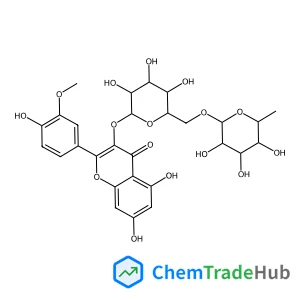
![(1S)-1,5-Anhydro-1-[3-(1-benzothiophen-2-ylmethyl)-4-fluorophenyl]-D-glucitol structure](https://static.chemtradehub.com/structs/761/761423-87-4-dbeb.webp "(1S)-1,5-Anhydro-1-[3-(1-benzothiophen-2-ylmethyl)-4-fluorophenyl]-D-glucitol structure")
(1S)-1,5-Anhydro-1-[3-(1-benzothiophen-2-ylmethyl)-4-fluorophenyl]-D-glucitol
CAS番号:
761423-87-4
分子式:
C21H21FO5S
おすすめサプライヤー







免責事項
このページに表示される学術雑誌情報は、参考および研究目的のみを目的としています。当社は雑誌出版社とは提携しておらず、投稿の取り扱いも行っておりません。出版に関するお問い合わせは、各雑誌出版社に直接ご連絡ください。
表示されている情報に誤りがある場合は、support@chemtradehub.com までご連絡ください。迅速に確認し、対応いたします。