












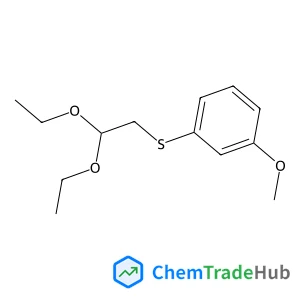
Photoinduced charge-transfer dynamics simulations in noncovalently bonded molecular aggregates
文献情報
出版日
2016-05-11
DOI
10.1039/C6CP00231E
インパクトファクター
3.676
著者
Carlos R. Medrano, M. Belén Oviedo, Cristián G. Sánchez
原文を見る
要旨
The rational design of new materials as prototype systems for organic solar cells remains challenging. Perylene diimide has emerged as a promising material to replace fullerene derivatives because of its synthetic flexibility, leading to the manipulation of their optical properties. As a result of their fused aromatic core that favors π–π stacking interactions, the aggregation of these molecules can reach highly ordered nanostructures as one-dimensional nanofibers, with a fast photoinduced charge transfer mechanism. In this article, we present an atomistic description of the photoexcited exciton dynamics in noncovalently bonded perylene diimides by time integration of the electron density in the presence of external time varying electric fields. We show that our approach is able to capture and explain the physics that underlies the charge transport mechanism through perylene diimide aggregates.
おすすめジャーナル
関連文献
Perylenequinonoid-catalyzed photoredox activation for the direct arylation of (het)arenes with sunlight
Zhaocheng Tang, Wenhao Bao, Jia Li, Baodang Guo, Shuping Huang, Yan Zhang, Yijian Rao
2019-04-09
Paper
DOI: 10.1039/C9OB00659A
A facile one pot synthesis of thiazolo[3,2-a]benzimidazole and pyran fused polyheterocyclic scaffolds
Arumugam Mariappan, Kandasamy Rajaguru, Shanmugam Muthusubramanian, Nattamai Bhuvanesh
2019-03-25
Communication
DOI: 10.1039/C9OB00300B
Enzymatic and non-enzymatic crosslinks found in collagen and elastin and their chemical synthesis
Rafea Naffa
2020-08-04
Review Article
DOI: 10.1039/D0QO00624F
Synthesis of the tetrasaccharide repeating unit of the cryoprotectant capsular polysaccharide from Colwellia psychrerythraea 34H
Giulia Vessella, Angela Casillo, Antonio Fabozzi, Serena Traboni, Alfonso Iadonisi, Maria Michela Corsaro, Emiliano Bedini
2019-02-27
Paper
DOI: 10.1039/C9OB00104B
Pictet–Spengler reaction based on in situ generated α-amino iminium ions through the Heyns rearrangement
Guo-bin Yang, Yong-po Zhang, Dong-dong Guo, Jin-zhong Zhao, Guang-xun Li, Zhuo Tang
2020-09-18
Research Article
DOI: 10.1039/D0QO00722F
Direct C–S bond formation via C–O bond activation of phenols in a crossover Pd/Cu dual-metal catalysis system
Vahid Khakyzadeh, Abed Rostami, Hojat Veisi, Behzad Shirmardi Shaghasemi, Erik Reimhult, Yuanzhi Xia, Sima Darvishi
2019-04-10
Paper
DOI: 10.1039/C9OB00313D
Cold-induced aldimine bond cleavage by Tris in Bacillus subtilis alanine racemase
Noelia Bernardo-García, Pedro A. Sánchez-Murcia, Akbar Espaillat, Siseth Martínez-Caballero, Felipe Cava, Juan A. Hermoso, Federico Gago
2019-04-08
Paper
DOI: 10.1039/C9OB00223E
こちらもおすすめ
化合物よくある質問
4'-ブロモビフェニル-3-メトークシーディ.ActionBarはどのように保存すればよいですか?
4'-ブロモビフェニル-3-メトークシーディ.ActionBarは、冷暗所で、直射日光を避け、密栓の容器に保存し、遠隔場所に保管してください。温度は常温(0〜2...
149506-25-24'-Bromo-biphenyl-3-...
2947-60-6(3-Methylphenyl)acet...
化合物よくある質問
2-異丙基フェニルヒドラジン塩酸塩とは何ですか?
2-異丙基フェニルヒドラジン塩酸塩は、CAS番号58928-82-8を有する化合物で、構造式はC11H14N2HClです。これは塩基性化合物であり、水に溶けやす...
58928-82-8(2-Isopropylphenyl)h...
化合物よくある質問
5-(4-クロロフェニル)-4H-1,2,4-三氮唑-3-アミンを取り扱う際の実験室安全事項は何ですか?
5-(4-クロロフェニル)-4H-1,2,4-三氮唑-3-アミンは取り扱いに注意が必要です。PPEとして防塵マスク、ゴーグル、手袋を使用し、ドラフトチャンバーを...
98554-00-85-(4-Chlorophenyl)-1...
化合物よくある質問
去甲基雷贝拉唑硫醚はどのように合成されますか?
去甲基雷贝拉唑硫醚は、ベンジミダゾール硫化物と3-メチル-4-ピリジノールの反応によって合成されます。具体的には、2-チオキシドベンジミダゾールと3-メチル-4...
117976-91-73-({2-[(1H-Benzimida...
化合物よくある質問
2-ブロモ-5-フロロ-N-(2-フェノールメチル)ベンゼンウレアは安全ですか?
2-ブロモ-5-フロロ-N-(2-フェノールメチル)ベンゼンウレアは、毒性や刺激性の実験データに基づき、適切な取扱いと防護措置を講じることで安全に使用できます。...
923722-86-52-Bromo-5-fluoro-N-(...
化合物よくある質問
対甲苯磺酸酯-四聚乙二醇-四氢吡喃醚の物理化学的性質は何ですか?
対甲苯磺酸酯-四聚乙二醇-四氢吡喃醚のCAS番号は86259-89-4です。この化合物は無色の液体で、分子量は約724.8です。高濃度では溶血性が報告されており...
86259-89-42-(2-{2-[2-(Tetrahyd...
化合物よくある質問
2-(3-(二氟甲基)-4-氟苯基)-4,4,5,5-四甲基-1,3,2-二噁硼戊環はどのように保存すればよいですか?
2-(3-(二氟甲基)-4-氟苯基)-4,4,5,5-四甲基-1,3,2-二噁硼戊環は、室温で暗い場所に保管し、直射日光から遠ざけ、容器は密閉状態で保存してくだ...
445303-65-12-[3-(difluoromethyl...
化合物よくある質問
6-アミノ-5-クロロ-2-シクロプロピルピリミジンカルボン酸の代替品はありますか?
この化合物の代替品には、ピロリミジン酸やその類似物、またピロリミジンカルボン酸の他の異性体があります。これらの代替品は、特定の化学反応や目的に応じて選択すること...
858956-08-86-Amino-5-chloro-2-c...
化合物よくある質問
5-クロロベンゾ[1,3]二オキセイン-4-アミンに適用される法規ガイドラインは何ですか?
5-クロロベンゾ[1,3]二オキセイン-4-アミンはCAS番号379228-45-2に該当します。この化合物はGHS分類でH314(接触により急性毒性がある)と...
379228-45-25-Chloro-1,3-benzodi...
掲載誌
Physical Chemistry Chemical Physics

CiteScore:
5.5
自己引用率:
10.3%
年間論文数:
3036
Physical Chemistry Chemical Physics (PCCP) is an international journal co-owned by 19 physical chemistry and physics societies from around the world. This journal publishes original, cutting-edge research in physical chemistry, chemical physics and biophysical chemistry. To be suitable for publication in PCCP, articles must include significant innovation and/or insight into physical chemistry; this is the most important criterion that reviewers and Editors will judge against when evaluating submissions. The journal has a broad scope and welcomes contributions spanning experiment, theory, computation and data science. Topical coverage includes spectroscopy, dynamics, kinetics, statistical mechanics, thermodynamics, electrochemistry, catalysis, surface science, quantum mechanics, quantum computing and machine learning. Interdisciplinary research areas such as polymers and soft matter, materials, nanoscience, energy, surfaces/interfaces, and biophysical chemistry are welcomed if they demonstrate significant innovation and/or insight into physical chemistry. Joined experimental/theoretical studies are particularly appreciated when complementary and based on up-to-date approaches.
おすすめ化合物
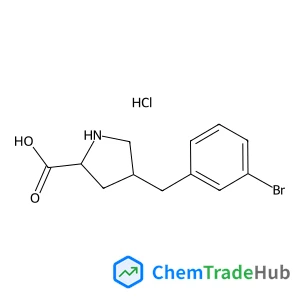
(2S,4R)-4-(3-Bromobenzyl)pyrrolidine-2-carboxylic acid hydrochloride
CAS番号:
1049734-10-2
分子式:
C12H15BrClNO2
![Ethyl ({[(2-methyl-2-propanyl)oxy]carbonyl}amino)(2-pyridinyl)acetate structure](https://static.chemtradehub.com/structs/313/313490-90-3-dd15.webp "Ethyl ({[(2-methyl-2-propanyl)oxy]carbonyl}amino)(2-pyridinyl)acetate structure")
Ethyl ({[(2-methyl-2-propanyl)oxy]carbonyl}amino)(2-pyridinyl)acetate
CAS番号:
313490-90-3
分子式:
C14H20N2O4
![(3S,4aS,8aS)-2-[(2R,3S)-3-Amino-2-hydroxy-4-phenylbutyl]-N-(2-methyl-2-propanyl)decahydro-3-isoquinolinecarboxamide structure](https://static.chemtradehub.com/structs/136/136522-17-3-4d77.webp "(3S,4aS,8aS)-2-[(2R,3S)-3-Amino-2-hydroxy-4-phenylbutyl]-N-(2-methyl-2-propanyl)decahydro-3-isoquinolinecarboxamide structure")
おすすめサプライヤー






免責事項
このページに表示される学術雑誌情報は、参考および研究目的のみを目的としています。当社は雑誌出版社とは提携しておらず、投稿の取り扱いも行っておりません。出版に関するお問い合わせは、各雑誌出版社に直接ご連絡ください。
表示されている情報に誤りがある場合は、support@chemtradehub.com までご連絡ください。迅速に確認し、対応いたします。