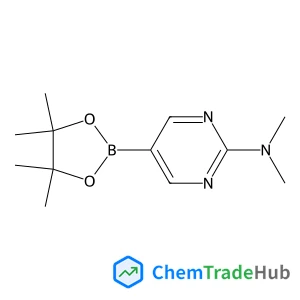
N,N-Dimethyl-5-(4,4,5,5-tetramethyl-1,3,2-dioxaborolan-2-yl)-2-pyrimidinamine
CAS番号:
1032759-30-0
分子式:
C12H20BN3O2
Wenyuan Li, Bo Guan, Xinxin Zhang, Jianhua Yan, Yue Zhou, Xingbo Liu
Ruddlesden–Popper (R–P) phase materials have been investigated widely as cathode candidates for IT-SOFCs. However, widespread application of R–P phase cathodes demands further improvement in electrode activity whose progress is hindered by the limited information in the oxygen reduction reaction (ORR). The ORR mechanism for the R–P phase is therefore investigated in this paper using (LaSr)2NiO4±δ as an example. Accurate characterization of the surface oxygen exchange process is realized by developing thin and dense polycrystalline LSNO layers via a versatile spray-modified pressing method we invented before to avoid perceptible bulk diffusion contribution, surface enrichment and geometry complication. The governing factors of the ORR are identified as oxygen adsorption and incorporation based on the findings in reaction orders from electrochemical impedance spectroscopy (EIS), stoichiometry-related chemical capacitance and intrinsic anisotropic properties. The incorporation rate is proven to drastically depend on the amount of interstitial oxygen . Since the unfilled interstitial sites in the R–P phase serve to accommodate the adsorbed oxygen during incorporation, like vacancies in the perovskite structure , more would seem to suppress the kinetics of this process. In regards to this, for the first time, a physical model is proposed to reconcile the discrepancy between the experimental results and intuitive reasoning. Based on supporting evidence, this model illustrates a possibility of how works to regulate the exchange rate, and how the contradiction between and is harmonized so that the latter in the R–P structure also positively promotes the incorporation rate in the ORR.

Proceedings of the National Academy of Sciences of the United States of America

Journal of Organometallic Chemistry

Pure and Applied Chemistry

Pharmacological Reviews

Fibre Chemistry

Journal of Physics and Chemistry of Solids

Russian Chemical Reviews

Nature

European Journal of Wood and Wood Products

Helvetica Chimica Acta
Jia-Hui Zhao, Xue-Ya Gou, Xi-Meng Chen, Yong-Min Liang
DOI: 10.1039/C9QO00240E
Yun-Xia Qu, Rui-Lian Lin, Yun-Qian Zhang, Kai-Zhi Zhou, Qing-Di Zhou, Qian-Jiang Zhu, Zhu Tao, Pei-Hua Ma, Jing-Xin Liu, Gang Wei
DOI: 10.1039/C7QO00376E
Zhen Zhang, Xiao-Ming Zhang, Fu-Min Zhang, Shao-Hua Wang
DOI: 10.1039/C9QO00353C
David C. Fabry, Steffen Mader
DOI: 10.1039/C9QO00206E
Hui Yang, Chao Tian, Dongsheng Qiu, Haitao Tian, Guangming Li
DOI: 10.1039/C9QO00495E
Shangbiao Feng, Jinlai Li, Feifei He, Tao Li, Huilin Li, Xiaolei Wang, Xingang Xie, Xuegong She
DOI: 10.1039/C9QO00006B
Iryna Vashchenko, Andrii Gerasov, Mykhaylo Vovk, Eduard Rusanov, Volodymyr Fetyukhin, Oleg Lukin
DOI: 10.1039/C9QO00377K
Daniel Bauer, Beatrice Andrae, Patrick Gaß, Danjano Trenz, Sabine Becker, Stefan Kubik
DOI: 10.1039/C9QO90027F
Danilo M. Lustosa, Patrick Cieslik, Deborah Hartmann, Tim Bruckhoff, Matthias Rudolph, Frank Rominger, A. Stephen K. Hashmi
DOI: 10.1039/C9QO00260J
6- bromo-1-cyclopropyl-1H-benzimidazoleは、抗炎症、抗ウイルス作用を持つことが報告されており、新薬開発の研究対象として注目...
取り扱う際には、防護眼鏡と手袋を使用し、ドラフトチャンバー内で操作することを推奨します。漏洩時には適切な手順で処理し、安全データシートを常に参照してください。
2,2’-ジメチル-3,3’-ビピリジンは、ピリジンと2-メチルアクリルアミドを有機合成反応で合成します。この反応では、ピリジンと2-メチルアクリルアミドを含有...
6-甲基ピリジン-2-ボリック酸は、合成化学、医薬品合成、以及研究用途などに広く使用され、特に組換えDNA技術や分子生物学の研究において重要な役割を果たします。
(R)-3-(1-甲基-2-氧環己基)プロpano酸メチルは一定の安全性がありますが、直接的な皮膚接触や吸入は避けるべきです。使用する際は適切な個々の安全データ...
ketorolacは、密封して遮光容器に保管し、直射日光や高温を避けて保存してください。温度は常温で保存し、湿度をなるべく低く保つことが推奨されます。
L-2,3-二氨基丙酸二盐酸盐は腐食性が強く、皮膚や粘膜に刺激を与える可能性があります。取り扱う際は、防塵マスク、ゴーグル、手袋を使用し、適切な排気設備を使用し...
2-(4-溴ピリジン-2-基)乙腈のCAS番号は312325-73-8です。主に結晶形態で存在し、分子量は159.01 g/molです。この化合物は水に溶けやす...
この化合物は毒性は低いですが、直接的な接触や吸入に注意が必要です。PPE(個人防護具)を着用し、ドラフトチャンバーを使用して操作することを推奨します。また、漏洩...
3-(1-氧代-1,3-二氢-2H-2-异吲哚)丙酸は、薬理学研究や医薬品製造において広く用いられる化合物です。また、工業的な用途でも一部の化学反応の触媒や助剤...

Physical Chemistry Chemical Physics (PCCP) is an international journal co-owned by 19 physical chemistry and physics societies from around the world. This journal publishes original, cutting-edge research in physical chemistry, chemical physics and biophysical chemistry. To be suitable for publication in PCCP, articles must include significant innovation and/or insight into physical chemistry; this is the most important criterion that reviewers and Editors will judge against when evaluating submissions. The journal has a broad scope and welcomes contributions spanning experiment, theory, computation and data science. Topical coverage includes spectroscopy, dynamics, kinetics, statistical mechanics, thermodynamics, electrochemistry, catalysis, surface science, quantum mechanics, quantum computing and machine learning. Interdisciplinary research areas such as polymers and soft matter, materials, nanoscience, energy, surfaces/interfaces, and biophysical chemistry are welcomed if they demonstrate significant innovation and/or insight into physical chemistry. Joined experimental/theoretical studies are particularly appreciated when complementary and based on up-to-date approaches.
![6-Bromo-2,3-dihydro-1H-pyrido[2,3-b][1,4]oxazine structure](https://static.chemtradehub.com/structs/120/1203499-17-5-b4d1.webp "6-Bromo-2,3-dihydro-1H-pyrido[2,3-b][1,4]oxazine structure")