


Liquid–liquid equilibria of binary mixtures of a lipidic ionic liquid with hydrocarbons
文献情報
出版日
2015-12-16
DOI
10.1039/C5CP06101F
インパクトファクター
3.676
著者
Blane D. Green, Alexander J. Badini, Richard A. O'Brien, James H. Davis, Jr., Kevin N. West
原文を見る
要旨
Although structurally diverse, many ionic liquids (ILs) are polar in nature due to the strong coulombic forces inherent in ionic compounds. However, the overall polarity of the IL can be tuned by incorporating significant nonpolar content into one or more of the constituent ions. In this work, the binary liquid–liquid equilibria of one such IL, 1-methyl-3-(Z-octadec-9-enyl)imidazolium bistriflimide, with several hydrocarbons (n-hexane, n-octane, n-decane, cyclohexane, methylcyclohexane, 1-octene) is measured over the temperature range 0–70 °C at ambient pressure using a combination of cloud point and gravimetric techniques. The phase behavior of the systems are similar in that they exhibit two phases: one that is 60–90 mole% hydrocarbon and a second phase that is nearly pure hydrocarbon. Each phase exhibits a weak dependence of composition on temperature (steep curve) above ∼10 °C, likely due to swelling and restructuring of the nonpolar nano-domains of the IL being limited by energetically unfavorable restructuring in the polar nano-domains. The solubility of the n-alkanes decreases with increasing size (molar volume), a trend that continues for the cyclic alkanes, for which upper critical solution temperatures are observed below 70 °C. 1-Octene is found to be more soluble than n-octane, attributable to a combination of its lower molar volume and slightly higher polarity. The COSMO-RS model is used to predict the T-x′-x′′ diagrams and gives good qualitative agreement of the observed trends. This work presents the highest known solubility of n-alkanes in an IL to date and tuning the structure of the ionic liquid to maximize the size/shape trends observed may provide the basis for enhanced separations of nonpolar species.
おすすめジャーナル

Journal of the Indian Institute of Science

Critical Reviews in Solid State and Materials Sciences

Atomization and Sprays

Polycyclic Aromatic Compounds

Topics in Catalysis

Electroanalysis

Bioorganic & Medicinal Chemistry

Heteroatom Chemistry

Chinese Journal of Chemistry

Bioorganic & Medicinal Chemistry Letters
関連文献
Virtual screening and in vitro validation identifies the first reported inhibitors of Salmonella enterica HPPK
Ronel Müller, Tiaan M. Gerwel, Magambo Phillip Kimuda, Özlem Tastan Bishop, Clinton G. L. Veale, Heinrich C. Hoppe
2021-08-23
Research Article
DOI: 10.1039/D1MD00237F
Structure-based design of haloperidol analogues as inhibitors of acetyltransferase Eis from Mycobacterium tuberculosis to overcome kanamycin resistance
Ankita Punetha, Keith D. Green, Atefeh Garzan, Nishad Thamban Chandrika, Melisa J. Willby, Allan H. Pang, Caixia Hou, Selina Y. L. Holbrook, Kyle Krieger, James E. Posey, Tanya Parish, Oleg V. Tsodikov, Sylvie Garneau-Tsodikova
2021-10-05
Research Article
DOI: 10.1039/D1MD00239B
Generation of reactive oxygen species is the primary mode of action and cause of survivin suppression by sepantronium bromide (YM155)
Tasaduq Hussain Wani, Goutam Chowdhury, Anindita Chakrabarty
2021-02-15
Research Article
DOI: 10.1039/D0MD00383B
β-Carboline-based molecular hybrids as anticancer agents: a brief sketch
Jay Prakash Soni, Yogesh Yeole, Nagula Shankaraiah
2021-03-24
Review Article
DOI: 10.1039/D0MD00422G
Covalent PROTACs: the best of both worlds?
Neil P. Grimster
2021-07-15
Opinion
DOI: 10.1039/D1MD00191D
Monobodies as tool biologics for accelerating target validation and druggable site discovery
Padma Akkapeddi, Kai Wen Teng
2021-09-13
Review Article
DOI: 10.1039/D1MD00188D
Fragment-based drug discovery: opportunities for organic synthesis
Jeffrey D. St. Denis, Richard J. Hall, Christopher W. Murray, Tom D. Heightman, David C. Rees
2020-12-24
Review Article
DOI: 10.1039/D0MD00375A
Synthesis and evaluation of bis(imino)anthracene derivatives as G-quadruplex ligands
Tomris Coban, Cameron Robertson, Sianne Schwikkard, Richard Singer, Adam LeGresley
2021-03-26
Research Article
DOI: 10.1039/D0MD00428F
Pharmacokinetics and pharmacodynamics in the treatment of cutaneous leishmaniasis – challenges and opportunities
Katrien Van Bocxlaer, Simon L. Croft
2021-01-07
Review Article
DOI: 10.1039/D0MD00343C
こちらもおすすめ
化合物よくある質問
カルボニル基が付いた5-氰基-1-{[(2-メチル-2-プロpanyl)オキシ]カーボンイル}1H-吲哚-2-イリド-2-ボリン酸はどのように保存すればよいですか?
カルボニル基が付いた5-氰基-1-{[(2-メチル-2-プロpanyl)オキシ]カーボンイル}1H-吲哚-2-イリド-2-ボリン酸は、直射日光を避けて室温(15...
475102-15-9(5-Cyano-1-{[(2-meth...
化合物よくある質問
tert-ブチル2-クロロメチルピリジン-3-基炭酸エステルの市場動向や研究トレンドはどうですか?
この化合物は合成化学分野において、特にピリジン化合物の合成や改良に用いられます。最近の研究では、ピリジン化合物の新規合成法や特性の改良が注目されています。市場動...
1203498-98-9tert-Butyl 2-chloro-...
化合物よくある質問
聚二季戊四醇六丙烯酸酯はどの業界で使用されていますか?
聚二季戊四醇六丙烯酸酯は、医薬品、ポリマー、センサー、半導体などの業界で広く使用されています。特にポリマー業界では硬化剤として、医薬分野では医療機器の製造に使用...
29570-58-93-(Acryloyloxy)-2-({...
化合物よくある質問
1-氯-5-硝基异喹啉の市場動向や研究トレンドはどうですか?
1-氯-5-硝基异喹啉は、薬理学や合成化学の研究分野で注目されています。市場動向としては、その生物学的な活性や合成可能性を評価する研究が増えています。また、代替...
58142-97-51-Chloro-5-nitroisoq...
化合物よくある質問
2-チロール-5-メチルスルフェニル-3-trifルオルメチルベンゼンはどのように合成されますか?
2-チロール-5-メチルスルフェニル-3-trifルオルメチルベンゼンは、トリフルオロメチル化反応と硫化反応を経て合成されます。通常、トリフルオロメチル化剤と硫...
957066-04-51-Chloro-4-(methylsu...
化合物よくある質問
p-トールイルマグネシウムブロミドの物理化学的性質は何ですか?
p-トールイルマグネシウムブロミドのCAS番号は4294-57-9です。この化合物は白色の結晶性粉末で、分子量は204.32です。溶剤中で良好に溶解しますが、水...
4294-57-9p-Tolylmagnesium bro...
化合物よくある質問
1-(5-甲基-2-硫化素基)プロパン-1-酮の市場動向や研究トレンドはどうですか?
1-(5-甲基-2-硫化素基)プロパン-1-酮の市場動向は、化学産業全体の需要に影響を受けますが、最近では pharmaceutical 分野での応用が注目され...
59303-13-81-(5-Methyl-2-thieny...
化合物よくある質問
十一碳烯酰甘氨酸を取り扱う際の実験室安全事項は何ですか?
十一碳烯酰甘氨酸は吸入や皮膚から吸収されることがあり、取り扱う際には防塵マスクと手袋を使用してください。ドラフトチャンバーを用いて漏洩を処理し、適切なSDS(S...
54301-26-7N-10-Undecenoylglyci...
化合物よくある質問
1H,1H-全氟-3,6-二氧杂葵-1-醇を取り扱う際の実験室安全事項は何ですか?
この化合物は吸入や皮膚吸収による毒性があるため、防塵マスク、ゴーグル、防護手袋を使用する必要があります。ドラフトチャンバーでの操作が必要です。漏洩時には即座に換...
152914-73-32,2-Difluoro-2-[1,1,...
化合物よくある質問
3-(4-(フルオロメチルオキシ)フェニル)-1,2,4-オキサジアゾール-5-カルボハイドライドは安全ですか?
安全性は化合物の使用方法によります。直接的な毒性は報告されていませんが、吸入や皮膚接触には注意が必要です。適切な防護服を着用し、換気を図ることを推奨します。
883028-82-83-(4-(Trifluorometho...
掲載誌
Physical Chemistry Chemical Physics

CiteScore:
5.5
自己引用率:
10.3%
年間論文数:
3036
Physical Chemistry Chemical Physics (PCCP) is an international journal co-owned by 19 physical chemistry and physics societies from around the world. This journal publishes original, cutting-edge research in physical chemistry, chemical physics and biophysical chemistry. To be suitable for publication in PCCP, articles must include significant innovation and/or insight into physical chemistry; this is the most important criterion that reviewers and Editors will judge against when evaluating submissions. The journal has a broad scope and welcomes contributions spanning experiment, theory, computation and data science. Topical coverage includes spectroscopy, dynamics, kinetics, statistical mechanics, thermodynamics, electrochemistry, catalysis, surface science, quantum mechanics, quantum computing and machine learning. Interdisciplinary research areas such as polymers and soft matter, materials, nanoscience, energy, surfaces/interfaces, and biophysical chemistry are welcomed if they demonstrate significant innovation and/or insight into physical chemistry. Joined experimental/theoretical studies are particularly appreciated when complementary and based on up-to-date approaches.
おすすめ化合物
![Benzyl 2-{[(tert-butoxy)carbonyl]amino}acetate structure](https://static.chemtradehub.com/structs/542/54244-69-8-6399.webp "Benzyl 2-{[(tert-butoxy)carbonyl]amino}acetate structure")
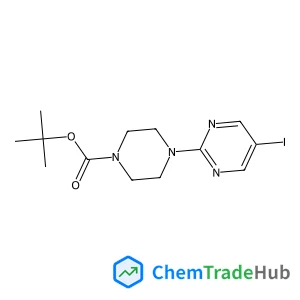
2-Methyl-2-propanyl 4-(5-iodo-2-pyrimidinyl)-1-piperazinecarboxylate
CAS番号:
1027616-32-5
分子式:
C13H19IN4O2
おすすめサプライヤー





免責事項
このページに表示される学術雑誌情報は、参考および研究目的のみを目的としています。当社は雑誌出版社とは提携しておらず、投稿の取り扱いも行っておりません。出版に関するお問い合わせは、各雑誌出版社に直接ご連絡ください。
表示されている情報に誤りがある場合は、support@chemtradehub.com までご連絡ください。迅速に確認し、対応いたします。