












Playing with isomerism and N substitution in pentalenedione derivatives for organic electrode batteries: how high are the stakes?
文献情報
出版日
2015-12-08
DOI
10.1039/C5CP05786H
インパクトファクター
3.676
著者
Carlo Gatti
原文を見る
要旨
New concepts to design innovating and top-performing redox-active organic molecules based electrodes should push forward and promote an eco-friendly alternative to classical Li-ion batteries. In this promising research area, density functional theory calculations lend support to experiments through the prediction of redox voltage and give promise to rationalize the trends, thus providing a general approach for engineering advanced materials. In this study in which we analysed spin density/net atomic charges distribution along with global energy decomposition thanks to Bader's partitioning of the molecular space, a vision for designing pentalenedione derivatives by fine tuning of the redox potential properties is presented. The concept relies on combined effects of isomerism and N single/double substitution for CH on the parent backbone. Such dual nature modification is able to provide a series of compounds within the range of 2.2–3.6 V vs. Li+/Li (against a more restricted range of 2.2–2.8 V vs. Li+/Li for the sole effect of isomerism on the unsubstituted parent compounds). The incidence of double N substitution alone generally follows an almost additive rule based on the combined actions of the composing single N substitutions. Few exceptions to the rule were, however, also observed and rationalized. Beyond learning gained for this peculiar family, these results may have exciting implications for future design strategies.
関連文献
Surface-enhanced Raman spectroscopy (SERS) characterisation of abasic sites in DNA duplexes
Luca Guerrini
2019-11-05
Communication
DOI: 10.1039/C9AN02040C
Synthesis of a CdS-decorated Eu-MOF nanocomposite for the construction of a self-powered photoelectrochemical aptasensor
Jie Gao, Yingxu Chen, Weihao Ji, Zhonghong Gao, Jingdong Zhang
2019-09-25
Paper
DOI: 10.1039/C9AN01606F
Applications of MALDI-TOF MS in environmental microbiology
Inês C. Santos
2016-04-07
Minireview
DOI: 10.1039/C6AN00131A
Investigation of an SPR biosensor for determining the influence of connexin 43 expression on the cytotoxicity of cisplatin
Yijia Wang, Shiwu Zhang, Chunze Zhang, Zhenying Zhao, Xiaoli Zheng, Lihua Xue, Jun Liu, X.-C. Yuan
2016-04-20
Paper
DOI: 10.1039/C6AN00264A
Feature engineering applied to intraoperative in vivo Raman spectroscopy sheds light on molecular processes in brain cancer: a retrospective study of 65 patients
Rajeev Yadav, Rajeev Agarwal, Samuel Kadoury, Dominique Trudel, Marie-Christine Guiot, Kevin Petrecca
2019-10-15
Communication
DOI: 10.1039/C9AN01144G
Aluminium foil as a single-use substrate for MALDI-MS fingerprinting of different melanoma cell lines
A. Bondarenko, Y. Zhu, L. Qiao, F. Cortés Salazar, H. Pick, H. H. Girault
2016-04-20
Paper
DOI: 10.1039/C6AN00126B
Single droplet detection of immune checkpoints on a multiplexed electrohydrodynamic biosensor
Alain Wuethrich, Aswin Raj Rajkumar, Karthik Balaji Shanmugasundaram, Kamil K. Reza, Shuvashis Dey, Christopher B. Howard
2019-10-16
Paper
DOI: 10.1039/C9AN01450K
Highly intense fluorescence of novel carbon nanocrystals combined with a DNAzyme-assisted autocatalytic multiple amplification strategy for sensitive detection of thrombin
Xiaochun Wang, Zhengkun Lu, Lu Tan, Guifen Jie
2016-04-15
Communication
DOI: 10.1039/C6AN00279J
こちらもおすすめ
化合物よくある質問
カルボニル基が付いた5-氰基-1-{[(2-メチル-2-プロpanyl)オキシ]カーボンイル}1H-吲哚-2-イリド-2-ボリン酸はどのように保存すればよいですか?
カルボニル基が付いた5-氰基-1-{[(2-メチル-2-プロpanyl)オキシ]カーボンイル}1H-吲哚-2-イリド-2-ボリン酸は、直射日光を避けて室温(15...
475102-15-9(5-Cyano-1-{[(2-meth...
化合物よくある質問
tert-ブチル2-クロロメチルピリジン-3-基炭酸エステルの市場動向や研究トレンドはどうですか?
この化合物は合成化学分野において、特にピリジン化合物の合成や改良に用いられます。最近の研究では、ピリジン化合物の新規合成法や特性の改良が注目されています。市場動...
1203498-98-9tert-Butyl 2-chloro-...
化合物よくある質問
聚二季戊四醇六丙烯酸酯はどの業界で使用されていますか?
聚二季戊四醇六丙烯酸酯は、医薬品、ポリマー、センサー、半導体などの業界で広く使用されています。特にポリマー業界では硬化剤として、医薬分野では医療機器の製造に使用...
29570-58-93-(Acryloyloxy)-2-({...
化合物よくある質問
1-氯-5-硝基异喹啉の市場動向や研究トレンドはどうですか?
1-氯-5-硝基异喹啉は、薬理学や合成化学の研究分野で注目されています。市場動向としては、その生物学的な活性や合成可能性を評価する研究が増えています。また、代替...
58142-97-51-Chloro-5-nitroisoq...
化合物よくある質問
2-チロール-5-メチルスルフェニル-3-trifルオルメチルベンゼンはどのように合成されますか?
2-チロール-5-メチルスルフェニル-3-trifルオルメチルベンゼンは、トリフルオロメチル化反応と硫化反応を経て合成されます。通常、トリフルオロメチル化剤と硫...
957066-04-51-Chloro-4-(methylsu...
化合物よくある質問
p-トールイルマグネシウムブロミドの物理化学的性質は何ですか?
p-トールイルマグネシウムブロミドのCAS番号は4294-57-9です。この化合物は白色の結晶性粉末で、分子量は204.32です。溶剤中で良好に溶解しますが、水...
4294-57-9p-Tolylmagnesium bro...
化合物よくある質問
1-(5-甲基-2-硫化素基)プロパン-1-酮の市場動向や研究トレンドはどうですか?
1-(5-甲基-2-硫化素基)プロパン-1-酮の市場動向は、化学産業全体の需要に影響を受けますが、最近では pharmaceutical 分野での応用が注目され...
59303-13-81-(5-Methyl-2-thieny...
化合物よくある質問
十一碳烯酰甘氨酸を取り扱う際の実験室安全事項は何ですか?
十一碳烯酰甘氨酸は吸入や皮膚から吸収されることがあり、取り扱う際には防塵マスクと手袋を使用してください。ドラフトチャンバーを用いて漏洩を処理し、適切なSDS(S...
54301-26-7N-10-Undecenoylglyci...
化合物よくある質問
1H,1H-全氟-3,6-二氧杂葵-1-醇を取り扱う際の実験室安全事項は何ですか?
この化合物は吸入や皮膚吸収による毒性があるため、防塵マスク、ゴーグル、防護手袋を使用する必要があります。ドラフトチャンバーでの操作が必要です。漏洩時には即座に換...
152914-73-32,2-Difluoro-2-[1,1,...
化合物よくある質問
3-(4-(フルオロメチルオキシ)フェニル)-1,2,4-オキサジアゾール-5-カルボハイドライドは安全ですか?
安全性は化合物の使用方法によります。直接的な毒性は報告されていませんが、吸入や皮膚接触には注意が必要です。適切な防護服を着用し、換気を図ることを推奨します。
883028-82-83-(4-(Trifluorometho...
掲載誌
Physical Chemistry Chemical Physics

CiteScore:
5.5
自己引用率:
10.3%
年間論文数:
3036
Physical Chemistry Chemical Physics (PCCP) is an international journal co-owned by 19 physical chemistry and physics societies from around the world. This journal publishes original, cutting-edge research in physical chemistry, chemical physics and biophysical chemistry. To be suitable for publication in PCCP, articles must include significant innovation and/or insight into physical chemistry; this is the most important criterion that reviewers and Editors will judge against when evaluating submissions. The journal has a broad scope and welcomes contributions spanning experiment, theory, computation and data science. Topical coverage includes spectroscopy, dynamics, kinetics, statistical mechanics, thermodynamics, electrochemistry, catalysis, surface science, quantum mechanics, quantum computing and machine learning. Interdisciplinary research areas such as polymers and soft matter, materials, nanoscience, energy, surfaces/interfaces, and biophysical chemistry are welcomed if they demonstrate significant innovation and/or insight into physical chemistry. Joined experimental/theoretical studies are particularly appreciated when complementary and based on up-to-date approaches.
おすすめ化合物
![4-{[4-(Trifluoromethoxy)benzyl]oxy}benzonitrile structure](https://static.chemtradehub.com/structs/103/1036629-63-6-2172.webp "4-{[4-(Trifluoromethoxy)benzyl]oxy}benzonitrile structure")
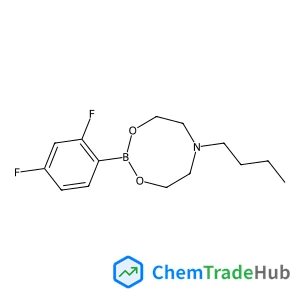
-1,2-cyclohexanediamine structure](https://static.chemtradehub.com/structs/928/928769-12-4-a4f0.webp "N,N'-Bis[3-(2-methoxyphenyl)-2-hydroxybenzyl](1R,2R)-1,2-cyclohexanediamine structure")
N,N'-Bis[3-(2-methoxyphenyl)-2-hydroxybenzyl](1R,2R)-1,2-cyclohexanediamine
CAS番号:
928769-12-4
分子式:
C34H38N2O4
おすすめサプライヤー




免責事項
このページに表示される学術雑誌情報は、参考および研究目的のみを目的としています。当社は雑誌出版社とは提携しておらず、投稿の取り扱いも行っておりません。出版に関するお問い合わせは、各雑誌出版社に直接ご連絡ください。
表示されている情報に誤りがある場合は、support@chemtradehub.com までご連絡ください。迅速に確認し、対応いたします。