












A diminutive modification in arylamine electron donors: synthesis, photophysics and solvatochromic analysis – towards the understanding of dye sensitized solar cell performances
文献情報
出版日
2015-09-25
DOI
10.1039/C5CP05338B
インパクトファクター
3.676
著者
Venkatesan Srinivasan, Murugesan Panneer, Madhavan Jaccob, Nagaraj Pavithra, Sambandam Anandan, Arunkumar Kathiravan
原文を見る
要旨
An electron rich donor moiety plays an important role in dye sensitized solar cells (DSCs). In order to attain a suitable donor moiety for DSCs, a deeper understanding of the role of a donor moiety in the dye excited state is significant. In this context, different arylamine dye-based electron donor moieties (TRA, CRA and PyRA) were successfully synthesized and well characterized using 1H-NMR, 13C-NMR and EI-MS spectrometry. Their photophysical properties and solvatochromic behavior were studied using UV-visible absorption, steady state and time resolved fluorescence spectroscopic techniques. The absorption of arylamine dyes is due to intramolecular charge transfer (ICT) between the donor and rhodanine-3-acetic acid via a π-bridge, which is further confirmed by DFT calculations. Lippert–Mataga analysis on the solvatochromic data implies that these molecules are more polar in the excited state, which is additional support for ICT. Furthermore, nanocrystalline TiO2-based dye sensitized solar cells (DSCs) were fabricated using these dyes to investigate the influence of donor moieties on their photovoltaic performance. The overall power conversion efficiencies of 2.57%, 1.68% and 1.25% were obtained for the TRA, PyRA and CRA dyes, respectively. The enhanced power conversion efficiency of TRA is due to a longer lifetime of injected electrons as demonstrated by the electrochemical impedance spectroscopy (EIS) measurements.
関連文献
Design of a simple paper-based colorimetric biosensor using polydiacetylene liposomes for neomycin detection
Do Hyun Kang, Keesung Kim, Younghwan Son, Pahn-Shick Chang, Ho-Sup Jung
2018-09-04
Paper
DOI: 10.1039/C8AN01097H
Efficient synthesis of riboflavin-imprinted magnetic nanoparticles by boronate affinity-based surface imprinting for the selective recognition of riboflavin
Daojin Li, Zijun Bie, Fangfang Wang, Enhui Guo
2018-09-06
Paper
DOI: 10.1039/C8AN01044G
Benzimidazole-containing aramid nanofiber for naked-eye detection of heavy metal ions
Zheng Cheng, Zhenyuan Bai, Yu Dai, Longbo Luo, Xiangyang Liu
2018-09-18
Paper
DOI: 10.1039/C8AN01484A
Fully convolutional neural network for removing background in noisy images of uranium bearing particles
Jay G. Tarolli, Benjamin E. Naes, Lamar Butler, Keeyahna Foster, Caleb M. Gumbs, Andrea L. Howard, David Willingham
2017-03-31
Paper
DOI: 10.1039/C7AN00175D
Multi-lumen capillary based trypsin micro-reactor for the rapid digestion of proteins
S. A. Currivan, W. Q. Chen, R. Wilson, E. Sanz Rodriguez, N. Upadhyay, D. Connolly
2018-09-10
Paper
DOI: 10.1039/C8AN01330F
Monitoring the biochemical alterations in hypertension affected salivary gland tissues using Fourier transform infrared hyperspectral imaging
Shaiju S. Nazeer, Rarinthorn Samrid, David Perez-Guaita, Parichat Prachaney, Kowit Chaisiwamongkol, Poungrat Pakdeechote, Bayden R. Wood
2017-01-25
Paper
DOI: 10.1039/C6AN02074G
Development of a high throughput (HT) Raman spectroscopy method for rapid screening of liquid blood plasma from prostate cancer patients
Jane Bryant, John Armstrong, Mary Dunne, Marie Finn
2016-12-13
Paper
DOI: 10.1039/C6AN02100J
Optical properties of porcine dermis in the mid-infrared absorption band of glucose
Arthur Schönhals, Hans Tholl, Mathias Glasmacher, Niels Kröger-Lui, Annemarie Pucci, Wolfgang Petrich
2016-11-09
Paper
DOI: 10.1039/C6AN01757F
2D europium coordination polymer as a regenerable fluorescence probe for efficiently detecting fipronil
Shuai-Liang Yang, Jiu-Nan Lu, Sai-Jun Zhang
2018-08-27
Paper
DOI: 10.1039/C8AN00701B
こちらもおすすめ
化合物よくある質問
3-イチチルビフェニルはどのように合成されますか?
3-イチチルビフェニルは、ビフェニルとイチプロピオニトリルを回収率約90%で反応させて合成されます。触媒は通常、亜リチウムホウ素を用います。
5668-93-93-Ethylbiphenyl
化合物よくある質問
8-溴-5-三氟甲基喹啉はどのように合成されますか?
8-溴-5-三氟甲基喹啉は、5-トリフルオロメチル-2-メチル-1,3-ベンゼンジオールをブロモエタノールと反応させて生成します。この反応は塩基性条件下で行われ...
917251-92-48-Bromo-5-(trifluoro...
化合物よくある質問
ジメチル4-(4,4,5,5-テトラメチル-1,3,2-ドioxaborolan-2-基)-2,6-ピリジンジカルボイル酸フェニルアミニドの代替品はありますか?
ジメチル4-(4,4,5,5-テトラメチル-1,3,2-ドioxaborolan-2-基)-2,6-ピリジンジカルボイル酸フェニルアミニドの代替品としては、4-...
741709-66-0Dimethyl 4-(4,4,5,5-...
化合物よくある質問
N-(3,5-ヘキサクロロ-4-ピリドインイル)-8-メチオキシ-5-キノリンカーボン酸の市場動向や研究トレンドはどのようなものでしょうか?
N-(3,5-ヘキサクロロ-4-ピリドインイル)-8-メチオキシ-5-キノリンカーボン酸の市場動向は、主に産業用途での需要により影響を受けます。研究トレンドとし...
199871-63-1N-(3,5-Dichloro-4-py...
化合物よくある質問
イソステアロイルグリセリルは安全ですか?
イソステアロイルグリセリルは一般的に安全性が高いとされていますが、過度な使用や個人差により皮�owsん炎などの反応が起こる可能性があります。使用前に医師に相談す...
222723-55-92-[(5Z,8Z,11Z,14Z)-5...
化合物よくある質問
1-(二苯甲基)-3,3-二氟-氮杂环丁烷の市場動向や研究トレンドはどうですか?
1-(二苯甲基)-3,3-二氟-氮杂环丁烷の市場動向は、医薬品や合成化学の研究分野で注目を集めています。新興研究は、該当化合物の合成改良と生体内での作用メカニズ...
288315-02-61-Benzhydryl-3,3-dif...
化合物よくある質問
3-チオフェンスチオールの物理化学的性質は何ですか?
3-チオフェンスチオールのCAS番号は7774-73-4です。結晶性の白色粉末で、分子量は122.17です。この化合物は水に微溶解し、エタノールやジクロロメタン...
7774-73-43-Thiophenethiol
化合物よくある質問
2-Methyl-2-propanyl (2S)-2-(aminomethyl)-1-piperidinecarboxylateは安全ですか?
2-Methyl-2-propanyl (2S)-2-(aminomethyl)-1-piperidinecarboxylateは一定の安全性基準を満たしていま...
475105-35-22-Methyl-2-propanyl ...
化合物よくある質問
CAS番号1316822-90-8の化合物は安全ですか?
CAS番号1316822-90-8の化合物は安全性に関しては評価が不足していますが、一般的には生物学的に活性な物質であり、取り扱いには適切な安全防護措置が必要で...
1316822-90-8Gal beta(1-3)[Neu5Ac...
化合物よくある質問
Tert-butyl 2-(2-羟基乙基)哌嗪-1-羧酸はどのように保存すればよいですか?
Tert-butyl 2-(2-羟基乙基)哌嗪-1-羧酸は、冷暗所で保存し、直射日光から遠ざけてください。容器は密閉し、高湿度や高温を避けて保管してください。
517866-79-4Tert-butyl 2-(2-hydr...
掲載誌
Physical Chemistry Chemical Physics

CiteScore:
5.5
自己引用率:
10.3%
年間論文数:
3036
Physical Chemistry Chemical Physics (PCCP) is an international journal co-owned by 19 physical chemistry and physics societies from around the world. This journal publishes original, cutting-edge research in physical chemistry, chemical physics and biophysical chemistry. To be suitable for publication in PCCP, articles must include significant innovation and/or insight into physical chemistry; this is the most important criterion that reviewers and Editors will judge against when evaluating submissions. The journal has a broad scope and welcomes contributions spanning experiment, theory, computation and data science. Topical coverage includes spectroscopy, dynamics, kinetics, statistical mechanics, thermodynamics, electrochemistry, catalysis, surface science, quantum mechanics, quantum computing and machine learning. Interdisciplinary research areas such as polymers and soft matter, materials, nanoscience, energy, surfaces/interfaces, and biophysical chemistry are welcomed if they demonstrate significant innovation and/or insight into physical chemistry. Joined experimental/theoretical studies are particularly appreciated when complementary and based on up-to-date approaches.
おすすめ化合物
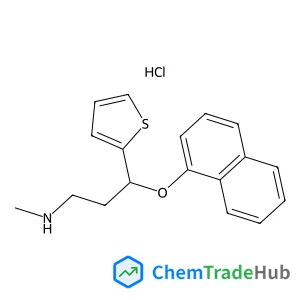
N-Methyl-3-(1-naphthyloxy)-3-(2-thienyl)-1-propanamine hydrochloride (1:1)
CAS番号:
1188266-11-6
分子式:
C18H20ClNOS
![5'-Fluoro-[2,3'-biindolinylidene]-2',3-dione structure](https://static.chemtradehub.com/structs/251/251903-00-1-9cb1.webp "5'-Fluoro-[2,3'-biindolinylidene]-2',3-dione structure")
おすすめサプライヤー





免責事項
このページに表示される学術雑誌情報は、参考および研究目的のみを目的としています。当社は雑誌出版社とは提携しておらず、投稿の取り扱いも行っておりません。出版に関するお問い合わせは、各雑誌出版社に直接ご連絡ください。
表示されている情報に誤りがある場合は、support@chemtradehub.com までご連絡ください。迅速に確認し、対応いたします。