












![1-oxaspiro[4.4]nonan-6-one structure](https://static.chemtradehub.com/structs/134/134179-01-4-e051.webp "1-oxaspiro[4.4]nonan-6-one structure")
Strong orbital deformation due to CH–π interaction in the benzene–methane complex
文献情報
出版日
2015-10-19
DOI
10.1039/C5CP04684J
インパクトファクター
3.676
著者
Jianfu Li, Rui-Qin Zhang
原文を見る
要旨
The orbital distribution and composition of the benzene–methane complex have been investigated systemically using ab initio calculations for the first time. Surprisingly, we find strong deformation in the HOMO−4 and LUMO+2 induced by CH–π interaction, extending the general view that nonbonding interaction does not cause orbital change of molecules.
関連文献
Synthesis of low-cost, rubbery amphiphilic comb-like copolymers and their use in the templated synthesis of mesoporous TiO2 films for solid-state dye-sensitized solar cells
Dong Jun Kim, Sang Jin Kim, Dong Kyu Roh, Jong Hak Kim
2013-03-25
Paper
DOI: 10.1039/C3CP44308F
Examination of the chemical behavior of the quercetin radical cation towards some bases
Zoran Marković, Dragan Amić, Dejan Milenković, Jasmina M. Dimitrić-Marković, Svetlana Marković
2013-03-22
Paper
DOI: 10.1039/C3CP44605K
An etched nanoporous Ge anode in a novel metal–air energy conversion cell
Sunghyun Uhm
2013-03-07
Paper
DOI: 10.1039/C3CP50885D
Understanding multi-quantum NMR through secular approximation
Deepansh Srivastava, R. Venkata SubbaRao, Ramesh Ramachandran
2013-02-15
Paper
DOI: 10.1039/C3CP44296A
Potential energy surfaces for ground and excited electronic states of the CF3I molecule and their relevance to its A-band photodissociation
Aleksey B. Alekseyev, Heinz-Peter Liebermann, Robert J. Buenker
2013-02-15
Paper
DOI: 10.1039/C3CP44237C
An oxygen pumping anode for electrowinning aluminium
Changqing Liu, Xiaobo Ji, Pingmin Zhang, Qiyuan Chen, Craig E. Banks
2013-03-22
Paper
DOI: 10.1039/C3CP44171G
Hydrogen and carbon monoxide generation from laser-induced graphitized nanodiamonds in water
Dong Myung Jang, Hyung Soon Im, Yoon Myung, Yong Jae Cho, Han Sung Kim, Seung Hyuk Back, Jeunghee Park, Eun Hee Cha, Minyung Lee
2013-03-19
Paper
DOI: 10.1039/C3CP50769F
Photovoltaic devices and characterization of a dodecyloxybenzothiadiazole-based copolymer
Purna P. Maharjan, Qiliang Chen, Lianjie Zhang, Olusegun Adebanjo, Nirmal Adhikari, Swaminathan Venkatesan, Prajwal Adhikary, Bjorn Vaagensmith, Qiquan Qiao
2013-03-14
Paper
DOI: 10.1039/C3CP51070K
こちらもおすすめ
化合物よくある質問
3-イチチルビフェニルはどのように合成されますか?
3-イチチルビフェニルは、ビフェニルとイチプロピオニトリルを回収率約90%で反応させて合成されます。触媒は通常、亜リチウムホウ素を用います。
5668-93-93-Ethylbiphenyl
化合物よくある質問
8-溴-5-三氟甲基喹啉はどのように合成されますか?
8-溴-5-三氟甲基喹啉は、5-トリフルオロメチル-2-メチル-1,3-ベンゼンジオールをブロモエタノールと反応させて生成します。この反応は塩基性条件下で行われ...
917251-92-48-Bromo-5-(trifluoro...
化合物よくある質問
ジメチル4-(4,4,5,5-テトラメチル-1,3,2-ドioxaborolan-2-基)-2,6-ピリジンジカルボイル酸フェニルアミニドの代替品はありますか?
ジメチル4-(4,4,5,5-テトラメチル-1,3,2-ドioxaborolan-2-基)-2,6-ピリジンジカルボイル酸フェニルアミニドの代替品としては、4-...
741709-66-0Dimethyl 4-(4,4,5,5-...
化合物よくある質問
N-(3,5-ヘキサクロロ-4-ピリドインイル)-8-メチオキシ-5-キノリンカーボン酸の市場動向や研究トレンドはどのようなものでしょうか?
N-(3,5-ヘキサクロロ-4-ピリドインイル)-8-メチオキシ-5-キノリンカーボン酸の市場動向は、主に産業用途での需要により影響を受けます。研究トレンドとし...
199871-63-1N-(3,5-Dichloro-4-py...
化合物よくある質問
イソステアロイルグリセリルは安全ですか?
イソステアロイルグリセリルは一般的に安全性が高いとされていますが、過度な使用や個人差により皮�owsん炎などの反応が起こる可能性があります。使用前に医師に相談す...
222723-55-92-[(5Z,8Z,11Z,14Z)-5...
化合物よくある質問
1-(二苯甲基)-3,3-二氟-氮杂环丁烷の市場動向や研究トレンドはどうですか?
1-(二苯甲基)-3,3-二氟-氮杂环丁烷の市場動向は、医薬品や合成化学の研究分野で注目を集めています。新興研究は、該当化合物の合成改良と生体内での作用メカニズ...
288315-02-61-Benzhydryl-3,3-dif...
化合物よくある質問
3-チオフェンスチオールの物理化学的性質は何ですか?
3-チオフェンスチオールのCAS番号は7774-73-4です。結晶性の白色粉末で、分子量は122.17です。この化合物は水に微溶解し、エタノールやジクロロメタン...
7774-73-43-Thiophenethiol
化合物よくある質問
2-Methyl-2-propanyl (2S)-2-(aminomethyl)-1-piperidinecarboxylateは安全ですか?
2-Methyl-2-propanyl (2S)-2-(aminomethyl)-1-piperidinecarboxylateは一定の安全性基準を満たしていま...
475105-35-22-Methyl-2-propanyl ...
化合物よくある質問
CAS番号1316822-90-8の化合物は安全ですか?
CAS番号1316822-90-8の化合物は安全性に関しては評価が不足していますが、一般的には生物学的に活性な物質であり、取り扱いには適切な安全防護措置が必要で...
1316822-90-8Gal beta(1-3)[Neu5Ac...
化合物よくある質問
Tert-butyl 2-(2-羟基乙基)哌嗪-1-羧酸はどのように保存すればよいですか?
Tert-butyl 2-(2-羟基乙基)哌嗪-1-羧酸は、冷暗所で保存し、直射日光から遠ざけてください。容器は密閉し、高湿度や高温を避けて保管してください。
517866-79-4Tert-butyl 2-(2-hydr...
掲載誌
Physical Chemistry Chemical Physics

CiteScore:
5.5
自己引用率:
10.3%
年間論文数:
3036
Physical Chemistry Chemical Physics (PCCP) is an international journal co-owned by 19 physical chemistry and physics societies from around the world. This journal publishes original, cutting-edge research in physical chemistry, chemical physics and biophysical chemistry. To be suitable for publication in PCCP, articles must include significant innovation and/or insight into physical chemistry; this is the most important criterion that reviewers and Editors will judge against when evaluating submissions. The journal has a broad scope and welcomes contributions spanning experiment, theory, computation and data science. Topical coverage includes spectroscopy, dynamics, kinetics, statistical mechanics, thermodynamics, electrochemistry, catalysis, surface science, quantum mechanics, quantum computing and machine learning. Interdisciplinary research areas such as polymers and soft matter, materials, nanoscience, energy, surfaces/interfaces, and biophysical chemistry are welcomed if they demonstrate significant innovation and/or insight into physical chemistry. Joined experimental/theoretical studies are particularly appreciated when complementary and based on up-to-date approaches.
おすすめ化合物
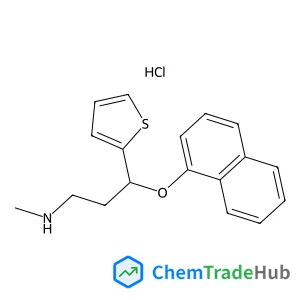
N-Methyl-3-(1-naphthyloxy)-3-(2-thienyl)-1-propanamine hydrochloride (1:1)
CAS番号:
1188266-11-6
分子式:
C18H20ClNOS
![N-{[(2-Methyl-2-propanyl)oxy]carbonyl}-L-methionylglycine structure](https://static.chemtradehub.com/structs/234/23446-03-9-e1e5.webp "N-{[(2-Methyl-2-propanyl)oxy]carbonyl}-L-methionylglycine structure")
おすすめサプライヤー






免責事項
このページに表示される学術雑誌情報は、参考および研究目的のみを目的としています。当社は雑誌出版社とは提携しておらず、投稿の取り扱いも行っておりません。出版に関するお問い合わせは、各雑誌出版社に直接ご連絡ください。
表示されている情報に誤りがある場合は、support@chemtradehub.com までご連絡ください。迅速に確認し、対応いたします。