












High-resolution separation of thiolate-protected gold clusters by reversed-phase high-performance liquid chromatography
文献情報
出版日
2015-08-25
DOI
10.1039/C5CP04660B
インパクトファクター
3.676
著者
Yoshiki Niihori, Chihiro Uchida, Wataru Kurashige
原文を見る
要旨
Thiolate (RS)-protected gold clusters (Aun(SR)m) have attracted much attention as building blocks of functional nanomaterials. Our group has been studying the high-resolution separation of Aun(SR)m clusters using reversed-phase high-performance liquid chromatography. In this perspective, we summarize our recent results on the separation of Aun(SR)m clusters and their doped clusters according to the core size, charge state, ligand composition, and coordination isomers. Additionally, this perspective describes new findings obtained by using high-resolution separation and future prospects for the separation of such types of metal clusters. We believe that the techniques and knowledge gained in this study would contribute to the creation of Aun(SR)m clusters with the desired functions and associated functional nanomaterials.
関連文献
A phototunable anion receptor for C–H⋯X interactions with benzoate anions
Sk. Atiur Rahaman, Munshi Sahid Hossain, Sruthy Baburaj, Ankita Biswas, Arijit Bag, Subhajit Bandyopadhyay
2019-04-27
Paper
DOI: 10.1039/C9OB00781D
Fluorescence-labeled neopeltolide derivatives for subcellular localization imaging
Shota Yanagi, Tomoya Sugai, Takuma Noguchi, Masato Kawakami, Makoto Sasaki, Shinsuke Niwa, Asako Sugimoto, Haruhiko Fuwa
2019-06-25
Communication
DOI: 10.1039/C9OB01276A
Decarboxylative acylation of N-free indoles enabled by a catalytic amount of copper catalyst and liquid-assisted grinding
Jingbo Yu, Chao Zhang, Xinjie Yang, Weike Su
2019-04-06
Communication
DOI: 10.1039/C9OB00622B
Transition metal-free α-Csp3–H oxidative sulfuration of benzyl thiosulfates with anilines to form N-aryl thioamides
Mengjun Qiao, Ling Chen, Fengyi Zhou, Yali Zhang, Lingfei Zhou
2019-03-19
Paper
DOI: 10.1039/C9OB00336C
Improvement of the versatility of an arabinofuranosidase against galactofuranose for the synthesis of galactofuranoconjugates
Quentin Pavic, Aline Pillot, Olivier Tasseau, Laurent Legentil, Sylvain Tranchimand
2019-06-24
Paper
DOI: 10.1039/C9OB01162E
A gold-catalyzed facile intramolecular rearrangement and cyclization sequence for synthesis of 2,5-dihydrofurans
Komalla Sunil, Sridhar Balasubramanian
2019-05-14
Paper
DOI: 10.1039/C9OB00756C
Divergent synthesis of 5′,7′-difluorinated dihydroxanthene-hemicyanine fused near-infrared fluorophores
Shasha Zheng, Gu Lingyue, Michelle Jui Hsien Ong, Denis Jacquemin, Jean-Alexandre Richard, Rajavel Srinivasan
2019-04-10
Paper
DOI: 10.1039/C9OB00568D
Phosphine-catalyzed dearomative (3 + 2) annulation of 2-nitrobenzofurans and nitrobenzothiophenes with allenoates
Jian-Qiang Zhao, Lei Yang, Yong You, Zhen-Hua Wang, Ke-Xin Xie, Xiao-Mei Zhang, Xiao-Ying Xu, Wei-Cheng Yuan
2019-05-07
Paper
DOI: 10.1039/C9OB00775J
Aminophosphonates and aminophosphonic acids with tetrasubstituted stereogenic center: diastereoselective synthesis from cyclic ketimines
Jakub Iwanejko, Anna Brol, Bartłomiej M. Szyja, Marek Daszkiewicz, Elżbieta Wojaczyńska, Tomasz K. Olszewski
2019-07-16
Paper
DOI: 10.1039/C9OB01346F
こちらもおすすめ
化合物よくある質問
2,5-二羧基氟苯の市場動向や研究トレンドはどうですか?
2,5-二羧基氟苯の市場は、主に医薬品および農薬の研究開発において伸長しています。一方、環境への影響や安全性の懸念から、その使用は一定の制限が置かれています。今...
3906-87-42-Fluoroterephthalic...
化合物よくある質問
8-甲基-2-噻吩-2-基-喹啉-4-羧酸を含む廃棄物はどのように処理すべきですか?
8-甲基-2-噻吩-2-基-喹啉-4-羧酸を含む廃棄物は専門的な廃棄処理が必要です。具体的には、廃棄物は密閉の容器に収集し、適切な危険物対策を講じて専門業者に引...
33289-45-18-Methyl-2-(2-thieny...
933686-24-92,4-Dichloro-6-methy...
917389-32-3Letermovir
化合物よくある質問
2-(1,3-二氧杂烷-2-基)噻唑の物理化学的性質は何ですか?
CAS番号24295-04-3の2-(1,3-二氧杂烷-2-基)噻唑は、結晶形態により白色粉末を呈します。分子量は208.23 g/molであり、水に溶けにくい...
24295-04-32-(1,3-Dioxolan-2-yl...
化合物よくある質問
L-beta-高酪氨酸塩酸塩は安全ですか?
L-beta-高酪氨酸塩酸塩自体は毒性は低く、しかし使用する際は適切な個人保護具を使用し、誤飲や皮膚への接触を避けることが推奨されます。
336182-13-9(3S)-3-Amino-4-(4-hy...
化合物よくある質問
睡茄灯笼草素Cはどのように合成されますか?
睡茄灯笼草素Cは、シクラメンケチャナfromaceaeから抽出する方法や、化学合成法で合成することができます。典型的な化学合成法では、3β,22-二オキシエクス...
81644-34-0(6beta,17alpha,22R)-...
化合物よくある質問
4-(嘧啶-2-基)哌嗪-1-羧酸叔丁酯はどのように保存すればよいですか?
4-(嘧啶-2-基)哌嗪-1-羧酸叔丁酯は直射日光を避けて、室温で保存するのが良いです。湿度を避けて密閉容器に入れて保管し、未使用の状態で長期保存することができ...
780705-64-82-Methyl-2-propanyl ...
化合物よくある質問
NBI-74330の主な用途は何ですか?
NBI-74330は主に薬理学研究および医療用途に使用されています。その主な用途は抗がん作用を有するため、がん治療の研究に使用されています。
855527-92-3N-{(1R)-1-[3-(4-Etho...
化合物よくある質問
6-トリフルオロメチル-2-クロロピリジン-4-ボリリック酸はどのように合成されますか?
6-トリフルオロメチル-2-クロロピリジン-4-ボリリック酸は、6-トリフルオロメチル-2-クロロピリジンとボリルリチウムを触媒なしで反応させることで合成するこ...
1446486-10-7[2-Chloro-6-(trifluo...
掲載誌
Physical Chemistry Chemical Physics

CiteScore:
5.5
自己引用率:
10.3%
年間論文数:
3036
Physical Chemistry Chemical Physics (PCCP) is an international journal co-owned by 19 physical chemistry and physics societies from around the world. This journal publishes original, cutting-edge research in physical chemistry, chemical physics and biophysical chemistry. To be suitable for publication in PCCP, articles must include significant innovation and/or insight into physical chemistry; this is the most important criterion that reviewers and Editors will judge against when evaluating submissions. The journal has a broad scope and welcomes contributions spanning experiment, theory, computation and data science. Topical coverage includes spectroscopy, dynamics, kinetics, statistical mechanics, thermodynamics, electrochemistry, catalysis, surface science, quantum mechanics, quantum computing and machine learning. Interdisciplinary research areas such as polymers and soft matter, materials, nanoscience, energy, surfaces/interfaces, and biophysical chemistry are welcomed if they demonstrate significant innovation and/or insight into physical chemistry. Joined experimental/theoretical studies are particularly appreciated when complementary and based on up-to-date approaches.
おすすめ化合物
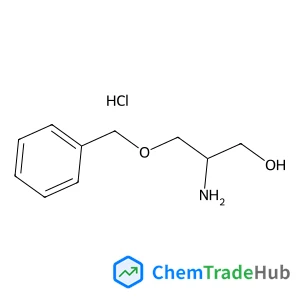
![2-Methyl-2-propanyl 1,6-diazaspiro[3.4]octane-6-carboxylate structure](https://static.chemtradehub.com/structs/115/1158749-79-1-81ee.webp "2-Methyl-2-propanyl 1,6-diazaspiro[3.4]octane-6-carboxylate structure")
おすすめサプライヤー







免責事項
このページに表示される学術雑誌情報は、参考および研究目的のみを目的としています。当社は雑誌出版社とは提携しておらず、投稿の取り扱いも行っておりません。出版に関するお問い合わせは、各雑誌出版社に直接ご連絡ください。
表示されている情報に誤りがある場合は、support@chemtradehub.com までご連絡ください。迅速に確認し、対応いたします。