












Near infrared absorbing near infrared emitting highly-sensitive luminescent nanothermometer based on Nd3+ to Yb3+ energy transfer
文献情報
出版日
2015-08-17
DOI
10.1039/C5CP03861H
インパクトファクター
3.676
著者
Ł. Marciniak, A. Bednarkiewicz, M. Stefanski, R. Tomala, D. Hreniak, W. Strek
原文を見る
要旨
A new type of near infrared absorbing near infrared emitting (NANE) luminescent nanothermometer is presented, with a physical background that relies on efficient Nd3+ to Yb3+ energy transfer under 808 nm photo-excitation. The emission spectra of LiLa0.9−xNd0.1YbxP4O12 (x = 0.05, 0.1, 0.2, 0.3, 0.5) nanocrystals were measured in a wide 100–700 °C temperature range. The ratio between the Nd3+ (4F3/2 → 4I9/2) and Yb3+ (2F5/2 → 2F7/2) luminescence bands, and the thermometer sensitivity were found to be strongly dependent on the Yb3+ concentration. These phenomenological relations were discussed in terms of the competition between three phenomena, namely (a) Nd3+ → Yb3+ phonon assisted energy transfer, (b) Yb3+ → Nd3+ back energy transfer and (c) energy diffusion between Yb3+ ions. The highest sensitivity of the temperature measurement was found for x = 0.5 (LiLa0.4Nd0.1Yb0.5P4O12), which was equal to 4 × 10⁻³ K−1 at 330 K. In stark contrast to conventional approaches, the proposed phosphate host matrix allows for a high level of doping, and thus, owing to the negligible concentration quenching, the presented luminophores exhibit a high absorption cross section and bright emission. Moreover, such optical remote thermometers, whose excitation and emission wavelengths are weakly scattered or absorbed and fall into the optical transmission window of the skin, may therefore become a practical solution for biomedical applications, such as remote control of thermotherapy.
関連文献
Cr-MIL-101 encapsulated Keggin phosphotungstic acid as active nanomaterial for catalysing the alcoholysis of styrene oxide
Lik H. Wee, Francesca Bonino, Carlo Lamberti, Silvia Bordiga, Johan A. Martens
2013-11-22
Paper
DOI: 10.1039/C3GC41988F
Vanillin, a promising biobased building-block for monomer synthesis
Maxence Fache, Emilie Darroman, Vincent Besse, Rémi Auvergne, Sylvain Caillol, Bernard Boutevin
2014-02-18
Paper
DOI: 10.1039/C3GC42613K
Towards resource efficient chemistry: tandem reactions with renewables
Arno Behr, Andreas J. Vorholt, Karoline A. Ostrowski, Thomas Seidensticker
2013-11-29
Critical Review
DOI: 10.1039/C3GC41960F
Aerobic oxidation of biomass derived 5-hydroxymethylfurfural into 5-hydroxymethyl-2-furancarboxylic acid catalyzed by a montmorillonite K-10 clay immobilized molybdenum acetylacetonate complex
Zehui Zhang, Bing Liu, Kangle Lv, Jie Sun, Kejan Deng
2014-03-25
Paper
DOI: 10.1039/C4GC00062E
Organocatalysis in biorefining for biomass conversion and upgrading
Eugene Y.-X. Chen
2013-11-12
Critical Review
DOI: 10.1039/C3GC41934G
Green and sustainable manufacture of chemicals from biomass: state of the art
Roger A. Sheldon
2013-11-27
Critical Review
DOI: 10.1039/C3GC41935E
Asymmetric hydrogenation of unprotected indoles using iridium complexes derived from P–OP ligands and (reusable) Brønsted acids
José Luis Núñez-Rico, Héctor Fernández-Pérez
2013-12-19
Communication
DOI: 10.1039/C3GC42132E
The potential of methylsiloxanes as solvents for synthetic chemistry applications
Mohd Azri Ab Rani, Nadine Borduas, Victoria Colquhoun, Robert Hanley, Henry Johnson, Solène Larger, Paul D. Lickiss, Veronica Llopis-Mestre, Selina Luu, Martin Mogstad, Philipp Oczipka, James R. Sherwood, Tom Welton, Jun-Yi Xing
2013-11-21
Paper
DOI: 10.1039/C3GC42036A
An eco-friendly three-component regio- and stereoselective synthesis of highly functionalized dihydroindeno[1,2-b]pyrroles under grinding
Sivasubramanian Muthusaravanan, Chinnathambi Sasikumar, Balasubramanian Devi Bala, Subbu Perumal
2013-11-21
Paper
DOI: 10.1039/C3GC42150C
Recovery of high purity ferric phosphate from a spent electroless nickel plating bath
Peng Liu, Chaolin Li, Xingang Liang, Gang Lu, Jianhui Xu, Xiaoqing Dong, Wenfang Zhang, Fei Ji
2013-10-22
Paper
DOI: 10.1039/C3GC41779D
こちらもおすすめ
化合物よくある質問
4-アミノフェノール酸ナトリウム水和物とは何ですか?
4-アミノフェノール酸ナトリウム水和物は、CAS番号206557-08-6の化合物で、4-アミノフェノールとナトリウムが結合した塩と水和物です。この化合物は、白...
206557-08-64-Aminobenzoic acid ...
化合物よくある質問
Methyl 3-methyl-N-{[(2-methyl-2-propanyl)oxy]carbonyl}-L-histidinateの代替品はありますか?
この化合物は特定の合成プロセスに使用される可能性がありますが、代替品として、他の类似的な化合物、例えばMethyl 3-methyl-N-{[(2-methyl...
72212-51-2Methyl 3-methyl-N-{[...
化合物よくある質問
4-Boc-2-哌嗪甲酸の市場動向や研究トレンドはどうですか?
4-Boc-2-哌嗪甲酸は、薬品開発や合成化学分野で広く使用されており、その需要は継続的に推移しています。特に、新薬開発における合成化学分野での需要が高まってい...
192330-11-3(2R)-4-[(tert-butoxy...
化合物よくある質問
4,4'-二羟甲基联苯の物理化学的性質は何ですか?
4,4'-二羟甲基联苯のCAS番号は1667-12-5です。この化合物は白色の結晶粉末で、分子量は154.20です。水にわずかに溶けますが、アルコールや有機溶媒...
1667-12-54,4'-Biphenyldiyldim...
化合物よくある質問
5-甲硫基戊腈はどの業界で使用されていますか?
5-甲硫基戊腈は医薬品産業で使用される可能性があります。また、ポリマー合成の触媒として、センサー製造の一部として、半導体製造のプロセス改善に使用される可能性があ...
59121-25-45-(Methylsulfanyl)pe...
化合物よくある質問
CAS番号1311961-50-8の化合物はどのように合成されますか?
この化合物は、1-abieta-8,11,13-trien-19-イルと6'-メトキシシンコナナン-9-基を含有する窒素含有化合物から合成されます。一般的な合成...
1311961-50-81-Abieta-8,11,13-tri...
化合物よくある質問
6-ブロモベンジジミダゾール-2-カルビルデオキシドはどのように保存すればよいですか?
6-ブロモベンジジミダゾール-2-カルビルデオキシドは、避光・乾燥した容器(密閉容器)で-20℃~4℃の低温で保存してください。高温や直射日光、湿気は避けてくだ...
885280-26-25-Bromo-1H-benzimida...
化合物よくある質問
Boc-N-甲基氨甲环酸とは何ですか?
621-65-8のCAS番号を持つBoc-N-甲基氨甲环酸は、化学式C7H13NO5を有する化合物です。この化合物は白色の結晶性粉末で、吸湿性があります。
621-65-83-Hydroxy-1,2-propan...
化合物よくある質問
乙基三氟硼酸钾はどのように合成されますか?
乙基三氟硼酸钾は、トリフLUオール酸カリウムとエチルブロミドを反応させて合成されます。この反応は高い選択性と収率を持ち、触媒を用いることで効率的に進行します。
882871-21-8Potassium ethyltrifl...
化合物よくある質問
2-フロウロ-5-クロロ-4-アミノフェノールはどのように保存すればよいですか?
2-フロウロ-5-クロロ-4-アミノフェノールは、直射日光を避けて冷却された暗所で保存し、密閉容器に保管してください。温度は常温か低温が適しています。
847872-10-04-Amino-5-chloro-2-f...
掲載誌
Physical Chemistry Chemical Physics

CiteScore:
5.5
自己引用率:
10.3%
年間論文数:
3036
Physical Chemistry Chemical Physics (PCCP) is an international journal co-owned by 19 physical chemistry and physics societies from around the world. This journal publishes original, cutting-edge research in physical chemistry, chemical physics and biophysical chemistry. To be suitable for publication in PCCP, articles must include significant innovation and/or insight into physical chemistry; this is the most important criterion that reviewers and Editors will judge against when evaluating submissions. The journal has a broad scope and welcomes contributions spanning experiment, theory, computation and data science. Topical coverage includes spectroscopy, dynamics, kinetics, statistical mechanics, thermodynamics, electrochemistry, catalysis, surface science, quantum mechanics, quantum computing and machine learning. Interdisciplinary research areas such as polymers and soft matter, materials, nanoscience, energy, surfaces/interfaces, and biophysical chemistry are welcomed if they demonstrate significant innovation and/or insight into physical chemistry. Joined experimental/theoretical studies are particularly appreciated when complementary and based on up-to-date approaches.
おすすめ化合物
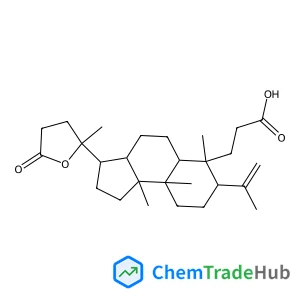
![(4aR,5S,6R,8aS)-5-[2-(3-Furyl)ethyl]-8a-(hydroxymethyl)-5,6-dimethyl-3,4,4a,5,6,7,8,8a-octahydro-1-naphthalenecarboxylic acid structure](https://static.chemtradehub.com/structs/184/18411-75-1-d4cd.webp "(4aR,5S,6R,8aS)-5-[2-(3-Furyl)ethyl]-8a-(hydroxymethyl)-5,6-dimethyl-3,4,4a,5,6,7,8,8a-octahydro-1-naphthalenecarboxylic acid structure")
おすすめサプライヤー





免責事項
このページに表示される学術雑誌情報は、参考および研究目的のみを目的としています。当社は雑誌出版社とは提携しておらず、投稿の取り扱いも行っておりません。出版に関するお問い合わせは、各雑誌出版社に直接ご連絡ください。
表示されている情報に誤りがある場合は、support@chemtradehub.com までご連絡ください。迅速に確認し、対応いたします。