












![2-(7,7-Difluorobicyclo[4.1.0]hept-1-yl)ethanamine structure](https://static.chemtradehub.com/structs/209/2098065-08-6-ff24.webp "2-(7,7-Difluorobicyclo[4.1.0]hept-1-yl)ethanamine structure")
Exploring electron pair behaviour in chemical bonds using the extracule density
文献情報
出版日
2015-07-10
DOI
10.1039/C5CP03280F
インパクトファクター
3.676
著者
Adam J. Proud, Dalton E. C. K. Mackenzie, Jason K. Pearson
原文を見る
要旨
We explore explicit electron pair behaviour within the chemical bond (and lone pairs) by calculating the probability distribution for the center-of-mass (extracule) of an electron pair described by single localized orbitals. Using Edmiston–Ruedenberg localized orbitals in a series of 61 chemical systems, we demonstrate the utility of the extracule density as an interpretive tool in chemistry. By accessing localized regions of chemical space we simplify the interpretation of the extracule density and afford a quantum mechanical interpretation of “chemically intuitive” features of electronic structure. Specifically, we describe the localized effects on chemical bonds due to changes in electronegativities of bonded neighbours, bond strain, and non-covalent interactions. We show that the extracule density offers unique insight into electronic structure and allows one to readily quantify the effects of changing the chemical environment.
関連文献
Stereoselective substituted pyrrolidine and cyclic ether synthesis by PhS migration
Lorenzo Caggiano, John Davies, David J. Fox, David C. Moody, Stuart Warren
2003-06-12
Communication
DOI: 10.1039/B303790H
Spontaneous free-standing nanostructured film growth in polyelectrolyte-surfactant systems
Karen J. Edler, Arach Goldar, Tessa Brennan, Stephen J. Roser
2003-06-16
Communication
DOI: 10.1039/B304202B
Biosynthesis of the insect pheromone(S)-4-methyl-3-heptanone
Andrew P. Jarvis, Jürgen Liebig, Bert Hölldobler
2004-04-14
Communication
DOI: 10.1039/B403186E
Computational screening of combinatorial catalyst libraries
James L. Melville, Benjamin I. Andrews, Barry Lygo, Jonathan D. Hirst
2004-05-17
Communication
DOI: 10.1039/B402378A
Palladium(0)-catalyzed direct cross-coupling reaction of allyl alcohols with aryl- and vinyl-boronic acids
Hirokazu Tsukamoto, Masanori Sato, Yoshinori Kondo
2004-04-15
Communication
DOI: 10.1039/B402256D
Biomimetic assembly of calcite microtrumpets: crystal tectonics in action
Saratchandra Babu Mukkamala, Annie K. Powell
2004-03-18
Communication
DOI: 10.1039/B401754D
A novel asymmetric route to succinimides and derived compounds: synthesis of the lignan lactone (+)-hinokinin
D. Jonathan Bennett, Paula L. Pickering, Nigel S. Simpkins
2004-05-14
Communication
DOI: 10.1039/B403193H
Hexakis(isopropylthio)-1,5-hexadien-3-yne and its fluorescent Ag(i) coordination polymers: assembly of helicates with thioether sites
Yuan-Te Fu, Vincent M. Lynch, Richard J. Lagow
2004-04-13
Communication
DOI: 10.1039/B314292B
Hydrogenation of olefins using ligand-stabilized palladium nanoparticles in an ionic liquid
Jun Huang, Tao Jiang, Buxing Han, Haixiang Gao, Yanhong Chang, Guoying Zhao, Weize Wu
2003-06-06
Communication
DOI: 10.1039/B302750C
Highly enantioselective dynamic kinetic resolution and desymmetrization processes by cyclocondensation of chiral aminoalcohols with racemic or prochiral δ-oxoacid derivatives
Mercedes Amat, Oriol Bassas, Miquel A. Pericàs, Mireia Pastó, Joan Bosch
2005-01-20
Communication
DOI: 10.1039/B413937B
こちらもおすすめ
化合物よくある質問
2-メトキシ-4-(メチルスルフィニル)アミンの主な用途は何ですか?
2-メトキシ-4-(メチルスルフィニル)アミンは、主に医薬品および農薬の製造に使用されます。また、合成化学の一部として研究用材料としても利用されます。
41608-73-52-Methoxy-4-(methyls...
118684-13-24-(Bromomethyl)-3-me...
化合物よくある質問
4,6-二氯-N-甲基ピラミジンアミンの代替品はありますか?
代替品としては、4,6-二クロロピラミジンアミンや他のピラミジン系化合物が考えられます。ただし、目的と用途によって最適な代替品は異なります。
10397-15-64,6-Dichloro-N-methy...
化合物よくある質問
6-氯-4-甲基-1H-吲哚を含む廃棄物はどのように処理すべきですか?
6-氯-4-甲基-1H-吲哚の廃棄物は、適切な容器に収集し、密閉して保管します。温度は常温、湿度は低く、直射日光を避けて保管することを推奨します。廃棄処理は専門...
885520-84-36-chloro-4-methyl-1H...
化合物よくある質問
2-フローユロ-4-(トリフルオロメチル)ベンゾイドについて「に適用される法規ガイドラインは何ですか」
2-フローユロ-4-(トリフルオロメチル)ベンゾイドのCAS番号は207974-08-1です。この化合物はGHS分類で毒性物質と有害な反応物質として分類されます...
207974-08-1[2-Fluoro-4-(trifluo...
化合物よくある質問
4-ニトロフェニルN-[(ベンゼルオキシルカーボンイル]グリシングリシングリシン酸はどのように保存すればよいですか?
4-ニトロフェニルN-[(ベンゼルオキシルカーボンイル]グリシングリシングリシン酸は、室温で暗所に保管し、乾燥した環境で保存することを推奨します。容器は密閉性の...
19811-64-44-Nitrophenyl N-[(be...
化合物よくある質問
イソデスロラタドリンの代替品はありますか?
イソデスロラタドリンの代替品としては、デスロラタドリンや他の抗ヒスタミン薬が挙げられます。具体的には、デスロラタドリン、ラセカミド、フェルタドリンなどが、症状や...
183198-49-4Iso Desloratadine
化合物よくある質問
5-甲氧基-1,2,3,4-四氢异喹啉盐酸盐はどのように合成されますか?
5-甲氧基-1,2,3,4-四氢异喹啉盐酸盐の一般的な合成方法は、メタノール中で5-メトキシ-1,2,3,4-四ヒュドロイソキシンを塩酸で塩化します。この反応で...
103030-69-95-Methoxy-1,2,3,4-te...
化合物よくある質問
4-アミノ-5-メトキシ-2-トルエンサルホニック酸についての法規ガイドラインは何ですか?
CAS番号6471-78-9の4-アミノ-5-メトキシ-2-トルエンサルホニック酸は、GHS分類では corrosive(腐食性)と識別されます。EUのREAC...
6471-78-94-Amino-5-Methoxy-2-...
化合物よくある質問
甲基孕酮を取り扱う際の実験室安全事項は何ですか?
甲基孕酮の取り扱いは、PPE(個人保護具)の使用が必要な重要な安全事項を伴います。防塵マスク、ゴーグル、手袋を着用することが推奨されます。ドラフトチャンバーを使...
204063-33-22-[(Diphenylmethyl)a...
掲載誌
Physical Chemistry Chemical Physics

CiteScore:
5.5
自己引用率:
10.3%
年間論文数:
3036
Physical Chemistry Chemical Physics (PCCP) is an international journal co-owned by 19 physical chemistry and physics societies from around the world. This journal publishes original, cutting-edge research in physical chemistry, chemical physics and biophysical chemistry. To be suitable for publication in PCCP, articles must include significant innovation and/or insight into physical chemistry; this is the most important criterion that reviewers and Editors will judge against when evaluating submissions. The journal has a broad scope and welcomes contributions spanning experiment, theory, computation and data science. Topical coverage includes spectroscopy, dynamics, kinetics, statistical mechanics, thermodynamics, electrochemistry, catalysis, surface science, quantum mechanics, quantum computing and machine learning. Interdisciplinary research areas such as polymers and soft matter, materials, nanoscience, energy, surfaces/interfaces, and biophysical chemistry are welcomed if they demonstrate significant innovation and/or insight into physical chemistry. Joined experimental/theoretical studies are particularly appreciated when complementary and based on up-to-date approaches.
おすすめ化合物
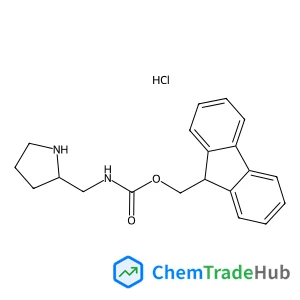
(S)-(9H-Fluoren-9-yl)methyl (pyrrolidin-2-ylmethyl)carbamate hydrochloride
CAS番号:
1217813-15-4
分子式:
C20H23ClN2O2

おすすめサプライヤー





免責事項
このページに表示される学術雑誌情報は、参考および研究目的のみを目的としています。当社は雑誌出版社とは提携しておらず、投稿の取り扱いも行っておりません。出版に関するお問い合わせは、各雑誌出版社に直接ご連絡ください。
表示されている情報に誤りがある場合は、support@chemtradehub.com までご連絡ください。迅速に確認し、対応いたします。