












![2-Methyl-2-propanyl {3-[4-(4,4,5,5-tetramethyl-1,3,2-dioxaborolan-2-yl)phenyl]-3-oxetanyl}carbamate structure](https://static.chemtradehub.com/structs/127/1279090-25-3-1b84.webp "2-Methyl-2-propanyl {3-[4-(4,4,5,5-tetramethyl-1,3,2-dioxaborolan-2-yl)phenyl]-3-oxetanyl}carbamate structure")
Quantum-trajectory Monte Carlo method for study of electron–crystal interaction in STEM
文献情報
出版日
2015-06-02
DOI
10.1039/C5CP02300A
インパクトファクター
3.676
著者
Z. Ruan, R. G. Zeng, Y. Ming, M. Zhang, B. Da, S. F. Mao, Z. J. Ding
原文を見る
要旨
In this paper, a novel quantum-trajectory Monte Carlo simulation method is developed to study electron beam interaction with a crystalline solid for application to electron microscopy and spectroscopy. The method combines the Bohmian quantum trajectory method, which treats electron elastic scattering and diffraction in a crystal, with a Monte Carlo sampling of electron inelastic scattering events along quantum trajectory paths. We study in this work the electron scattering and secondary electron generation process in crystals for a focused incident electron beam, leading to understanding of the imaging mechanism behind the atomic resolution secondary electron image that has been recently achieved in experiment with a scanning transmission electron microscope. According to this method, the Bohmian quantum trajectories have been calculated at first through a wave function obtained via a numerical solution of the time-dependent Schrödinger equation with a multislice method. The impact parameter-dependent inner-shell excitation cross section then enables the Monte Carlo sampling of ionization events produced by incident electron trajectories travelling along atom columns for excitation of high energy knock-on secondary electrons. Following cascade production, transportation and emission processes of true secondary electrons of very low energies are traced by a conventional Monte Carlo simulation method to present image signals. Comparison of the simulated image for a Si(110) crystal with the experimental image indicates that the dominant mechanism of atomic resolution of secondary electron image is the inner-shell ionization events generated by a high-energy electron beam.
関連文献
An efficient particulate photocatalyst for overall water splitting based on scandium and magnesium co-doped strontium titanate
Riku Okamoto, Akira Kimura, Yuhi Nakayasu, Akira Yamakata, Ryota Tomizawa, Taizo Masuda, Koichiro Nakatani
2023-11-29
Paper
DOI: 10.1039/D3SE01408H
Breaking the size constraint for nano cages using annular patchy particles
Vikki Anand Varma, Simmie Jaglan, Mohd Yasir Khan, Sujin B. Babu
2023-12-07
Paper
DOI: 10.1039/D3CP03681B
Trapping and thermal migration of the first- and second-row atoms in Ar, Kr and Xe crystals
Iosif V. Leibin, Dmitry S. Bezrukov, Alexei A. Buchachenko
2023-11-15
Paper
DOI: 10.1039/D3CP04178F
Giant exchange bias field above room temperature in perovskite YbCr1−xFexO3 (x = 0.6–0.9)
Kang Zhao, Dao Wang, Sajjad Ur Rehman
2023-12-06
Paper
DOI: 10.1039/D3CP04883G
The single metal atom (Ni, Pd, Pt) anchored on defective hexagonal boron nitride for oxidative desulfurization
Naixia Lv, Hongshun Ran, Jinrui Zhang, Jie Yin, Yuan Zhang, Hongping Li, Linhua Zhu
2023-12-19
Paper
DOI: 10.1039/D3CP04963A
Correction: Rational design and recent advancements of additives engineering in ASnI3 tin-based perovskite solar cells: insights from experiments and computational
Novrita Idayanti
2024-01-12
Correction
DOI: 10.1039/D4SE90004A
Growth methods' effect on the physical characteristics of CsPbBr3 single crystal
Mohamed Ben Bechir, Faisal Alresheedi
2023-12-05
Paper
DOI: 10.1039/D3CP04645A
Exploring the potential of cobalt hydroxide and its derivatives as a cost-effective and abundant alternative to noble metal electrocatalysts in oxygen evolution reactions: a review
Umair Shamraiz, Abdul Majeed, Bareera Raza, Noor ul Ain, Amin Badshah
2023-12-07
Review Article
DOI: 10.1039/D3SE00942D
Understanding the “Berg limit”: the 65° contact angle as the universal adhesion threshold of biomatter
Matej Kanduč, Emanuel Schneck, Roland R. Netz
2023-12-12
Perspective
DOI: 10.1039/D3CP05084J
Predicting nearest neighbor free energies of modified RNA with LIE: results for pseudouridine and N1-methylpseudouridine within RNA duplexes
Nivedita Dutta, Joanna Sarzynska, Indrajit Deb, Ansuman Lahiri
2023-11-24
Paper
DOI: 10.1039/D3CP02442C
こちらもおすすめ
化合物よくある質問
2-メトキシ-4-(メチルスルフィニル)アミンの主な用途は何ですか?
2-メトキシ-4-(メチルスルフィニル)アミンは、主に医薬品および農薬の製造に使用されます。また、合成化学の一部として研究用材料としても利用されます。
41608-73-52-Methoxy-4-(methyls...
118684-13-24-(Bromomethyl)-3-me...
化合物よくある質問
4,6-二氯-N-甲基ピラミジンアミンの代替品はありますか?
代替品としては、4,6-二クロロピラミジンアミンや他のピラミジン系化合物が考えられます。ただし、目的と用途によって最適な代替品は異なります。
10397-15-64,6-Dichloro-N-methy...
化合物よくある質問
6-氯-4-甲基-1H-吲哚を含む廃棄物はどのように処理すべきですか?
6-氯-4-甲基-1H-吲哚の廃棄物は、適切な容器に収集し、密閉して保管します。温度は常温、湿度は低く、直射日光を避けて保管することを推奨します。廃棄処理は専門...
885520-84-36-chloro-4-methyl-1H...
化合物よくある質問
2-フローユロ-4-(トリフルオロメチル)ベンゾイドについて「に適用される法規ガイドラインは何ですか」
2-フローユロ-4-(トリフルオロメチル)ベンゾイドのCAS番号は207974-08-1です。この化合物はGHS分類で毒性物質と有害な反応物質として分類されます...
207974-08-1[2-Fluoro-4-(trifluo...
化合物よくある質問
4-ニトロフェニルN-[(ベンゼルオキシルカーボンイル]グリシングリシングリシン酸はどのように保存すればよいですか?
4-ニトロフェニルN-[(ベンゼルオキシルカーボンイル]グリシングリシングリシン酸は、室温で暗所に保管し、乾燥した環境で保存することを推奨します。容器は密閉性の...
19811-64-44-Nitrophenyl N-[(be...
化合物よくある質問
イソデスロラタドリンの代替品はありますか?
イソデスロラタドリンの代替品としては、デスロラタドリンや他の抗ヒスタミン薬が挙げられます。具体的には、デスロラタドリン、ラセカミド、フェルタドリンなどが、症状や...
183198-49-4Iso Desloratadine
化合物よくある質問
5-甲氧基-1,2,3,4-四氢异喹啉盐酸盐はどのように合成されますか?
5-甲氧基-1,2,3,4-四氢异喹啉盐酸盐の一般的な合成方法は、メタノール中で5-メトキシ-1,2,3,4-四ヒュドロイソキシンを塩酸で塩化します。この反応で...
103030-69-95-Methoxy-1,2,3,4-te...
化合物よくある質問
4-アミノ-5-メトキシ-2-トルエンサルホニック酸についての法規ガイドラインは何ですか?
CAS番号6471-78-9の4-アミノ-5-メトキシ-2-トルエンサルホニック酸は、GHS分類では corrosive(腐食性)と識別されます。EUのREAC...
6471-78-94-Amino-5-Methoxy-2-...
化合物よくある質問
甲基孕酮を取り扱う際の実験室安全事項は何ですか?
甲基孕酮の取り扱いは、PPE(個人保護具)の使用が必要な重要な安全事項を伴います。防塵マスク、ゴーグル、手袋を着用することが推奨されます。ドラフトチャンバーを使...
204063-33-22-[(Diphenylmethyl)a...
掲載誌
Physical Chemistry Chemical Physics

CiteScore:
5.5
自己引用率:
10.3%
年間論文数:
3036
Physical Chemistry Chemical Physics (PCCP) is an international journal co-owned by 19 physical chemistry and physics societies from around the world. This journal publishes original, cutting-edge research in physical chemistry, chemical physics and biophysical chemistry. To be suitable for publication in PCCP, articles must include significant innovation and/or insight into physical chemistry; this is the most important criterion that reviewers and Editors will judge against when evaluating submissions. The journal has a broad scope and welcomes contributions spanning experiment, theory, computation and data science. Topical coverage includes spectroscopy, dynamics, kinetics, statistical mechanics, thermodynamics, electrochemistry, catalysis, surface science, quantum mechanics, quantum computing and machine learning. Interdisciplinary research areas such as polymers and soft matter, materials, nanoscience, energy, surfaces/interfaces, and biophysical chemistry are welcomed if they demonstrate significant innovation and/or insight into physical chemistry. Joined experimental/theoretical studies are particularly appreciated when complementary and based on up-to-date approaches.
おすすめ化合物
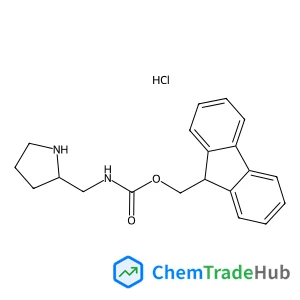
(S)-(9H-Fluoren-9-yl)methyl (pyrrolidin-2-ylmethyl)carbamate hydrochloride
CAS番号:
1217813-15-4
分子式:
C20H23ClN2O2
![2-Methylbenzo[h]quinoline structure](https://static.chemtradehub.com/structs/605/605-88-9-ac43.webp "2-Methylbenzo[h]quinoline structure")

おすすめサプライヤー






免責事項
このページに表示される学術雑誌情報は、参考および研究目的のみを目的としています。当社は雑誌出版社とは提携しておらず、投稿の取り扱いも行っておりません。出版に関するお問い合わせは、各雑誌出版社に直接ご連絡ください。
表示されている情報に誤りがある場合は、support@chemtradehub.com までご連絡ください。迅速に確認し、対応いたします。