












Bond angle variations in XH3 [X = N, P, As, Sb, Bi]: the critical role of Rydberg orbitals exposed using a diabatic state model
文献情報
出版日
2015-07-08
DOI
10.1039/C5CP02237A
インパクトファクター
3.676
著者
Ross H. McKenzie
原文を見る
要旨
Ammonia adopts sp3 hybridization (HNH bond angle 108°) whereas the other members of the XH3 series PH3, AsH3, SbH3, and BiH3 instead prefer octahedral bond angles of 90–93°. We use a recently developed general diabatic description for closed-shell chemical reactions, expanded to include Rydberg states, to understand the geometry, spectroscopy and inversion reaction profile of these molecules, fitting its parameters to results from Equation of Motion Coupled-Cluster Singles and Doubles (EOM-CCSD) calculations using large basis sets. Bands observed in the one-photon absorption spectrum of NH3 at 18.3 eV, 30 eV, and 33 eV are reassigned from Rydberg (formally forbidden) double excitations to valence single-excitation resonances. Critical to the analysis is the inclusion of all three electronic states in which two electrons are placed in the lone-pair orbital n and/or the symmetric valence σ* antibonding orbital. An illustrative effective two-state diabatic model is also developed containing just three parameters: the resonance energy driving the high-symmetry planar structure, the reorganization energy opposing it, and HXH bond angle in the absence of resonance. The diabatic orbitals are identified as sp hybrids on X; for the radical cations XH3+ for which only 2 electronic states and one conical intersection are involved, the principle of orbital following dictates that the bond angle in the absence of resonance is acos(−1/5) = 101.5°. The multiple states and associated multiple conical intersection seams controlling the ground-state structure of XH3 renormalize this to acos[3 sin2(21/2atan(1/2))/2 − 1/2] = 86.7°. Depending on the ratio of the resonance energy to the reorganization energy, equilibrium angles can vary from these limiting values up to 120°, and the anomalously large bond angle in NH3 arises because the resonance energy is unexpectedly large. This occurs as the ordering of the lowest Rydberg orbital and the σ* orbital swap, allowing Rydbergization to compresses σ* to significantly increase the resonance energy. Failure of both the traditional and revised versions of the valence-shell electron-pair repulsion (VSEPR) theory to explain the ground-state structures in simple terms is attributed to exclusion of this key physical interaction.
関連文献
Syntheses and structures of mono-, di- and tetranuclear rhodium or iridium complexes of thiacalix[4]arene derivatives
Kenji Hirata, Toshiaki Suzuki, Ai Noya, Izuru Takei, Masanobu Hidai
2005-06-15
Communication
DOI: 10.1039/B502999F
New generation ionic liquids: cations derived from amino acids
Guo-hong Tao, Ling He, Ning Sun, Yuan Kou
2005-06-09
Communication
DOI: 10.1039/B504256A
Novel poly(methimazolyl)borate complexes of niobium(v) and tantalum(v)
Anthony F. Hill, Matthew K. Smith
2005-02-09
Communication
DOI: 10.1039/B415852K
Rich chemistry of nitroso compounds
Hisashi Yamamoto, Norie Momiyama
2005-06-24
Feature Article
DOI: 10.1039/B503212C
Eu8(NCN)5−δI6+2δ (δ = 0.05): a novel rare-earth carbodiimide iodide containing oligomeric tritetrahedral Eu8 clusters
Wuping Liao, Boniface P. T. Fokwa, Richard Dronskowski
2005-06-09
Communication
DOI: 10.1039/B504235F
Fabrication of reusable sensor for detection of Cu2+ in an aqueous solution using a self-assembled monolayer with surface plasmon resonance spectroscopy
Taewook Kang, Surin Hong, Jungwoo Moon, Seogil Oh, Jongheop Yi
2005-06-15
Communication
DOI: 10.1039/B504064G
Acyclic amino acid-catalyzed direct asymmetric aldol reactions: alanine, the simplest stereoselective organocatalyst
Armando Córdova, Weibiao Zou, Ismail Ibrahem, Efraim Reyes, Magnus Engqvist, Wei-Wei Liao
2005-06-21
Communication
DOI: 10.1039/B507968N
Multiple morphologies from amphiphilic graft copolymers based on chitooligosaccharides as backbones and polycaprolactones as branches
Caiqi Wang, Guangtao Li, Ruirong Guo
2005-05-31
Communication
DOI: 10.1039/B504428F
Metal nanoparticle—conjugated polymer nanocomposites
Bryan C. Sih, Michael O. Wolf
2005-05-18
Feature Article
DOI: 10.1039/B501448D
こちらもおすすめ
化合物よくある質問
1-{3-[5-(エチルカルボンイル)-2,4-ジメチル-1H-ピロロール-3-基]プロパニル}ピペリジン-4-カルボン酸について、適用される法規ガイドラインは何ですか?
この化合物はCAS番号1142209-81-1であり、GHS分類では corrosive (腐食性物質) と classified (分類物質) として指定され...
1142209-81-11-{3-[5-(Ethoxycarbo...
化合物よくある質問
2,2-二氟-1,3-ベンゾジオキサン-5-カルボキシlic酸とは何ですか?
2,2-二氟-1,3-ベンゾジオキサン-5-カルボキシlic酸は、CAS番号656-46-2の化合物で、化学式はC8H4F2O4です。この化合物は白色の結晶性粉...
656-46-22,2-Difluoro-1,3-ben...
化合物よくある質問
8-氯-4-色原酮の代替品はありますか?
8-氯-4-色原酮(CAS番号: 49701-11-3)の代替品には、他の色原酮類似物や、構造が似ている化合物があります。例えば、8-メチル-4-色原酮や、他の...
49701-11-38-Chloro-2,3-dihydro...
化合物よくある質問
エチル6,6-ジメチル-4,5,6,7-テトラヒドロ-1H-インドアゼー-3-カルボキシレートとは何ですか?
エチル6,6-ジメチル-4,5,6,7-テトラヒドロ-1H-インドアゼー-3-カルボキシレートは、CAS番号1233243-56-5を有する化合物です。これは有...
1233243-56-5Ethyl 6,6-dimethyl-4...
化合物よくある質問
4-叔丁基-6-氯-嘧啶に適用される法規ガイドラインは何ですか?
4-叔丁基-6-氯-嘧啶はCAS番号3435-24-3で、GHS分類では毒性物質とみなし、GHSの危険性分類が適用されます。REACH規則では登録が必要で、Eu...
3435-24-34-Tert-butyl-6-chlor...
化合物よくある質問
維库溴铵杂质Bはどのように合成されますか?
維库溴铵杂质Bは、アンドロステンデンから始まり、一連の合成反応、包括的な選択性と高い収率で合成されます。具体的には、ブロミド化、酸化、ジマーゼ反応、アミド化など...
50587-95-6(2beta,3alpha,5alpha...
化合物よくある質問
2-(4-氟苄基)-吡咯烷の物理化学的性質は何ですか?
CAS番号350017-04-8の2-(4-氟苄基)-吡咯烷は、結晶性の白色粉末です。分子量は199.17 g/molで、水に溶けにくいです。化学反応では比較的...
350017-04-82-(4-Fluorobenzyl)py...
化合物よくある質問
3-喹啉甲醛(2-チロール-8-エチル)は安全ですか?
3-喹啉甲醛(2-チロール-8-エチル)は一定の毒性を持つため、取扱には注意が必要です。使用する際は適切な防護具を着用し、密閉容器で保管・搬送し、直接的な接触を...
335196-05-92-Chloro-8-ethyl-3-q...
化合物よくある質問
エチル3-(ヒドロキシメチル)-1H-ピロール-2-カルボキシレートはどのように保存すればよいですか?
エチル3-(ヒドロキシメチル)-1H-ピロール-2-カルボキシレートは、室温(25℃)以下で保存し、直射日光を避け、乾燥した環境で保管することが推奨されます。ま...
75448-69-0Ethyl 3-(hydroxymeth...
119410-05-88-Chloro-11-(4-piper...
掲載誌
Physical Chemistry Chemical Physics

CiteScore:
5.5
自己引用率:
10.3%
年間論文数:
3036
Physical Chemistry Chemical Physics (PCCP) is an international journal co-owned by 19 physical chemistry and physics societies from around the world. This journal publishes original, cutting-edge research in physical chemistry, chemical physics and biophysical chemistry. To be suitable for publication in PCCP, articles must include significant innovation and/or insight into physical chemistry; this is the most important criterion that reviewers and Editors will judge against when evaluating submissions. The journal has a broad scope and welcomes contributions spanning experiment, theory, computation and data science. Topical coverage includes spectroscopy, dynamics, kinetics, statistical mechanics, thermodynamics, electrochemistry, catalysis, surface science, quantum mechanics, quantum computing and machine learning. Interdisciplinary research areas such as polymers and soft matter, materials, nanoscience, energy, surfaces/interfaces, and biophysical chemistry are welcomed if they demonstrate significant innovation and/or insight into physical chemistry. Joined experimental/theoretical studies are particularly appreciated when complementary and based on up-to-date approaches.
おすすめ化合物
![[2',6'-bis(propan-2-yloxy)-[1,1'-biphenyl]-3-yl]dicyclohexylphosphane structure](https://static.chemtradehub.com/structs/787/787618-22-8-dda2.webp "[2',6'-bis(propan-2-yloxy)-[1,1'-biphenyl]-3-yl]dicyclohexylphosphane structure")
[2',6'-bis(propan-2-yloxy)-[1,1'-biphenyl]-3-yl]dicyclohexylphosphane
CAS番号:
787618-22-8
分子式:
C30H43O2P

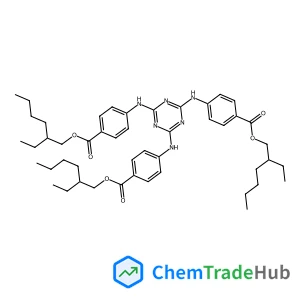
Tris(2-ethylhexyl) 4,4',4''-(1,3,5-triazine-2,4,6-triyltriimino)tribenzoate
CAS番号:
88122-99-0
分子式:
C48H66N6O6
おすすめサプライヤー






免責事項
このページに表示される学術雑誌情報は、参考および研究目的のみを目的としています。当社は雑誌出版社とは提携しておらず、投稿の取り扱いも行っておりません。出版に関するお問い合わせは、各雑誌出版社に直接ご連絡ください。
表示されている情報に誤りがある場合は、support@chemtradehub.com までご連絡ください。迅速に確認し、対応いたします。