


Efficient dye regeneration at low driving force achieved in triphenylamine dye LEG4 and TEMPO redox mediator based dye-sensitized solar cells
文献情報
出版日
2015-05-12
DOI
10.1039/C5CP01880C
インパクトファクター
3.676
著者
Wenxing Yang, Yan Hao, Gerrit Boschloo
原文を見る
要旨
Minimizing the driving force required for the regeneration of oxidized dyes using redox mediators in an electrolyte is essential to further improve the open-circuit voltage and efficiency of dye-sensitized solar cells (DSSCs). Appropriate combinations of redox mediators and dye molecules should be explored to achieve this goal. Herein, we present a triphenylamine dye, LEG4, in combination with a TEMPO-based electrolyte in acetonitrile (E0 = 0.89 V vs. NHE), reaching an efficiency of up to 5.4% under one sun illumination and 40% performance improvement compared to the previously and widely used indoline dye D149. The origin of this improvement was found to be the increased dye regeneration efficiency of LEG4 using the TEMPO redox mediator, which regenerated more than 80% of the oxidized dye with a driving force of only ∼0.2 eV. Detailed mechanistic studies further revealed that in addition to electron recombination to oxidized dyes, recombination of electrons from the conducting substrate and the mesoporous TiO2 film to the TEMPO+ redox species in the electrolyte accounts for the reduced short circuit current, compared to the state-of-the-art cobalt tris(bipyridine) electrolyte system. The diffusion length of the TEMPO-electrolyte based DSSCs was determined to be ∼0.5 μm, which is smaller than the ∼2.8 μm found for cobalt-electrolyte based DSSCs. These results show the advantages of using LEG4 as a sensitizer, compared to previously record indoline dyes, in combination with a TEMPO-based electrolyte. The low driving force for efficient dye regeneration presented by these results shows the potential to further improve the power conversion efficiency (PCE) of DSSCs by utilizing redox couples and dyes with a minimal need of driving force for high regeneration yields.
おすすめジャーナル

Journal of the American Chemical Society

Canadian Metallurgical Quarterly

Corrosion Science

Advances in Colloid and Interface Science

Chemistry of Heterocyclic Compounds

Anti-Corrosion Methods and Materials

Australian Journal of Chemistry

Bulletin of the Chemical Society of Japan

Journal of the Chinese Chemical Society

Chemical & Pharmaceutical Bulletin
関連文献
Stepwise deprotonation of truxene: structures, metal complexation, and charge-dependent optical properties
Yumeng Guo, Herdya S. Torchon, Yikun Zhu, Zheng Wei, Zhenyi Zhang, Haixiang Han, Marina A. Petrukhina, Zheng Zhou
2023-10-31
Edge Article
DOI: 10.1039/D3SC04885C
Photochemical halogen-bonding assisted carbothiophosphorylation reactions of alkenyl and 1,3-dienyl bromides
Helena F. Piedra, Victoria Gebler, Carlos Valdés, Manuel Plaza
2023-10-30
Edge Article
DOI: 10.1039/D3SC05263J
Reversible Cl/Cl− redox in a spinel Mn3O4 electrode
Sean K. Sandstrom, Qiuyao Li, Yiming Sui, Mason Lyons, Chun-Wai Chang, Rui Zhang, Heng Jiang, Mingliang Yu, David Hoang, William F. Stickle, Huolin L. Xin, Zhenxing Feng, Xiulei Ji
2023-10-24
Edge Article
DOI: 10.1039/D3SC04545E
Recent advances in Pd-catalyzed asymmetric cyclization reactions
Quanpu Wang, Chao Fang
2023-12-18
Review Article
DOI: 10.1039/D3CS00489A
Cyclic voltammetry and chronoamperometry: mechanistic tools for organic electrosynthesis
Mohammad Rafiee, Dylan J. Abrams, Luana Cardinale, Zachary Goss, Shannon S. Stahl
2023-12-05
Tutorial Review
DOI: 10.1039/D2CS00706A
Advances in glycoside and oligosaccharide synthesis
Conor J. Crawford
2023-10-13
Review Article
DOI: 10.1039/D3CS00321C
Bio-based hyperbranched epoxy resins: synthesis and recycling
Jiang Li, Dan Li, Yunke Ma, Shucun Zhou, Yu Wang, Daohong Zhang
2023-12-18
Review Article
DOI: 10.1039/D3CS00713H
Biocatalytic reductive aminations with NAD(P)H-dependent enzymes: enzyme discovery, engineering and synthetic applications
Dameng Yang, Nicholas J. Turner
2023-12-07
Review Article
DOI: 10.1039/D3CS00391D
Stimuli-responsive synthetic helical polymers
María Lago-Silva, Manuel Fernández-Míguez, Rafael Rodríguez, Emilio Quiñoá, Félix Freire
2023-12-18
Review Article
DOI: 10.1039/D3CS00952A
こちらもおすすめ
化合物よくある質問
カルボニル基が付いた5-氰基-1-{[(2-メチル-2-プロpanyl)オキシ]カーボンイル}1H-吲哚-2-イリド-2-ボリン酸はどのように保存すればよいですか?
カルボニル基が付いた5-氰基-1-{[(2-メチル-2-プロpanyl)オキシ]カーボンイル}1H-吲哚-2-イリド-2-ボリン酸は、直射日光を避けて室温(15...
475102-15-9(5-Cyano-1-{[(2-meth...
化合物よくある質問
tert-ブチル2-クロロメチルピリジン-3-基炭酸エステルの市場動向や研究トレンドはどうですか?
この化合物は合成化学分野において、特にピリジン化合物の合成や改良に用いられます。最近の研究では、ピリジン化合物の新規合成法や特性の改良が注目されています。市場動...
1203498-98-9tert-Butyl 2-chloro-...
化合物よくある質問
聚二季戊四醇六丙烯酸酯はどの業界で使用されていますか?
聚二季戊四醇六丙烯酸酯は、医薬品、ポリマー、センサー、半導体などの業界で広く使用されています。特にポリマー業界では硬化剤として、医薬分野では医療機器の製造に使用...
29570-58-93-(Acryloyloxy)-2-({...
化合物よくある質問
1-氯-5-硝基异喹啉の市場動向や研究トレンドはどうですか?
1-氯-5-硝基异喹啉は、薬理学や合成化学の研究分野で注目されています。市場動向としては、その生物学的な活性や合成可能性を評価する研究が増えています。また、代替...
58142-97-51-Chloro-5-nitroisoq...
化合物よくある質問
2-チロール-5-メチルスルフェニル-3-trifルオルメチルベンゼンはどのように合成されますか?
2-チロール-5-メチルスルフェニル-3-trifルオルメチルベンゼンは、トリフルオロメチル化反応と硫化反応を経て合成されます。通常、トリフルオロメチル化剤と硫...
957066-04-51-Chloro-4-(methylsu...
化合物よくある質問
p-トールイルマグネシウムブロミドの物理化学的性質は何ですか?
p-トールイルマグネシウムブロミドのCAS番号は4294-57-9です。この化合物は白色の結晶性粉末で、分子量は204.32です。溶剤中で良好に溶解しますが、水...
4294-57-9p-Tolylmagnesium bro...
化合物よくある質問
1-(5-甲基-2-硫化素基)プロパン-1-酮の市場動向や研究トレンドはどうですか?
1-(5-甲基-2-硫化素基)プロパン-1-酮の市場動向は、化学産業全体の需要に影響を受けますが、最近では pharmaceutical 分野での応用が注目され...
59303-13-81-(5-Methyl-2-thieny...
化合物よくある質問
十一碳烯酰甘氨酸を取り扱う際の実験室安全事項は何ですか?
十一碳烯酰甘氨酸は吸入や皮膚から吸収されることがあり、取り扱う際には防塵マスクと手袋を使用してください。ドラフトチャンバーを用いて漏洩を処理し、適切なSDS(S...
54301-26-7N-10-Undecenoylglyci...
化合物よくある質問
1H,1H-全氟-3,6-二氧杂葵-1-醇を取り扱う際の実験室安全事項は何ですか?
この化合物は吸入や皮膚吸収による毒性があるため、防塵マスク、ゴーグル、防護手袋を使用する必要があります。ドラフトチャンバーでの操作が必要です。漏洩時には即座に換...
152914-73-32,2-Difluoro-2-[1,1,...
化合物よくある質問
3-(4-(フルオロメチルオキシ)フェニル)-1,2,4-オキサジアゾール-5-カルボハイドライドは安全ですか?
安全性は化合物の使用方法によります。直接的な毒性は報告されていませんが、吸入や皮膚接触には注意が必要です。適切な防護服を着用し、換気を図ることを推奨します。
883028-82-83-(4-(Trifluorometho...
掲載誌
Physical Chemistry Chemical Physics

CiteScore:
5.5
自己引用率:
10.3%
年間論文数:
3036
Physical Chemistry Chemical Physics (PCCP) is an international journal co-owned by 19 physical chemistry and physics societies from around the world. This journal publishes original, cutting-edge research in physical chemistry, chemical physics and biophysical chemistry. To be suitable for publication in PCCP, articles must include significant innovation and/or insight into physical chemistry; this is the most important criterion that reviewers and Editors will judge against when evaluating submissions. The journal has a broad scope and welcomes contributions spanning experiment, theory, computation and data science. Topical coverage includes spectroscopy, dynamics, kinetics, statistical mechanics, thermodynamics, electrochemistry, catalysis, surface science, quantum mechanics, quantum computing and machine learning. Interdisciplinary research areas such as polymers and soft matter, materials, nanoscience, energy, surfaces/interfaces, and biophysical chemistry are welcomed if they demonstrate significant innovation and/or insight into physical chemistry. Joined experimental/theoretical studies are particularly appreciated when complementary and based on up-to-date approaches.
おすすめ化合物
![1-[6-(1H-Imidazol-1-yl)-3-pyridinyl]methanamine structure](https://static.chemtradehub.com/structs/914/914637-08-4-8825.webp "1-[6-(1H-Imidazol-1-yl)-3-pyridinyl]methanamine structure")
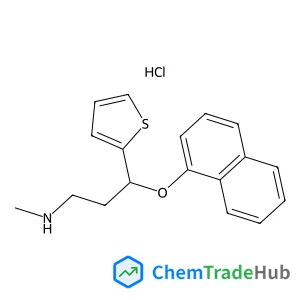
N-Methyl-3-(1-naphthyloxy)-3-(2-thienyl)-1-propanamine hydrochloride (1:1)
CAS番号:
1188266-11-6
分子式:
C18H20ClNOS
おすすめサプライヤー





免責事項
このページに表示される学術雑誌情報は、参考および研究目的のみを目的としています。当社は雑誌出版社とは提携しておらず、投稿の取り扱いも行っておりません。出版に関するお問い合わせは、各雑誌出版社に直接ご連絡ください。
表示されている情報に誤りがある場合は、support@chemtradehub.com までご連絡ください。迅速に確認し、対応いたします。