













Analysis of the structure of nanocomposites of triglyceride platelets and DNA
文献情報
出版日
2015-06-12
DOI
10.1039/C5CP01241D
インパクトファクター
3.676
著者
Martin Schmiele, Charlotte Knittel, Tobias Unruh, Sebastian Busch, Humphrey Morhenn, Peter Boesecke, Sérgio S. Funari, Ralf Schweins, Peter Lindner, Martin Westermann, Frank Steiniger
原文を見る
要旨
DNA-complexes with platelet-like, cationically modified lipid nanoparticles (cLNPs) are studied with regard to the formation of nanocomposite structures with a sandwich-like arrangement of the DNA and platelets. For this purpose suspensions of platelet-like triglyceride nanocrystals, stabilized by a mixture of two nonionic (lecithin plus polysorbate 80 or poloxamer 188) and one cationic stabilizer dimethyldioctadecylammonium (DODAB), are used. The structure of the platelets in the native suspensions and their DNA-complexes, ranging from the sub-nano to the micron scale, is investigated with small- and wide-angle scattering (SAXS, SANS, WAXS), calorimetry, photon correlation spectroscopy, transmission electron microscopy and computer simulations. The appearance of strong, lamellarly ordered peaks in the SAXS patterns of the DNA-complexes suggests a stacked arrangement of the nanocrystals, with the DNA being partially condensed between the platelets. This finding is supported with computer simulated small-angle scattering patterns of nanocrystal stacks, which can reproduce the measured small-angle scattering patterns on an absolute scale. The influence of the choice of the nonionic stabilizers and the amount of the cationic stabilizer DODAB on the structure of the native suspensions and the inner structure of their DNA-complexes is studied, too. Using high amounts of DODAB, lecithins with saturated acyl chains and polysorbate 80 instead of poloxamer 188 produces thinner nanocrystals, and thus decreases their repeat distances in the nanocomposites. Such nanocomposites could be of interest as DNA carriers, where the triglyceride platelets protect the sandwiched DNA from degradation.
関連文献
Formation of O adatom pairs and charge transfer upon O2 dissociation on reduced TiO2(110)
Yingge Du, Nathaniel A. Deskins, Zhenrong Zhang, Zdenek Dohnalek, Michel Dupuis, Igor Lyubinetsky
2010-03-25
Paper
DOI: 10.1039/C000250J
Möbius basket molecule: structure and properties
Yin-Feng Wang, Zhuo Li, Ying Li, Zhi-Ru Li, Zong-Jun Li, Di Wu, Fang Ma, Chia-Chung Sun
2010-06-08
Paper
DOI: 10.1039/B927344A
Ionic liquids and solids with paramagnetic anions‡
James F. Wishart
2010-06-18
Paper
DOI: 10.1039/B920652N
Highly ordered aluminium-planted mesoporous silica as active catalyst for Biginelli reaction and formyl C–H insertion reaction with diazoester
Hiroaki Murata, Haruro Ishitani, Masakazu Iwamoto
2010-10-12
Communication
DOI: 10.1039/C0CP00565G
Gap state formation by interfacial interaction between Al and 8-hydroxyquinolatolithium
Young Mi Lee, Yongsup Park
2010-07-07
Paper
DOI: 10.1039/C000282H
A facile chemical approach for preparing a SERS active silver substrate
Cheng Yang, Yu-Tao Xie, Matthew M. F. Yuen, Xiaomin Xiong, C. P. Wong
2010-09-30
Communication
DOI: 10.1039/C0CP00414F
Stability and chemisorption properties of ultrathin TiOx/Pt(111) films and Au/TiOx/Pt(111) model catalysts in reactive atmospheres
Luca Artiglia, Thomas Diemant, Heinrich Hartmann, Joachim Bansmann, R. Jürgen Behm, Gaetano Granozzi
2010-05-11
Paper
DOI: 10.1039/C000884B
The effect of cationic gemini surfactants upon lipidmembranes. An experimental and molecular dynamics simulation study
Eduardo F. Marques, Amália S. Jurado, Alberto A. C. C. Pais
2010-10-04
Paper
DOI: 10.1039/C0CP00950D
Ab initio electron correlated studies on the intracluster reaction of NO+(H2O)n → H3O+(H2O)n−2 (HONO) (n = 4 and 5)
Masataka Nagaoka
2010-11-23
Paper
DOI: 10.1039/C0CP01077D
こちらもおすすめ
化合物よくある質問
2-メトキシ-4-(メチルスルフィニル)アミンの主な用途は何ですか?
2-メトキシ-4-(メチルスルフィニル)アミンは、主に医薬品および農薬の製造に使用されます。また、合成化学の一部として研究用材料としても利用されます。
41608-73-52-Methoxy-4-(methyls...
118684-13-24-(Bromomethyl)-3-me...
化合物よくある質問
4,6-二氯-N-甲基ピラミジンアミンの代替品はありますか?
代替品としては、4,6-二クロロピラミジンアミンや他のピラミジン系化合物が考えられます。ただし、目的と用途によって最適な代替品は異なります。
10397-15-64,6-Dichloro-N-methy...
化合物よくある質問
6-氯-4-甲基-1H-吲哚を含む廃棄物はどのように処理すべきですか?
6-氯-4-甲基-1H-吲哚の廃棄物は、適切な容器に収集し、密閉して保管します。温度は常温、湿度は低く、直射日光を避けて保管することを推奨します。廃棄処理は専門...
885520-84-36-chloro-4-methyl-1H...
化合物よくある質問
2-フローユロ-4-(トリフルオロメチル)ベンゾイドについて「に適用される法規ガイドラインは何ですか」
2-フローユロ-4-(トリフルオロメチル)ベンゾイドのCAS番号は207974-08-1です。この化合物はGHS分類で毒性物質と有害な反応物質として分類されます...
207974-08-1[2-Fluoro-4-(trifluo...
化合物よくある質問
4-ニトロフェニルN-[(ベンゼルオキシルカーボンイル]グリシングリシングリシン酸はどのように保存すればよいですか?
4-ニトロフェニルN-[(ベンゼルオキシルカーボンイル]グリシングリシングリシン酸は、室温で暗所に保管し、乾燥した環境で保存することを推奨します。容器は密閉性の...
19811-64-44-Nitrophenyl N-[(be...
化合物よくある質問
イソデスロラタドリンの代替品はありますか?
イソデスロラタドリンの代替品としては、デスロラタドリンや他の抗ヒスタミン薬が挙げられます。具体的には、デスロラタドリン、ラセカミド、フェルタドリンなどが、症状や...
183198-49-4Iso Desloratadine
化合物よくある質問
5-甲氧基-1,2,3,4-四氢异喹啉盐酸盐はどのように合成されますか?
5-甲氧基-1,2,3,4-四氢异喹啉盐酸盐の一般的な合成方法は、メタノール中で5-メトキシ-1,2,3,4-四ヒュドロイソキシンを塩酸で塩化します。この反応で...
103030-69-95-Methoxy-1,2,3,4-te...
化合物よくある質問
4-アミノ-5-メトキシ-2-トルエンサルホニック酸についての法規ガイドラインは何ですか?
CAS番号6471-78-9の4-アミノ-5-メトキシ-2-トルエンサルホニック酸は、GHS分類では corrosive(腐食性)と識別されます。EUのREAC...
6471-78-94-Amino-5-Methoxy-2-...
化合物よくある質問
甲基孕酮を取り扱う際の実験室安全事項は何ですか?
甲基孕酮の取り扱いは、PPE(個人保護具)の使用が必要な重要な安全事項を伴います。防塵マスク、ゴーグル、手袋を着用することが推奨されます。ドラフトチャンバーを使...
204063-33-22-[(Diphenylmethyl)a...
掲載誌
Physical Chemistry Chemical Physics

CiteScore:
5.5
自己引用率:
10.3%
年間論文数:
3036
Physical Chemistry Chemical Physics (PCCP) is an international journal co-owned by 19 physical chemistry and physics societies from around the world. This journal publishes original, cutting-edge research in physical chemistry, chemical physics and biophysical chemistry. To be suitable for publication in PCCP, articles must include significant innovation and/or insight into physical chemistry; this is the most important criterion that reviewers and Editors will judge against when evaluating submissions. The journal has a broad scope and welcomes contributions spanning experiment, theory, computation and data science. Topical coverage includes spectroscopy, dynamics, kinetics, statistical mechanics, thermodynamics, electrochemistry, catalysis, surface science, quantum mechanics, quantum computing and machine learning. Interdisciplinary research areas such as polymers and soft matter, materials, nanoscience, energy, surfaces/interfaces, and biophysical chemistry are welcomed if they demonstrate significant innovation and/or insight into physical chemistry. Joined experimental/theoretical studies are particularly appreciated when complementary and based on up-to-date approaches.
おすすめ化合物
![4-[(2-{2-[2-(2-Aminoethoxy)ethoxy]ethoxy}ethyl)amino]-2-(2,6-dioxo-3-piperidinyl)-1H-isoindole-1,3(2H)-dione structure](https://static.chemtradehub.com/structs/209/2093416-31-8-3162.webp "4-[(2-{2-[2-(2-Aminoethoxy)ethoxy]ethoxy}ethyl)amino]-2-(2,6-dioxo-3-piperidinyl)-1H-isoindole-1,3(2H)-dione structure")
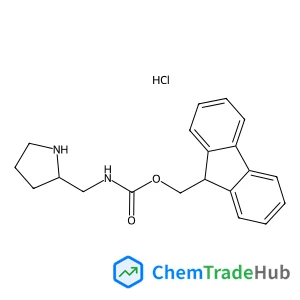
(S)-(9H-Fluoren-9-yl)methyl (pyrrolidin-2-ylmethyl)carbamate hydrochloride
CAS番号:
1217813-15-4
分子式:
C20H23ClN2O2
おすすめサプライヤー




免責事項
このページに表示される学術雑誌情報は、参考および研究目的のみを目的としています。当社は雑誌出版社とは提携しておらず、投稿の取り扱いも行っておりません。出版に関するお問い合わせは、各雑誌出版社に直接ご連絡ください。
表示されている情報に誤りがある場合は、support@chemtradehub.com までご連絡ください。迅速に確認し、対応いたします。