












Specific ion effects on the electrokinetic properties of iron oxide nanoparticles: experiments and simulations
文献情報
出版日
2015-05-22
DOI
10.1039/C5CP01011J
インパクトファクター
3.676
著者
Fernando Vereda, Alberto Martín-Molina, Roque Hidalgo-Alvarez, Manuel Quesada-Pérez
原文を見る
要旨
We report experimental and simulation studies on ion specificity in aqueous colloidal suspensions of positively charged, bare magnetite nanoparticles. Magnetite has the largest saturation magnetization among iron oxides and relatively low toxicity, which explain why it has been used in multiple biomedical applications. Bare magnetite is hydrophilic and the sign of the surface charge can be changed by adjusting the pH, its isoelectric point being in the vicinity of pH = 7. Electrophoretic mobility of our nanoparticles in the presence of increasing concentrations of different anions showed that anions regarded as kosmotropic are more efficient in decreasing, and even reversing, the mobility of the particles. If the anions were ordered according to the extent to which they reduced the particle mobility, a classical Hofmeister series was obtained with the exception of thiocyanate, whose position was altered. Monte Carlo simulations were used to predict the diffuse potential of magnetite in the presence of the same anions. The simulations took into account the ion volume, and the electrostatic and dispersion forces among the ions and between the ions and the solid surface. Even though no fitting parameters were introduced and all input data were estimated using Lifshitz theory of van der Waals forces or obtained from the literature, the predicted diffusion potentials of different anions followed the same order as the mobility curves. The results suggest that ionic polarizabilities and ion sizes are to a great extent responsible for the specific ion effects on the electrokinetic potential of iron oxide particles.
関連文献
Evolution of flow-oriented design strategies in the continuous preparation of pharmaceuticals
Zsolt Fülöp, Péter Szemesi, Péter Bana, János Éles, István Greiner
2020-07-17
Review Article
DOI: 10.1039/D0RE00273A
Continuous production of iron oxide nanoparticles via fast and economical high temperature synthesis
Maximilian O. Besenhard, Alec P. LaGrow, Simone Famiani, Martina Pucciarelli, Paola Lettieri, Asterios Gavriilidis
2020-07-06
Paper
DOI: 10.1039/D0RE00078G
Activation of homogenous polyolefin catalysis with a machine-assisted reactor laboratory-in-a-box (μAIR-LAB)
Benjamin A. Rizkin, Ryan L. Hartman
2020-06-18
Paper
DOI: 10.1039/D0RE00139B
Multifunctional poly(amine-ester)-type hyperbranched polymers: lipase-catalyzed green synthesis, characterization, biocompatibility, drug loading and anticancer activity
Fangli Xu, Jiaren Zhong, Xueqi Qian, Yanyan Li, Xianfu Lin, Qi Wu
2013-03-22
Paper
DOI: 10.1039/C3PY00156C
Azolium hydrogen carbonates and azolium carboxylates as organic pre-catalysts for N-heterocyclic carbene-catalysed group transfer and ring-opening polymerisations
2013-01-25
Paper
DOI: 10.1039/C2PY20915B
Folate-conjugated poly(N-(2-hydroxypropyl)methacrylamide-co-methacrylic acid) nanohydrogels with pH/redox dual-stimuli response for controlled drug release
Yuan-Jia Pan, Dian Li, Sha Jin, Chuan Wei, Ke-Yi Wu, Jia Guo, Chang-Chun Wang
2013-03-27
Paper
DOI: 10.1039/C3PY00249G
Polymerization behaviors and polymer branching structures in ATRP of monovinyl and divinyl monomers
Hongjun Yang, Xiaoqiang Xue, Bibiao Jiang, Jianhai Chen, Yang Yang, Hongting Pu, Yun Liu, Dongliang Zhang, Lizhi Kong, Guangqun Zhai
2013-04-03
Paper
DOI: 10.1039/C3PY00338H
Ultrafine silver nanoparticles with excellent antibacterial efficacy prepared by a handover of vesicle templating to micelle stabilization
Hang Lu, Li Yu, Qiuming Liu, Jianzhong Du
2013-04-23
Communication
DOI: 10.1039/C3PY00393K
A facile and highly efficient strategy for esterification of poly(meth)acrylic acid with halogenated compounds at room temperature promoted by 1,1,3,3-tetramethylguanidine
Qianbiao Li, Yinyin Bao, Hu Wang, Fanfan Du, Qing Li, Bangkun Jin, Ruke Bai
2013-03-22
Paper
DOI: 10.1039/C3PY00155E
Synthesis and characterization of fluorinated polyionomers. Part I: polyperfluoro-sulfonylethoxy propylene vinyl ether sulfonimides containing aryl sulfonic acids
Anna M. Flach, Frederick E. Johnson, Israel Cabasso
2013-04-05
Paper
DOI: 10.1039/C3PY00315A
こちらもおすすめ
化合物よくある質問
2-ヒドロキシ-5-ニトロベンジンブロモイドの代替品はありますか?
2-ヒドロキシ-5-ニトロベンジンブロモイドは特定の化学反応に適しているため、代替品は限られています。しかし、同様の構造を持つ2-ヒドロキシ-4-ニトロベンジン...
772-33-82-(Bromomethyl)-4-ni...
化合物よくある質問
N-(2-ブロモフェニル)-1-チロール-3-オキソ-3-(ピペリジニル)プロペン-2-イル)ベンゼンアミドを取り扱う際の実験室安全事項は何ですか?
N-(2-ブロモフェニル)-1-チロール-3-オキソ-3-(ピペリジニル)プロペン-2-イル)ベンゼンアミドは有毒で、皮膚や粘膜に刺激を与える可能性があります。...
1800044-77-2N-[(1Z)-1-(2-Bromoph...
化合物よくある質問
1,3プロパンジオール,2-[2-(2アミノ-6クロロ-9Hピリミジン-9-イル)エチル-1,1,2,2-D4]-2,3-ジアセタートの市場動向や研究トレンドはどうですか?
この化合物は、新規治療薬の開発に注目されています。市場では、その有効性と安全性が評価され、研究分野では、分子生物学と医薬化学の新たな発見が期待されています。
1020718-81-31,3-Propanediol, 2-[...
579-44-2Ethanone, 2-hydroxy-...
化合物よくある質問
Succinimidyl-alanyl-phenylalanyl-prolyl-phenylalanine 4-nitroanilide はどの業界で使用されていますか?
Succinimidyl-alanyl-phenylalanyl-prolyl-phenylalanine 4-nitroanilide は主に医薬品開発やポ...
128802-73-3succinimidyl-alanyl-...
化合物よくある質問
メチル6-アミノ-5-クロロピリジン-2-カーボイル酸について、適用される法規ガイドラインは何ですか?
メチル6-アミノ-5-クロロピリジン-2-カーボイル酸(CAS番号: 1256794-05-4)の使用には、GHS( Globally Harmonized S...
1256794-05-4Methyl 6-amino-5-chl...
化合物よくある質問
エチル4-(シクロ Pentagonyl)アミノ-2-メチル硫化基ピリミジン-5-カルボキシレートを取り扱う際の実験室安全事項は何ですか?
取り扱いには、耐薬品性の容器を使用し、通気性の良い場所で操作することを推奨します。漏れ時は、SDS(安全データシート)を参照して適切な措置を取ること。手洗いと洗...
211245-62-4ethyl 4-(cyclopentyl...
化合物よくある質問
(S)-3-ベンZYルピペリジン塩酸塩とは何ですか?
(S)-3-ベンZYルピペリジン塩酸塩は、CAS番号1258940-00-9で表される化合物です。これは、(S)-3-苯基哌啶的盐酸盐であり、主に医薬品の原料と...
1258940-00-9(S)-3-Phenylpiperidi...
化合物よくある質問
3,5-二甲基金剛胺の主な用途は何ですか?
3,5-二甲基金剛胺は、主に医薬品の原料として使用され、また抗うつ薬や抗アルツハイマー薬の開発に利用されます。さらに、化粧品や食品添加物の製造でも重要な役割を果...
19988-45-52-(2,3-Dihydroxyphen...
化合物よくある質問
ビス(4-メチル-2-ペンチル)フェニルカルボン酸エステルの代替品はありますか?
ビス(4-メチル-2-ペンチル)フェニルカルボン酸エステル (CAS番号: 1398066-13-1) の代替品には、ビス(2-エチルヘキシル)フェノールカルボ...
1398066-13-1Bis(4-methyl-2-penty...
掲載誌
Physical Chemistry Chemical Physics

CiteScore:
5.5
自己引用率:
10.3%
年間論文数:
3036
Physical Chemistry Chemical Physics (PCCP) is an international journal co-owned by 19 physical chemistry and physics societies from around the world. This journal publishes original, cutting-edge research in physical chemistry, chemical physics and biophysical chemistry. To be suitable for publication in PCCP, articles must include significant innovation and/or insight into physical chemistry; this is the most important criterion that reviewers and Editors will judge against when evaluating submissions. The journal has a broad scope and welcomes contributions spanning experiment, theory, computation and data science. Topical coverage includes spectroscopy, dynamics, kinetics, statistical mechanics, thermodynamics, electrochemistry, catalysis, surface science, quantum mechanics, quantum computing and machine learning. Interdisciplinary research areas such as polymers and soft matter, materials, nanoscience, energy, surfaces/interfaces, and biophysical chemistry are welcomed if they demonstrate significant innovation and/or insight into physical chemistry. Joined experimental/theoretical studies are particularly appreciated when complementary and based on up-to-date approaches.
おすすめ化合物
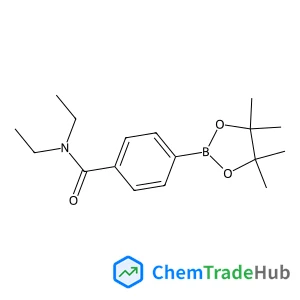
N,N-Diethyl-4-(4,4,5,5-tetramethyl-1,3,2-dioxaborolan-2-yl)benzamide
CAS番号:
325142-99-2
分子式:
C17H26BNO3
![Methyl 4-({[(2-methyl-2-propanyl)oxy]carbonyl}amino)bicyclo[2.2.2]octane-1-carboxylate structure](https://static.chemtradehub.com/structs/943/943845-74-7-b7e5.webp "Methyl 4-({[(2-methyl-2-propanyl)oxy]carbonyl}amino)bicyclo[2.2.2]octane-1-carboxylate structure")
おすすめサプライヤー






免責事項
このページに表示される学術雑誌情報は、参考および研究目的のみを目的としています。当社は雑誌出版社とは提携しておらず、投稿の取り扱いも行っておりません。出版に関するお問い合わせは、各雑誌出版社に直接ご連絡ください。
表示されている情報に誤りがある場合は、support@chemtradehub.com までご連絡ください。迅速に確認し、対応いたします。