












Coumarin–BODIPY hybrids by heteroatom linkage: versatile, tunable and photostable dye lasers for UV irradiation
文献情報
出版日
2015-02-23
DOI
10.1039/C5CP00193E
インパクトファクター
3.676
著者
I. Esnal, G. Duran-Sampedro, A. R. Agarrabeitia, J. Bañuelos, I. García-Moreno, M. A. Macías, E. Peña-Cabrera, I. López-Arbeloa, S. de la Moya, M. J. Ortiz
原文を見る
要旨
Linking amino and hydroxycoumarins to BODIPYs through the amino or hydroxyl group lets the easy construction of unprecedented photostable coumarin–BODIPY hybrids with broadened and enhanced absorption in the UV spectral region, and outstanding wavelength-tunable laser action within the green-to-red spectral region (∼520–680 nm). These laser dyes allow the generation of a valuable tunable UV (∼260–350 nm) laser source by frequency doubling, which is essential to study accurately the photochemistry of biological molecules under solar irradiation. The tunability is achieved by selecting the substitution pattern of the hybrid. Key factors are the linking heteroatom (nitrogen vs. oxygen), the number of coumarin units joined to the BODIPY framework and the involved linking positions.
関連文献
Prediction of the vapor–liquid phase equilibrium of hydrogen sulfide and the binary system water–hydrogen sulfide by molecular simulation
Johannes Vorholz, Bernd Rumpf, Gerd Maurer
2002-08-14
Paper
DOI: 10.1039/B203867F
Rotational quantum dynamics in a non-activated adsorption system
Arezoo Dianat, Axel Groß
2002-07-25
Paper
DOI: 10.1039/B203310K
Correlated ab initio study of nucleic acid bases and their tautomers in the gas phase, in a microhydrated environment and in aqueous solution Part 1. Cytosine
Semen A. Trygubenko, Tetyana V. Bogdan, Manuel Rueda, Modesto Orozco, F. Javier Luque, Jiří Šponer, Petr Slavíček, Pavel Hobza
2002-07-25
Paper
DOI: 10.1039/B202156K
Alternating stacks of neutral and ion-radical hydrocarbons. A feasible path to ferromagnetic materials?
Anela Ivanova, Martin Baumgarten, Stoyan Karabunarliev, Nikolai Tyutyulkov
2002-08-28
Paper
DOI: 10.1039/B204763B
Ring-opening of the cyclopropyl radical in the condensed phase: A combined density functional theory/molecular mechanics quasiclassical trajectory study
David J. Mann, Mathew D. Halls
2002-09-13
Paper
DOI: 10.1039/B206365D
Second virial coefficients of fluorinated methanes CH4−xFx (x = 0–4) and their binary mixtures
Joachim A. Lamp, Bernhard F. Schramm, Shokry M. Saad, Samia A. El-Geubeily
2002-08-12
Paper
DOI: 10.1039/B204839F
Effects of critical fluctuations to stochastic thermodynamic behavior of chemical reaction systems at steady state far from equilibrium
Nanrong Zhao
2002-07-29
Paper
DOI: 10.1039/B201564C
Proton shielding calculations in C6H6⋯H–CX3, X = H, F, Cl and Br, complexes
Yuthana Tantirungrotechai, Somsak Tonmunphean, Atchara Wijitkosoom
2002-08-28
Paper
DOI: 10.1039/B206135J
The prediction of energies and geometries of hydrogen bonded DNA base-pairs via a topological electrostatic potential
Laurent Joubert, Paul L. A. Popelier
2002-08-05
Paper
DOI: 10.1039/B204485D
Imaging thin films of organic molecules with the scanning tunnelling microscope
2002-08-08
Invited Article
DOI: 10.1039/B202462D
こちらもおすすめ
化合物よくある質問
噻奈普汀乙酯の物理化学的性質は何ですか?
CAS番号66981-77-9の噻奈普汀乙酯は、結晶性白色粉末であり、分子量は476.9 g/molです。この化合物は水に溶けにくく、一般的には有機溶媒で溶解し...
66981-77-9Ethyl 7-[(3-chloro-6...
化合物よくある質問
アミピシリン不純物Fとは何ですか?
アミピシリン不純物Fは、CAS番号124774-48-7の化合物です。これは、抗生物質アミピシリンの生産過程で生成される不純物の一つであり、(4S)-2-({[...
124774-48-7Ampicillin impurity ...
化合物よくある質問
イリジウム(I)ヘキサフルオロフォスファートの代替品はありますか?
イリジウム(I)ヘキサフルオロフォスファートの代替品として、他の有機金属化合物や非有機金属化合物が使用されることがあります。具体的には、ダイゾニウム塩や他の金属...
870077-94-43-Di-i-propylphosphi...
化合物よくある質問
含有3-(苯氧基甲基)苯硼酸频那醇酯の廃棄物はどのように処理すべきですか?
含有3-(苯氧基甲基)苯硼酸频那醇酯の廃棄物は、安全な方法で処理する必要があります。まず、廃棄物を適切な容器に収集し、避けて保管します。次に、専門の廃棄処理業者...
912569-68-74,4,5,5-Tetramethyl-...
化合物よくある質問
2-甲基辛-1-醇を取り扱う際の実験室安全事項は何ですか?
取り扱う際は、密閉のゴーグルと手袋を着用することが推奨されます。ドラフトチャンバーを使用し、漏洩時には速やかに取り扱いを中止し、適切な排気設備を使用してください...
818-81-52-Methyl-1-octanol
14066-05-8Scandium triperchlor...
化合物よくある質問
3α-アセトキノイドコレステロールエステルはどのように保存すればよいですか?
3α-アセトキノイドコレステロールエステルは、常温から低温(0-5℃)の暗所で保存し、密閉容器に入れることで安定性を保つことが推奨されます。また、湿気や酸素から...
30365-63-0Methyl (3alpha,5beta...
化合物よくある質問
2-ぶンジロキシ-4-(トリフルオロメチル)フェノルビノン酸の主な用途は何ですか?
2-ぶンジロキシ-4-(トリフルオロメチル)フェノルビノン酸は、化学合成の触媒としての使用や、医薬品の合成材料としての役割があります。また、特定の合成路線で使用...
1701435-39-3[2-(Benzyloxy)-4-(tr...
化合物よくある質問
(2S,3R)-2-氨基-3-甲基丁二酸はどのように合成されますか?
(2S,3R)-2-氨基-3-甲基丁二酸は、2-ヒドロキシ-3-メチル丁酸とアミノ化反応を行うことで合成されます。触媒としてジクロロメタンが使用され、選択性と収...
121570-10-3(2S,3R)-2-amino-3-me...
化合物よくある質問
1-Benzyl-2-phenyl-1H-imidazoleはどのように保存すればよいですか?
この化合物は常温で避けてください。直射日光を避け、密閉容器で保存し、湿気を防水の容器に入れて保管してください。
37734-89-71-Benzyl-2-phenyl-1H...
掲載誌
Physical Chemistry Chemical Physics

CiteScore:
5.5
自己引用率:
10.3%
年間論文数:
3036
Physical Chemistry Chemical Physics (PCCP) is an international journal co-owned by 19 physical chemistry and physics societies from around the world. This journal publishes original, cutting-edge research in physical chemistry, chemical physics and biophysical chemistry. To be suitable for publication in PCCP, articles must include significant innovation and/or insight into physical chemistry; this is the most important criterion that reviewers and Editors will judge against when evaluating submissions. The journal has a broad scope and welcomes contributions spanning experiment, theory, computation and data science. Topical coverage includes spectroscopy, dynamics, kinetics, statistical mechanics, thermodynamics, electrochemistry, catalysis, surface science, quantum mechanics, quantum computing and machine learning. Interdisciplinary research areas such as polymers and soft matter, materials, nanoscience, energy, surfaces/interfaces, and biophysical chemistry are welcomed if they demonstrate significant innovation and/or insight into physical chemistry. Joined experimental/theoretical studies are particularly appreciated when complementary and based on up-to-date approaches.
おすすめ化合物
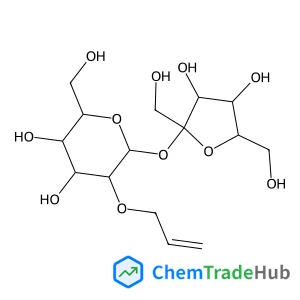
![L-Threonine, N-[[4,7,10-tris(carboxymethyl)-1,4,7,10-tetraazacyclododec-1-yl]acetyl]-D-phenylalanyl-L-cysteinyl-L-tyrosyl-D-tryptophyl-L-lysyl-L-threonyl-L-cysteinyl-, cyclic (2→7)-disulfide, acetate (salt) (9CI) structure](https://static.chemtradehub.com/structs/177/177943-89-4-6312.webp "L-Threonine, N-[[4,7,10-tris(carboxymethyl)-1,4,7,10-tetraazacyclododec-1-yl]acetyl]-D-phenylalanyl-L-cysteinyl-L-tyrosyl-D-tryptophyl-L-lysyl-L-threonyl-L-cysteinyl-, cyclic (2→7)-disulfide, acetate (salt) (9CI) structure")
![4-(4-{4-[4-Fluoro-3-(trifluoromethyl)phenyl]-1-methyl-1H-imidazol-2-yl}-1-piperidinyl)-1H-pyrazolo[3,4-d]pyrimidine 4-methylbenzenesulfonate (1:1) structure](https://static.chemtradehub.com/structs/108/1082949-68-5-00b6.webp "4-(4-{4-[4-Fluoro-3-(trifluoromethyl)phenyl]-1-methyl-1H-imidazol-2-yl}-1-piperidinyl)-1H-pyrazolo[3,4-d]pyrimidine 4-methylbenzenesulfonate (1:1) structure")
おすすめサプライヤー




免責事項
このページに表示される学術雑誌情報は、参考および研究目的のみを目的としています。当社は雑誌出版社とは提携しておらず、投稿の取り扱いも行っておりません。出版に関するお問い合わせは、各雑誌出版社に直接ご連絡ください。
表示されている情報に誤りがある場合は、support@chemtradehub.com までご連絡ください。迅速に確認し、対応いたします。