












Radical-induced, proton-transfer-driven fragmentations in [b5 − H]˙+ ions derived from pentaalanyl tryptophan
文献情報
出版日
2015-03-10
DOI
10.1039/C5CP00178A
インパクトファクター
3.676
著者
Declan Williams, Junfang Zhao, Stefanie Mädler, Yating Wang, Irine S. Saminathan, Alan C. Hopkinson
原文を見る
要旨
The collision-induced dissociation (CID) of [b5 − H]˙+ ions containing four alanine residues and one tryptophan give identical spectra regardless of the initial location of the tryptophan indicating that, as proposed for b5+ ions, sequence scrambling occurs prior to dissociation. Cleavage occurs predominantly at the peptide bonds and at the N–Cα bond of the alanine residue that is attached to the N-terminus of the tryptophan residue. The product of the latter pathway, an ion at m/z 240, is the base peak in all the mass spectra. With the exception of one minor channel giving a b3+ ion, the product ions retain both the tryptophan residue and the radical. Experiments with one trideuterated alanine established the sequences of loss of alanine residues. Formation of identical products implies a common intermediate, a [b5 − H]˙+ ion that has a `linear` structure in which the tryptophan residue is present as an α-radical located in the oxazolone ring, structure Ie. Density functional theory calculations show this structure to be at the global minimum, 14.6 kcal mol−1 below the macrocyclic structure, ion II. Loss of CO from the [b5 − H]˙+ ions is inhibited by the presence of the radical centre in the oxazolone ring and migration of the proton from the oxazolone ring onto the peptide backbone induces cleavage of an N–Cα or peptide bond. Three calculated structures for the ion at m/z 240 all have an oxazolone ring. Two of these structures may be formed from Ie, depending upon which proton migrates onto the peptide chain prior to the dissociation. The barrier to interconversion between these two structures requires a 1,3-hydrogen atom shift and is high (51.0 kcal mol−1), but both can convert into a third isomer that readily loses CO2 (barrier 38.7 kcal mol−1). The lowest barrier to the loss of CO, the usual fragmentation path observed for protonated oxazolones, is 47.0 kcal mol−1.
おすすめジャーナル
関連文献
Hydrogen bonds in methane–water clusters
Juan-Ramón Salazar-Cano, Alfredo Guevara-García, Rubicelia Vargas, Albeiro Restrepo, Jorge Garza
2016-07-29
Paper
DOI: 10.1039/C6CP04086A
A DFT study on dihydropyrazine annulated linear polyacenes: aromaticity, stability and HOMO–LUMO energy modulation
Ramachandran Rakhi, Cherumuttathu H. Suresh
2016-08-15
Paper
DOI: 10.1039/C6CP03723B
Is the manifestation of the local dynamics in the spin–lattice NMR relaxation in dendrimers sensitive to excluded volume interactions?
2016-08-17
Paper
DOI: 10.1039/C6CP01520D
Role of the deposition temperature on the self-assembly of the non-planar molecule benzene-1,3,5-triphosphonic acid (BTP) at the liquid–solid interface
Doan Chau Yen Nguyen, Lars Smykalla, Thi Ngoc Ha Nguyen, Michael Mehring, Michael Hietschold
2016-08-05
Paper
DOI: 10.1039/C6CP04764E
Hydrogen evolution in [NiFe] hydrogenases and related biomimetic systems: similarities and differences
Ranjita Das, Frank Neese, Maurice van Gastel
2016-08-10
Paper
DOI: 10.1039/C6CP03672D
Prediction of two-photon absorption enhancement in red fluorescent protein chromophores made from non-canonical amino acids
M. Alaraby Salem, Isaac Twelves, Alex Brown
2016-08-10
Paper
DOI: 10.1039/C6CP03865D
Hard magnetism in structurally engineered silica nanocomposite
Jeffrey I. Zink
2016-08-02
Paper
DOI: 10.1039/C6CP04843A
Theoretical insight into the wavelength-dependent photodissociation mechanism of nitric acid
Satoshi Maeda
2016-08-08
Paper
DOI: 10.1039/C6CP04713K
Understanding metastable phase transformation during crystallization of RDX, HMX and CL-20: experimental and DFT studies
Mrinal Ghosh, Shaibal Banerjee, Md Abdul Shafeeuulla Khan, Nirmala Sikder, Arun Kanti Sikder
2016-07-27
Paper
DOI: 10.1039/C6CP02185A
こちらもおすすめ
化合物よくある質問
4'-ブロモビフェニル-3-メトークシーディ.ActionBarはどのように保存すればよいですか?
4'-ブロモビフェニル-3-メトークシーディ.ActionBarは、冷暗所で、直射日光を避け、密栓の容器に保存し、遠隔場所に保管してください。温度は常温(0〜2...
149506-25-24'-Bromo-biphenyl-3-...
2947-60-6(3-Methylphenyl)acet...
化合物よくある質問
2-異丙基フェニルヒドラジン塩酸塩とは何ですか?
2-異丙基フェニルヒドラジン塩酸塩は、CAS番号58928-82-8を有する化合物で、構造式はC11H14N2HClです。これは塩基性化合物であり、水に溶けやす...
58928-82-8(2-Isopropylphenyl)h...
化合物よくある質問
5-(4-クロロフェニル)-4H-1,2,4-三氮唑-3-アミンを取り扱う際の実験室安全事項は何ですか?
5-(4-クロロフェニル)-4H-1,2,4-三氮唑-3-アミンは取り扱いに注意が必要です。PPEとして防塵マスク、ゴーグル、手袋を使用し、ドラフトチャンバーを...
98554-00-85-(4-Chlorophenyl)-1...
化合物よくある質問
去甲基雷贝拉唑硫醚はどのように合成されますか?
去甲基雷贝拉唑硫醚は、ベンジミダゾール硫化物と3-メチル-4-ピリジノールの反応によって合成されます。具体的には、2-チオキシドベンジミダゾールと3-メチル-4...
117976-91-73-({2-[(1H-Benzimida...
化合物よくある質問
2-ブロモ-5-フロロ-N-(2-フェノールメチル)ベンゼンウレアは安全ですか?
2-ブロモ-5-フロロ-N-(2-フェノールメチル)ベンゼンウレアは、毒性や刺激性の実験データに基づき、適切な取扱いと防護措置を講じることで安全に使用できます。...
923722-86-52-Bromo-5-fluoro-N-(...
化合物よくある質問
対甲苯磺酸酯-四聚乙二醇-四氢吡喃醚の物理化学的性質は何ですか?
対甲苯磺酸酯-四聚乙二醇-四氢吡喃醚のCAS番号は86259-89-4です。この化合物は無色の液体で、分子量は約724.8です。高濃度では溶血性が報告されており...
86259-89-42-(2-{2-[2-(Tetrahyd...
化合物よくある質問
2-(3-(二氟甲基)-4-氟苯基)-4,4,5,5-四甲基-1,3,2-二噁硼戊環はどのように保存すればよいですか?
2-(3-(二氟甲基)-4-氟苯基)-4,4,5,5-四甲基-1,3,2-二噁硼戊環は、室温で暗い場所に保管し、直射日光から遠ざけ、容器は密閉状態で保存してくだ...
445303-65-12-[3-(difluoromethyl...
化合物よくある質問
6-アミノ-5-クロロ-2-シクロプロピルピリミジンカルボン酸の代替品はありますか?
この化合物の代替品には、ピロリミジン酸やその類似物、またピロリミジンカルボン酸の他の異性体があります。これらの代替品は、特定の化学反応や目的に応じて選択すること...
858956-08-86-Amino-5-chloro-2-c...
化合物よくある質問
5-クロロベンゾ[1,3]二オキセイン-4-アミンに適用される法規ガイドラインは何ですか?
5-クロロベンゾ[1,3]二オキセイン-4-アミンはCAS番号379228-45-2に該当します。この化合物はGHS分類でH314(接触により急性毒性がある)と...
379228-45-25-Chloro-1,3-benzodi...
掲載誌
Physical Chemistry Chemical Physics

CiteScore:
5.5
自己引用率:
10.3%
年間論文数:
3036
Physical Chemistry Chemical Physics (PCCP) is an international journal co-owned by 19 physical chemistry and physics societies from around the world. This journal publishes original, cutting-edge research in physical chemistry, chemical physics and biophysical chemistry. To be suitable for publication in PCCP, articles must include significant innovation and/or insight into physical chemistry; this is the most important criterion that reviewers and Editors will judge against when evaluating submissions. The journal has a broad scope and welcomes contributions spanning experiment, theory, computation and data science. Topical coverage includes spectroscopy, dynamics, kinetics, statistical mechanics, thermodynamics, electrochemistry, catalysis, surface science, quantum mechanics, quantum computing and machine learning. Interdisciplinary research areas such as polymers and soft matter, materials, nanoscience, energy, surfaces/interfaces, and biophysical chemistry are welcomed if they demonstrate significant innovation and/or insight into physical chemistry. Joined experimental/theoretical studies are particularly appreciated when complementary and based on up-to-date approaches.
おすすめ化合物
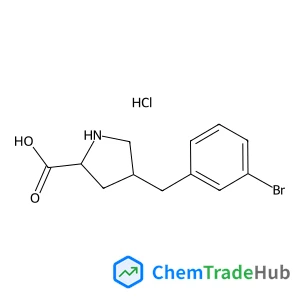
(2S,4R)-4-(3-Bromobenzyl)pyrrolidine-2-carboxylic acid hydrochloride
CAS番号:
1049734-10-2
分子式:
C12H15BrClNO2
おすすめサプライヤー





免責事項
このページに表示される学術雑誌情報は、参考および研究目的のみを目的としています。当社は雑誌出版社とは提携しておらず、投稿の取り扱いも行っておりません。出版に関するお問い合わせは、各雑誌出版社に直接ご連絡ください。
表示されている情報に誤りがある場合は、support@chemtradehub.com までご連絡ください。迅速に確認し、対応いたします。