


![(1R)-N-((1R)-1-Phenylethyl)-1-[4-(tert-butyldimethylsilyloxymethyl)cyclohexyl]ethan-1-amine structure](https://static.chemtradehub.com/structs/672/672314-45-3-47ef.webp "(1R)-N-((1R)-1-Phenylethyl)-1-[4-(tert-butyldimethylsilyloxymethyl)cyclohexyl]ethan-1-amine structure")
Oligomeric interface modifiers in hybrid polymer solar cell prototypes investigated by fluorescence voltage spectroscopy
文献情報
出版日
2015-03-18
DOI
10.1039/C5CP00012B
インパクトファクター
3.676
著者
B. Reeja-Jayan, Katherine A. Koen, Robert J. Ono, David A. Vanden Bout, Christopher W. Bielawski, Arumugam Manthiram
原文を見る
要旨
Carboxylated oligothiophenes were evaluated as interfacial modifiers between the organic poly(3-hexylthiophene) (P3HT) and inorganic TiO2 layers in bilayer hybrid polymer solar cells. Carboxylated oligothiophenes can be isolated using conventional purification techniques resulting in pure, monodisperse molecules with 100% carboxylation. Device prototypes using carboxylated oligothiophenes as interfacial modifiers showed improved performance in the open-circuit voltage and fill factor over devices using unmodified oligothiophenes as interfacial modifiers. X-ray photoelectron spectroscopy (XPS) studies supported the idea that interface layer adhesion was improved by functionalizing oligothiophenes with a carboxyl moiety. Wide-field fluorescence images revealed that devices made using carboxylated oligothiophenes had fewer aggregates in the P3HT layers atop the modified TiO2 surface. Hysteresis seen in the fluorescence intensity as a function of applied bias, obtained from In-Device Fluorescence Voltage Spectroscopy (ID-FVS), was found to be a diagnostic criterion of the quality of the hybrid interface modification. The best interfaces were found using oligothiophenes functionalized with carboxylates, which created smooth layers on TiO2, and showed no hysteresis, suggesting elimination of interfacial charge traps. However, this hysteresis could be re-introduced by increasing the scan rate of the applied bias, suggesting that smooth P3HT layers created by carboxylated oligothiophene interface modifiers were necessary but not sufficient for sustaining improved photovoltaic properties especially during long-term device operation.
おすすめジャーナル

Journal of Natural Medicines

Russian Journal of Organic Chemistry

Chemistry Education Research and Practice

Russian Journal of General Chemistry

Journal of Peptide Science

Russian Journal of Applied Chemistry

Organic Process Research & Development

Saudi Pharmaceutical Journal

Nature Medicine

Russian Journal of Coordination Chemistry
関連文献
A self-consistent GW approach to the van der Waals potential for a helium dimer
Toru Shoji, Riichi Kuwahara, Kaoru Ohno
2016-08-12
Paper
DOI: 10.1039/C6CP04678A
Laser induced mechanisms controlling the size distribution of metallic nanoparticles
Zeming Liu, Guy Vitrant, Yaya Lefkir, Said Bakhti, Nathalie Destouches
2016-08-08
Paper
DOI: 10.1039/C6CP03415B
Rutile to anatase phase transition induced by N doping in highly oriented TiO2 films
Gopinathan Sankar, Gregory Kia Liang Goh, Robert G. Palgrave
2016-08-12
Paper
DOI: 10.1039/C6CP04003A
First hyperpolarizability of para-aminoaniline induced by a variety of gold nano particles
Stine T. Olsen, Kurt V. Mikkelsen
2016-08-18
Paper
DOI: 10.1039/C6CP01078D
The influence of LiH on the rehydrogenation behavior of halide free rare earth (RE) borohydrides (RE = Pr, Er)
Michael Heere, Seyed Hosein Payandeh GharibDoust, Christoph Frommen, Magnus H. Sørby, Torben R. Jensen, Bjørn C. Hauback
2016-08-12
Paper
DOI: 10.1039/C6CP04523E
Stepwise collapse of highly overlapping electrical double layers
N. D. Spencer
2016-08-12
Paper
DOI: 10.1039/C6CP04222H
The photochemistry of sodium ion pump rhodopsin observed by watermarked femto- to submillisecond stimulated Raman spectroscopy
Yusaku Hontani, Miroslav Kloz, Yoshitaka Kato, John T. M. Kennis
2016-08-17
Paper
DOI: 10.1039/C6CP05240A
The involvement of triplet receiver states in the ultrafast excited state processes of small esters
A. B. Stephansen, M. A. B. Larsen, T. I. Sølling
2016-08-12
Paper
DOI: 10.1039/C6CP04046B
Retracted Article: Comprehensive insights into the charge dynamics process and excellent photoelectric properties of heterojunction solar cells
Xiangyang Liu, Shun Wang, Haiwu Zheng, Xiuying Cheng, Yuzong Gu
2016-07-27
Paper
DOI: 10.1039/C6CP02656G
Toward an absolute NMR shielding scale using the spin-rotation tensor within a relativistic framework
I. Agustín Aucar, Sergio S. Gomez, Claudia G. Giribet, Gustavo A. Aucar
2016-07-19
Paper
DOI: 10.1039/C6CP03355E
こちらもおすすめ
化合物よくある質問
4'-ブロモビフェニル-3-メトークシーディ.ActionBarはどのように保存すればよいですか?
4'-ブロモビフェニル-3-メトークシーディ.ActionBarは、冷暗所で、直射日光を避け、密栓の容器に保存し、遠隔場所に保管してください。温度は常温(0〜2...
149506-25-24'-Bromo-biphenyl-3-...
2947-60-6(3-Methylphenyl)acet...
化合物よくある質問
2-異丙基フェニルヒドラジン塩酸塩とは何ですか?
2-異丙基フェニルヒドラジン塩酸塩は、CAS番号58928-82-8を有する化合物で、構造式はC11H14N2HClです。これは塩基性化合物であり、水に溶けやす...
58928-82-8(2-Isopropylphenyl)h...
化合物よくある質問
5-(4-クロロフェニル)-4H-1,2,4-三氮唑-3-アミンを取り扱う際の実験室安全事項は何ですか?
5-(4-クロロフェニル)-4H-1,2,4-三氮唑-3-アミンは取り扱いに注意が必要です。PPEとして防塵マスク、ゴーグル、手袋を使用し、ドラフトチャンバーを...
98554-00-85-(4-Chlorophenyl)-1...
化合物よくある質問
去甲基雷贝拉唑硫醚はどのように合成されますか?
去甲基雷贝拉唑硫醚は、ベンジミダゾール硫化物と3-メチル-4-ピリジノールの反応によって合成されます。具体的には、2-チオキシドベンジミダゾールと3-メチル-4...
117976-91-73-({2-[(1H-Benzimida...
化合物よくある質問
2-ブロモ-5-フロロ-N-(2-フェノールメチル)ベンゼンウレアは安全ですか?
2-ブロモ-5-フロロ-N-(2-フェノールメチル)ベンゼンウレアは、毒性や刺激性の実験データに基づき、適切な取扱いと防護措置を講じることで安全に使用できます。...
923722-86-52-Bromo-5-fluoro-N-(...
化合物よくある質問
対甲苯磺酸酯-四聚乙二醇-四氢吡喃醚の物理化学的性質は何ですか?
対甲苯磺酸酯-四聚乙二醇-四氢吡喃醚のCAS番号は86259-89-4です。この化合物は無色の液体で、分子量は約724.8です。高濃度では溶血性が報告されており...
86259-89-42-(2-{2-[2-(Tetrahyd...
化合物よくある質問
2-(3-(二氟甲基)-4-氟苯基)-4,4,5,5-四甲基-1,3,2-二噁硼戊環はどのように保存すればよいですか?
2-(3-(二氟甲基)-4-氟苯基)-4,4,5,5-四甲基-1,3,2-二噁硼戊環は、室温で暗い場所に保管し、直射日光から遠ざけ、容器は密閉状態で保存してくだ...
445303-65-12-[3-(difluoromethyl...
化合物よくある質問
6-アミノ-5-クロロ-2-シクロプロピルピリミジンカルボン酸の代替品はありますか?
この化合物の代替品には、ピロリミジン酸やその類似物、またピロリミジンカルボン酸の他の異性体があります。これらの代替品は、特定の化学反応や目的に応じて選択すること...
858956-08-86-Amino-5-chloro-2-c...
化合物よくある質問
5-クロロベンゾ[1,3]二オキセイン-4-アミンに適用される法規ガイドラインは何ですか?
5-クロロベンゾ[1,3]二オキセイン-4-アミンはCAS番号379228-45-2に該当します。この化合物はGHS分類でH314(接触により急性毒性がある)と...
379228-45-25-Chloro-1,3-benzodi...
掲載誌
Physical Chemistry Chemical Physics

CiteScore:
5.5
自己引用率:
10.3%
年間論文数:
3036
Physical Chemistry Chemical Physics (PCCP) is an international journal co-owned by 19 physical chemistry and physics societies from around the world. This journal publishes original, cutting-edge research in physical chemistry, chemical physics and biophysical chemistry. To be suitable for publication in PCCP, articles must include significant innovation and/or insight into physical chemistry; this is the most important criterion that reviewers and Editors will judge against when evaluating submissions. The journal has a broad scope and welcomes contributions spanning experiment, theory, computation and data science. Topical coverage includes spectroscopy, dynamics, kinetics, statistical mechanics, thermodynamics, electrochemistry, catalysis, surface science, quantum mechanics, quantum computing and machine learning. Interdisciplinary research areas such as polymers and soft matter, materials, nanoscience, energy, surfaces/interfaces, and biophysical chemistry are welcomed if they demonstrate significant innovation and/or insight into physical chemistry. Joined experimental/theoretical studies are particularly appreciated when complementary and based on up-to-date approaches.
おすすめ化合物
![3,7-Di(1,1':3',1''-terphenyl-5'-yl)-10,11,12,13-tetrahydrodiindeno[7,1-de:1',7'-fg][1,3,2]dioxaphosphocin-5-ol 5-oxide structure](https://static.chemtradehub.com/structs/135/1352810-38-8-3f10.webp "3,7-Di(1,1':3',1''-terphenyl-5'-yl)-10,11,12,13-tetrahydrodiindeno[7,1-de:1',7'-fg][1,3,2]dioxaphosphocin-5-ol 5-oxide structure")
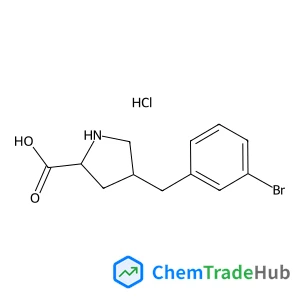
(2S,4R)-4-(3-Bromobenzyl)pyrrolidine-2-carboxylic acid hydrochloride
CAS番号:
1049734-10-2
分子式:
C12H15BrClNO2
![(1S)-1,5-Anhydro-2-O-alpha-L-arabinopyranosyl-1-[5-hydroxy-7-({6-O-[3-(4-hydroxy-3-methoxyphenyl)propanoyl]-beta-D-glucopyranosyl}oxy)-2-(4-hydroxyphenyl)-4-oxo-4H-chromen-6-yl]-D-glucitol structure](https://static.chemtradehub.com/structs/225/2252345-81-4-bcff.webp "(1S)-1,5-Anhydro-2-O-alpha-L-arabinopyranosyl-1-[5-hydroxy-7-({6-O-[3-(4-hydroxy-3-methoxyphenyl)propanoyl]-beta-D-glucopyranosyl}oxy)-2-(4-hydroxyphenyl)-4-oxo-4H-chromen-6-yl]-D-glucitol structure")
おすすめサプライヤー



免責事項
このページに表示される学術雑誌情報は、参考および研究目的のみを目的としています。当社は雑誌出版社とは提携しておらず、投稿の取り扱いも行っておりません。出版に関するお問い合わせは、各雑誌出版社に直接ご連絡ください。
表示されている情報に誤りがある場合は、support@chemtradehub.com までご連絡ください。迅速に確認し、対応いたします。