












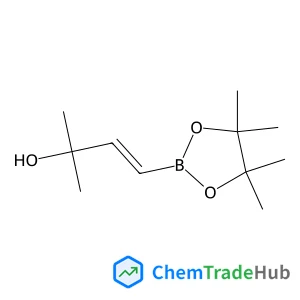
(E)-2-methyl-4-(4,4,5,5-tetramethyl-1,3,2-dioxaborolan-2-yl)but-3-en-2-ol
CAS番号:
581802-26-8
分子式:
C11H21BO3
Xiaofei Chen, Xuemei Yao, Chunran Wang, Li Chen, Xuesi Chen
Herein, hyperbranched poly(ethylene glycol)-based supramolecular nanoparticles with pH-sensitive properties were designed and used for targeted drug delivery. Via host–guest recognition between benzimidazole anchored poly(ethylene glycol)-hyperbranched polyglycerol (PEG-HPG-BM) and folic acid modified CD (FA-CD), targeted supramolecular nanoparticles (TSNs) were fabricated. At neutral aqueous conditions TSNs could load the model drug DOX. While under intracellular acidic conditions the loaded-drug would be released due to the protonation of BM. This protonation allowed the supramolecular nanoparticles to expand or even disassemble, which showes the pH-dependent property. The introduction of the active targeting FA molecule and the specific interactions with the receptor of HeLa cells means that DOX-loaded TSNs show a significantly improved anticancer efficacy. In vitro drug release assays and intracellular experiments confirmed that TSNs had an obvious pH-sensitive property and remarkably improved anticancer effects, which hold great potential for further biomedical applications such as anticancer drug delivery.
Chao Li, Li Han, Xiping Chen, Xinyu Bao, Qi Sun, Hongwei Ma, Yang Li
DOI: 10.1039/D1PY00416F
Bo Pang, Rui Liu, Guang Han, Wei Wang
DOI: 10.1039/D1PY00087J
Jacob J. Lessard, Georg M. Scheutz, Angie B. Korpusik, Rebecca A. Olson, C. Adrian Figg, Brent S. Sumerlin
DOI: 10.1039/D1PY00208B
Marc Guerre, Cédric Totée, Gilles Silly, Olinda Gimello, Bruno Améduri, Jean-François Tahon, Rinaldo Poli, Sophie Barrau, Vincent Ladmiral
DOI: 10.1039/D0PY01754J
Marc A. Hillmyer
DOI: 10.1039/D1PY00185J
Vincent Bouad, Marc Guerre, Sami Zeliouche, Bruno Améduri, Cédric Totée, Gilles Silly, Rinaldo Poli, Vincent Ladmiral
DOI: 10.1039/D0PY01753A
Yongjun Men, Tobias G. Brevé, Antonia G. Denkova, Rienk Eelkema
DOI: 10.1039/D1PY00514F
Tae Woong Kang, Atsushi Tamura, Yoshinori Arisaka, Nobuhiko Yui
DOI: 10.1039/D1PY00569C
Huan-Huan Ding, Mu-Han Zhao, Le Zhai, Jian-Bin Zhen, Le-Yun Sun, Jia-Zhu Chigan, Cheng Chen, Jia-Qi Li, Han Gao, Ke-Wu Yang
DOI: 10.1039/D0PY01751E
環戊烷-1,3-二甲酸甲酯は、環戊烷と塩酸によるヒンデンブルク反応を経由して合成されます。この反応では、環戊烷が塩酸と作用し、1,3-ジカルボキシ基が導入されま...
4-メトキシ-1,2,3-スチアゼ-3,5-ジオンは、CAS番号107843-77-6の化合物で、(E)-ベンジル3-(3,4-ジヒドロキシフェニル) acry...
プロスタグランジンA2 (CAS番号: 41691-92-3) は、化学物質の安全管理に関する規制として、GHS (危険物質の国際的ハザード分類・ラベル付けシス...
4-アミノ-1-ナフタレン sulfonic 酸のCAS番号は84-86-6です。この化合物は結晶性で、分子量は212.15 g/molです。アルコールや水など...
N-GlcNAc-生物素は吸収性があり、皮膚や目への接触を避けることが重要です。PPE(個体保護具)は使用し、ドラフトチャンバーは必要に応じて使用します。漏洩時...
CAS番号1209781-11-2の3-アミノメチルフローラノピペリジン-1-カルボニル酸テルブチルエステルは、有機化合物の一種で、化学式はC10H17FNO3...
6- bromo-1-methyl-1H-benzotriazoleは、ブロモフリオリンと1-メチル-1H-ベンゾ[d][1,2,3]三氮唑の反応により合成され...
4-硫代尿苷は、尿素とD-リボシルヒドロキシアルデヒドを用いてスルホン化反応を経て合成されます。通常は塩酸ヒドロキシチオニルスルホン酸などの触媒を使用し、選択性...
ブレインナトリユリックペプチド32ラット(CAS番号: 133448-20-1)は、心臓で作られるホルモンの一つで、心不全の診断や予後評価に使用されます。
CAS番号810680-60-5の1-(3-氮杂啶)-4-羟基哌啶双盐酸盐は、白色の結晶性粉末である。分子量は360.84 g/molで、水に溶けやすい。反応活...
Biomaterials Science is an international high impact journal exploring the science of biomaterials and their translation towards clinical use. Its scope encompasses new concepts in biomaterials design, studies into the interaction of biomaterials with the body, and the use of materials to answer fundamental biological questions. Papers do not necessarily need to report a new biomaterial but should provide novel insight into the biological applications of the biomaterial. Articles that primarily focus on demonstrating novel materials chemistry and bring a molecular picture to bear on a given material’s suitability as a biomaterial are more suited to our companion journal, Journal of Materials Chemistry B. Biomaterials Science publishes primary research and review-type articles in the following areas: molecular design of biomaterials, including translation of emerging chemistries to biomaterials science of cells and materials at the nanoscale and microscale materials as model systems for stem cell and human biology materials for tissue engineering and regenerative medicine (Nano)materials and (nano)systems for therapeutic delivery interactions at the biointerface biologically inspired and biomimetic materials, including bio-inspired self-assembly systems and cell-inspired synthetic tools next-generation biomaterials tools and methods
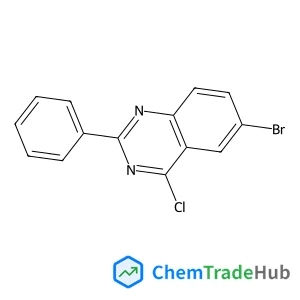
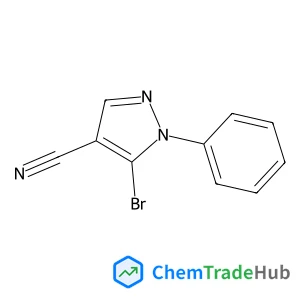
![(2S)-2-{[(9H-Fluoren-9-ylmethoxy)carbonyl]amino}-4-(methylselanyl)butanoic acid structure](https://static.chemtradehub.com/structs/121/1217852-49-7-f252.webp "(2S)-2-{[(9H-Fluoren-9-ylmethoxy)carbonyl]amino}-4-(methylselanyl)butanoic acid structure")




