












Expression of concern: Synthesis of poly(ethylene-co-acrylic acid) via a tandem hydrocarboxylation/hydrogenation of poly(butadiene)
文献情報
出版日
2014-11-21
DOI
10.1039/C4PY90087A
インパクトファクター
5.582
著者
原文を見る
要旨
Expression of concern for ‘Synthesis of poly(ethylene-co-acrylic acid) via a tandem hydrocarboxylation/hydrogenation of poly(butadiene)’ by Kelly M. Wiggins and Christopher W. Bielawski, Polym. Chem., 2013, 4, 2239–2245.
関連文献
Thermoresponsive polymers with LCST transition: synthesis, characterization, and their impact on biomedical frontiers
Yichun Yuan, Konpal Raheja, Nathalie B. Milbrandt, Sophia Beilharz, Steffy Tene, Solomon Oshabaheebwa, Anna Cristina S. Samia, Metin Karayilan
2023-08-29
Review Article
DOI: 10.1039/D3LP00114H
Macroporous hydrogels for soil water retention in arid and semi-arid regions
Ryan Zowada, Reza Foudazi
2023-09-04
Paper
DOI: 10.1039/D3LP00117B
A simple approach to determining the efficacy of antiperspirants using paper-based colorimetric paper sensors: SweatSENSE
Rachel A. Hand, Spyridon Efstathiou, Alan M. Wemyss, Maria Grypioti, Gavin Kirby, Tammie Barlow, Emmett Cullen Tinley, Jane Ford, Andy Jamieson, Janette Reynolds, Jean Miller, Susan Bates, David M. Haddleton
2024-01-05
Paper
DOI: 10.1039/D3LP00214D
Rational element-doping of FeOOH-based electrocatalysts for efficient ammonia electrosynthesis
Ke Zhang, Bin Li
2023-11-01
Paper
DOI: 10.1039/D3EY00208J
Predicting power plant emissions using public data and machine learning
Jiajun Gu, Jeffrey A. Sward, K. Max Zhang
2023-10-18
Paper
DOI: 10.1039/D3VA00191A
Activating iodine redox by enabling single-atom coordination to dormant nitrogen sites to realize durable zinc–iodine batteries
Jisung Lee, Wooseok Lee, Seungho Back, Seung Yeop Yi, Seongseop Kim, Joonhee Moon, Dong-Yeun Koh, Kyeounghak Kim, Seoin Back, Jinwoo Lee
2023-11-07
Paper
DOI: 10.1039/D3EY00228D
A review on polyhydroxyalkanoate (PHA) production through the use of lignocellulosic biomass
Deepak Kumar, B. V. Ramarao
2023-09-20
Critical Review
DOI: 10.1039/D3SU00126A
Operando insights into correlating CO coverage and Cu–Au alloying with the selectivity of Au NP-decorated Cu2O nanocubes during the electrocatalytic CO2 reduction
Clara Rettenmaier, Antonia Herzog, Daniele Casari, Martina Rüscher, Hyo Sang Jeon, David Kordus, Mauricio Lopez Luna, Stefanie Kühl, Uta Hejral, Earl M. Davis, See Wee Chee, Janis Timoshenko, Duncan T.L. Alexander, Arno Bergmann, Beatriz Roldan Cuenya
2023-10-25
Paper
DOI: 10.1039/D3EY00162H
こちらもおすすめ
化合物よくある質問
3-(5-フェニル-2-ファイル)-プロパン酸の市場動向や研究トレンドはどうですか?
この化合物の市場動向は不明ですが、類似化合物の需要は化学繊維、医薬品、農薬分野で安定しています。研究トレンドとしては、該当化合物の生物学的活性の評価や、その他の...
3465-61-03-(5-Phenyl-2-furyl)...
化合物よくある質問
3- Chloro-1H-indazol-5-olはどのように保存すればよいですか?
3- チロロ-1H-吲唑-5-醇は遮光し、直射日光を避けて、温度は室温を推奨し、密閉容器に保存してください。
885519-34-63-Chloro-1H-indazol-...
849924-76-11,2,3,4,5-Cyclopenta...
化合物よくある質問
L-(1-~13~C)メチオニンの市場動向や研究トレンドはどうですか?
L-(1-~13~C)メチオニンは、医薬品やバイオテクノロジー分野での研究が増加しており、その価格は安定しています。新興研究分野では、代謝解析や遺伝子機能解析で...
81202-04-2L-(1-~13~C)Methionin...
化合物よくある質問
1,3-フェニレンビスメチレンビスアクリレートは安全ですか?
1,3-フェニレンビスメチレンビスアクリレートは一般的に安全ですが、直接皮膚に触れる場合は保護用具を使用することを推奨します。高濃度の蒸気が吸入された場合は呼吸...
22757-16-01,3-Phenylenebis(met...
化合物よくある質問
丹参醇Aはどのように保存すればよいですか?
丹参醇Aは、直射日光を避けて室温で保存し、密栓容器に入れることをお勧めします。適切な保存条件は、安定性を保ち、安全性を確保する上で重要です。
189308-08-5Danshenol A
化合物よくある質問
4-メチル-2-(1,1,1-三フロロ-2-メチルプロパニル)ピリドインとは何ですか?
CAS番号1378865-93-0の4-メチル-2-(1,1,1-三フロロ-2-メチルプロパニル)ピリドインは、合成化学分野で用いられる有機化合物の一種です。こ...
1378865-93-04-Methyl-2-(1,1,1-tr...
化合物よくある質問
N-フェニルベンジル-2-クロロ酢氨を取り扱う際の実験室安全事項は何ですか?
N-フェニルベンジル-2-クロロ酢氨は毒性があり、皮膚や粘膜に刺激を与えます。取り扱う際には、保護眼鏡、手袋、ゴーグルを着用することを強く推奨します。ドラフトチ...
2653-14-7N-benzyl-2-chloro-N-...
化合物よくある質問
UCN-02を取り扱う際の実験室安全事項は何ですか?
UCN-02は毒性は低いですが、人体への直接的な接触は避けるべきです。PPE要件はグローブと顔面保護具を着用することです。ドラフトチャンバーを使用して漏洩を処理...
121569-61-7UCN-02
化合物よくある質問
N-[3-[2-(二甲基氨基)乙氧基]-4-甲氧基苯基]-2'-甲基-4'-(5-甲基-1,2,4-恶二唑-3-基)-[1,1'-联苯]-4-甲酰胺を取り扱う際の実験室安全事項は何ですか?
手袋と保護眼鏡を着用し、漏洩時には吸気防止装置を使用してください。室温、乾燥した場所に保管し、直日光から隔離してください。SDS(安全データシート)を参照してく...
170230-39-4N-{3-[2-(Dimethylami...
掲載誌
Polymer Chemistry

CiteScore:
8.6
自己引用率:
7.3%
年間論文数:
457
Polymer Chemistry welcomes submissions in all areas of polymer science that have a strong focus on macromolecular chemistry. Manuscripts may cover a broad range of fields, yet no direct application focus is required.
おすすめ化合物
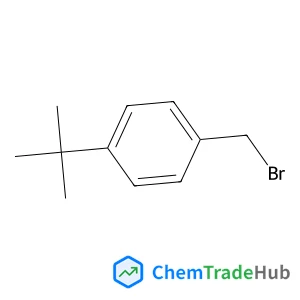
![2-{[4-(2-Methoxyethyl)phenoxy]methyl}oxirane structure](https://static.chemtradehub.com/structs/567/56718-70-8-f037.webp "2-{[4-(2-Methoxyethyl)phenoxy]methyl}oxirane structure")
おすすめサプライヤー






免責事項
このページに表示される学術雑誌情報は、参考および研究目的のみを目的としています。当社は雑誌出版社とは提携しておらず、投稿の取り扱いも行っておりません。出版に関するお問い合わせは、各雑誌出版社に直接ご連絡ください。
表示されている情報に誤りがある場合は、support@chemtradehub.com までご連絡ください。迅速に確認し、対応いたします。