


Aqueous SET-LRP catalyzed with “in situ” generated Cu(0) demonstrates surface mediated activation and bimolecular termination
文献情報
出版日
2015-01-14
DOI
10.1039/C4PY01748J
インパクトファクター
5.582
著者
Shampa R. Samanta, Vasiliki Nikolaou, Shauni Keller, Michael J. Monteiro, Daniela A. Wilson, David M. Haddleton, Virgil Percec
原文を見る
要旨
The aqueous SET-LRP catalyzed with “in situ” generated Cu(0) of the two amphiphilic monomers 2-hydroxyethyl acrylate (HEA) and oligo(ethylene oxide) methyl ether acrylate (OEOMEA) was investigated at temperatures from −22 to +25 °C. The kappp values of both monomers are higher at 0 °C (4.61 min−1 for OEOMEA and 2.60 min−1 for HEA) than at 25 °C (1.60 min−1 for OEOMEA and 1.12 min−1 for HEA). These unexpected and unprecedented results are explained by the lower Cu(0) particle size obtained by the disproportionation of CuBr at 0 °C in H2O. Poly(OEOMEA) obtained by aqueous SET-LRP at 0 °C with the unexpectedly high kappp = 4.61 min−1 exhibits 88% chain-end functionality at 100% monomer conversion, while the theoretical value would have to be ∼0%. This high experimental chain-end functionality was explained by the slow desorption of the hydrophobic backbone containing the propagating radicals of these amphiphilic polymers from the surface of the catalyst due to their strong hydrophobic effect. Polymer radicals adsorbed on the surface of Cu(0) undergo monomer addition and reversible deactivation but do not undergo the bimolecular termination that requires desorption. This amplified adsorption–desorption process that mediates both the activation and the bimolecular termination explains the unexpectedly high chain-end functionality of the polymers synthesized by SET-LRP.
おすすめジャーナル

Current Opinion in Solid State & Materials Science

Nature Medicine

Russian Chemical Bulletin

Chemistry Education Research and Practice

Current Opinion in Colloid & Interface Science

Russian Journal of Applied Chemistry

Journal of Saudi Chemical Society

Crystallography Reports

Russian Journal of Coordination Chemistry

Organic Process Research & Development
関連文献
Spectrophotometric terms and symbols. Report of a panel appointed by the Publication Committee
Other
DOI: 10.1039/AN942670227A
The College of the Pharmaceutical Society. Annual Report of Research Work, 1941
Other
DOI: 10.1039/AN942670297A
American Leather Chemists Association. Analysis of myrobalans extract
Other
DOI: 10.1039/AN942670265B
こちらもおすすめ
化合物よくある質問
4'-ブロモビフェニル-3-メトークシーディ.ActionBarはどのように保存すればよいですか?
4'-ブロモビフェニル-3-メトークシーディ.ActionBarは、冷暗所で、直射日光を避け、密栓の容器に保存し、遠隔場所に保管してください。温度は常温(0〜2...
149506-25-24'-Bromo-biphenyl-3-...
2947-60-6(3-Methylphenyl)acet...
化合物よくある質問
2-異丙基フェニルヒドラジン塩酸塩とは何ですか?
2-異丙基フェニルヒドラジン塩酸塩は、CAS番号58928-82-8を有する化合物で、構造式はC11H14N2HClです。これは塩基性化合物であり、水に溶けやす...
58928-82-8(2-Isopropylphenyl)h...
化合物よくある質問
5-(4-クロロフェニル)-4H-1,2,4-三氮唑-3-アミンを取り扱う際の実験室安全事項は何ですか?
5-(4-クロロフェニル)-4H-1,2,4-三氮唑-3-アミンは取り扱いに注意が必要です。PPEとして防塵マスク、ゴーグル、手袋を使用し、ドラフトチャンバーを...
98554-00-85-(4-Chlorophenyl)-1...
化合物よくある質問
去甲基雷贝拉唑硫醚はどのように合成されますか?
去甲基雷贝拉唑硫醚は、ベンジミダゾール硫化物と3-メチル-4-ピリジノールの反応によって合成されます。具体的には、2-チオキシドベンジミダゾールと3-メチル-4...
117976-91-73-({2-[(1H-Benzimida...
化合物よくある質問
2-ブロモ-5-フロロ-N-(2-フェノールメチル)ベンゼンウレアは安全ですか?
2-ブロモ-5-フロロ-N-(2-フェノールメチル)ベンゼンウレアは、毒性や刺激性の実験データに基づき、適切な取扱いと防護措置を講じることで安全に使用できます。...
923722-86-52-Bromo-5-fluoro-N-(...
化合物よくある質問
対甲苯磺酸酯-四聚乙二醇-四氢吡喃醚の物理化学的性質は何ですか?
対甲苯磺酸酯-四聚乙二醇-四氢吡喃醚のCAS番号は86259-89-4です。この化合物は無色の液体で、分子量は約724.8です。高濃度では溶血性が報告されており...
86259-89-42-(2-{2-[2-(Tetrahyd...
化合物よくある質問
2-(3-(二氟甲基)-4-氟苯基)-4,4,5,5-四甲基-1,3,2-二噁硼戊環はどのように保存すればよいですか?
2-(3-(二氟甲基)-4-氟苯基)-4,4,5,5-四甲基-1,3,2-二噁硼戊環は、室温で暗い場所に保管し、直射日光から遠ざけ、容器は密閉状態で保存してくだ...
445303-65-12-[3-(difluoromethyl...
化合物よくある質問
6-アミノ-5-クロロ-2-シクロプロピルピリミジンカルボン酸の代替品はありますか?
この化合物の代替品には、ピロリミジン酸やその類似物、またピロリミジンカルボン酸の他の異性体があります。これらの代替品は、特定の化学反応や目的に応じて選択すること...
858956-08-86-Amino-5-chloro-2-c...
化合物よくある質問
5-クロロベンゾ[1,3]二オキセイン-4-アミンに適用される法規ガイドラインは何ですか?
5-クロロベンゾ[1,3]二オキセイン-4-アミンはCAS番号379228-45-2に該当します。この化合物はGHS分類でH314(接触により急性毒性がある)と...
379228-45-25-Chloro-1,3-benzodi...
掲載誌
Polymer Chemistry

CiteScore:
8.6
自己引用率:
7.3%
年間論文数:
457
Polymer Chemistry welcomes submissions in all areas of polymer science that have a strong focus on macromolecular chemistry. Manuscripts may cover a broad range of fields, yet no direct application focus is required.
おすすめ化合物
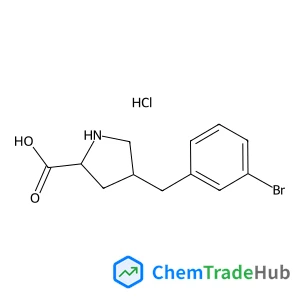
(2S,4R)-4-(3-Bromobenzyl)pyrrolidine-2-carboxylic acid hydrochloride
CAS番号:
1049734-10-2
分子式:
C12H15BrClNO2
![3-[4-(difluoromethoxy)phenyl]-2-({[(9H-fluoren-9-yl)methoxy]carbonyl}amino)propanoic acid structure](https://static.chemtradehub.com/structs/149/1496564-27-2-952e.webp "3-[4-(difluoromethoxy)phenyl]-2-({[(9H-fluoren-9-yl)methoxy]carbonyl}amino)propanoic acid structure")
![(3S,4aS,8aS)-2-[(2R,3S)-3-Amino-2-hydroxy-4-phenylbutyl]-N-(2-methyl-2-propanyl)decahydro-3-isoquinolinecarboxamide structure](https://static.chemtradehub.com/structs/136/136522-17-3-4d77.webp "(3S,4aS,8aS)-2-[(2R,3S)-3-Amino-2-hydroxy-4-phenylbutyl]-N-(2-methyl-2-propanyl)decahydro-3-isoquinolinecarboxamide structure")
おすすめサプライヤー




免責事項
このページに表示される学術雑誌情報は、参考および研究目的のみを目的としています。当社は雑誌出版社とは提携しておらず、投稿の取り扱いも行っておりません。出版に関するお問い合わせは、各雑誌出版社に直接ご連絡ください。
表示されている情報に誤りがある場合は、support@chemtradehub.com までご連絡ください。迅速に確認し、対応いたします。