












Diindenocarbazole-based large bandgap copolymers for high-performance organic solar cells with large open circuit voltages
文献情報
出版日
2014-08-20
DOI
10.1039/C4PY00951G
インパクトファクター
5.582
著者
Dongdong Cai, Zhigang Yin, Changquan Tang, Shan-Ci Chen, Qingdong Zheng
原文を見る
要旨
Three donor–acceptor alternating copolymers abbreviated as PC1, PC2, and PC3, respectively, were designed and synthesized using diindenocarbazole (DIC) and dithienylbenzothiadiazole (DTBT) units. Through backbone manipulation, copolymers with large bandgaps (∼2.0 eV) and deep-lying HOMO energy levels (below −5.41 eV) were obtained. The side chains were also investigated to tune the intermolecular interactions and morphology of the copolymers blended with PC71BM. Polymer solar cells (PSCs) based on PC2 : PC71BM exhibit an outstanding power conversion efficiency (PCE) of 7.26%, which represents one of the highest PCEs ever reported for PSCs while combining an open-circuit voltage (Voc) of 0.93 V and a large optical bandgap of 2.01 eV. Under similar device fabrication conditions, regular PSCs based on PC1 and PC3 achieve PCEs of 2.45% and 6.68%, respectively. Moreover, inverted PSCs derived from PC2 also exhibit an attractive PCE of 6.17% with a high Voc of 0.92 V. In view of its similar optical profiles to P3HT, but a deeper-lying HOMO energy level, PC2 should be a promising candidate as a short wavelength absorbing material for tandem solar cells.
関連文献
Up-regulating pyocyanin production by amino acid addition for early electrochemical identification of Pseudomonas aeruginosa
Hunter J. Sismaet, Thaddaeus A. Webster, Edgar D. Goluch
2014-06-23
Paper
DOI: 10.1039/C4AN00756E
Construction of carbon nanotube based nanoarchitectures for selective impedimetric detection of cancer cells in whole blood
Wangxia Dan, Yu Fu, Shaoqin Liu
2014-07-21
Paper
DOI: 10.1039/C4AN00758A
Cell electrospinning cardiac patches for tissue engineering the heart
Elisabeth Ehler, Suwan N. Jayasinghe
2014-07-03
Communication
DOI: 10.1039/C4AN00766B
Counting cell number in situ by quantification of dimethyl sulphide in culture headspace
David Smith, Alicia J. El Haj
2014-07-21
Paper
DOI: 10.1039/C4AN01102C
High throughput volatile fatty acid skin metabolite profiling by thermal desorption secondary electrospray ionisation mass spectrometry
Helen J. Martin, James C. Reynolds, Svetlana Riazanskaia, C. L. Paul Thomas
2014-05-16
Paper
DOI: 10.1039/C4AN00134F
Analysis of ethyl and methyl centralite vibrational spectra for mapping organic gunshot residues
Jianbo Zeng, Ji Qi, Fuquan Bai, Jorn Chi Chung Yu, Wei-Chuan Shih
2014-05-29
Paper
DOI: 10.1039/C4AN00657G
Detection of c-reactive protein based on a magnetic immunoassay by using functional magnetic and fluorescent nanoparticles in microplates
S. F. Yang, B. Z. Gao, C. Bor Fuh
2014-08-21
Paper
DOI: 10.1039/C4AN00921E
Methane–oxygen electrochemical coupling in an ionic liquid: a robust sensor for simultaneous quantification
Zhe Wang, Min Guo, Gary A. Baker, Joseph R. Stetter, Lu Lin, Andrew J. Mason, Xiangqun Zeng
2014-06-25
Paper
DOI: 10.1039/C4AN00839A
こちらもおすすめ
化合物よくある質問
3-(5-フェニル-2-ファイル)-プロパン酸の市場動向や研究トレンドはどうですか?
この化合物の市場動向は不明ですが、類似化合物の需要は化学繊維、医薬品、農薬分野で安定しています。研究トレンドとしては、該当化合物の生物学的活性の評価や、その他の...
3465-61-03-(5-Phenyl-2-furyl)...
化合物よくある質問
3- Chloro-1H-indazol-5-olはどのように保存すればよいですか?
3- チロロ-1H-吲唑-5-醇は遮光し、直射日光を避けて、温度は室温を推奨し、密閉容器に保存してください。
885519-34-63-Chloro-1H-indazol-...
849924-76-11,2,3,4,5-Cyclopenta...
化合物よくある質問
L-(1-~13~C)メチオニンの市場動向や研究トレンドはどうですか?
L-(1-~13~C)メチオニンは、医薬品やバイオテクノロジー分野での研究が増加しており、その価格は安定しています。新興研究分野では、代謝解析や遺伝子機能解析で...
81202-04-2L-(1-~13~C)Methionin...
化合物よくある質問
1,3-フェニレンビスメチレンビスアクリレートは安全ですか?
1,3-フェニレンビスメチレンビスアクリレートは一般的に安全ですが、直接皮膚に触れる場合は保護用具を使用することを推奨します。高濃度の蒸気が吸入された場合は呼吸...
22757-16-01,3-Phenylenebis(met...
化合物よくある質問
丹参醇Aはどのように保存すればよいですか?
丹参醇Aは、直射日光を避けて室温で保存し、密栓容器に入れることをお勧めします。適切な保存条件は、安定性を保ち、安全性を確保する上で重要です。
189308-08-5Danshenol A
化合物よくある質問
4-メチル-2-(1,1,1-三フロロ-2-メチルプロパニル)ピリドインとは何ですか?
CAS番号1378865-93-0の4-メチル-2-(1,1,1-三フロロ-2-メチルプロパニル)ピリドインは、合成化学分野で用いられる有機化合物の一種です。こ...
1378865-93-04-Methyl-2-(1,1,1-tr...
化合物よくある質問
N-フェニルベンジル-2-クロロ酢氨を取り扱う際の実験室安全事項は何ですか?
N-フェニルベンジル-2-クロロ酢氨は毒性があり、皮膚や粘膜に刺激を与えます。取り扱う際には、保護眼鏡、手袋、ゴーグルを着用することを強く推奨します。ドラフトチ...
2653-14-7N-benzyl-2-chloro-N-...
化合物よくある質問
UCN-02を取り扱う際の実験室安全事項は何ですか?
UCN-02は毒性は低いですが、人体への直接的な接触は避けるべきです。PPE要件はグローブと顔面保護具を着用することです。ドラフトチャンバーを使用して漏洩を処理...
121569-61-7UCN-02
化合物よくある質問
N-[3-[2-(二甲基氨基)乙氧基]-4-甲氧基苯基]-2'-甲基-4'-(5-甲基-1,2,4-恶二唑-3-基)-[1,1'-联苯]-4-甲酰胺を取り扱う際の実験室安全事項は何ですか?
手袋と保護眼鏡を着用し、漏洩時には吸気防止装置を使用してください。室温、乾燥した場所に保管し、直日光から隔離してください。SDS(安全データシート)を参照してく...
170230-39-4N-{3-[2-(Dimethylami...
掲載誌
Polymer Chemistry

CiteScore:
8.6
自己引用率:
7.3%
年間論文数:
457
Polymer Chemistry welcomes submissions in all areas of polymer science that have a strong focus on macromolecular chemistry. Manuscripts may cover a broad range of fields, yet no direct application focus is required.
おすすめ化合物
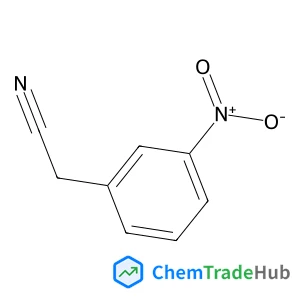
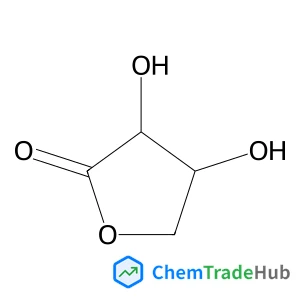
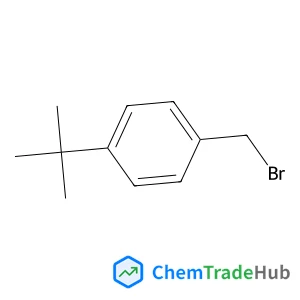
おすすめサプライヤー





免責事項
このページに表示される学術雑誌情報は、参考および研究目的のみを目的としています。当社は雑誌出版社とは提携しておらず、投稿の取り扱いも行っておりません。出版に関するお問い合わせは、各雑誌出版社に直接ご連絡ください。
表示されている情報に誤りがある場合は、support@chemtradehub.com までご連絡ください。迅速に確認し、対応いたします。