


![19-[Chloro(dideuterio)methyl]-19-deuterio-20,20-dideuteriooxyoctatriacontane-18,21-dione structure](https://static.chemtradehub.com/structs/124/1246818-85-8-6244.webp "19-[Chloro(dideuterio)methyl]-19-deuterio-20,20-dideuteriooxyoctatriacontane-18,21-dione structure")
On the importance of shear dissipative forces in coarse-grained dynamics of molecular liquids
文献情報
出版日
2015-03-23
DOI
10.1039/C4CP06116K
インパクトファクター
3.676
著者
Sergei Izvekov, Betsy M. Rice
原文を見る
要旨
In this work we demonstrate from first principles that the shear frictions describing dissipative forces in the direction normal to the vector connecting the coarse-grained (CG) particles in dissipative particle dynamics (DPD) could be dominant for certain real molecular liquids at high-resolution coarse-graining. This is in contrast to previous works on bottom-up DPD modeling and indicates that such liquids cannot be simulated accurately using the conventional form of DPD which relies only on frictions in the radial direction. Specifically, we describe the development of fully bottom-up CG models for liquid hexahydro-1,3,5-trinitro-s-triazine (RDX) which are incorporated into the DPD method. Consistent with the microscopic foundation of DPD dynamics, the conservative part of the DPD models is obtained by the multi-scale coarse-graining (MS-CG) approach, which implements the pairwise decomposition of the atomistic potential of mean force (PMF) in CG coordinates. The radial and shear distant-dependent friction coefficients in a parameter-free form are derived systematically from microscopic velocity and force correlation data along system trajectories using a recently proposed approach [J. Chem. Phys., 2014, 140, 104104]. The shear dissipative forces for the reported system appear to be dominant. We discuss the implications of dominant shear dissipation on dynamical and transport properties of CG liquids such as diffusion and viscosity as revealed by simulations of liquid RDX using the new MS-CG/DPD models.
おすすめジャーナル

Journal of Natural Medicines

Journal of Saudi Chemical Society

Nature Medicine

Organic Process Research & Development

Saudi Pharmaceutical Journal

Current Opinion in Colloid & Interface Science

Russian Journal of Bioorganic Chemistry

Russian Journal of Organic Chemistry

New Journal of Chemistry

Current Opinion in Solid State & Materials Science
関連文献
Hard magnetism in structurally engineered silica nanocomposite
Jeffrey I. Zink
2016-08-02
Paper
DOI: 10.1039/C6CP04843A
How do random superficial defects influence the electro-oxidation of glycerol on Pt(111) surfaces?
Pablo S. Fernández, Polina Tereshchuk, Camilo A. Angelucci, Janaina F. Gomes, Amanda C. Garcia, Cauê A. Martins, Giuseppe A. Camara, María E. Martins, Juarez L. F. Da Silva, Germano Tremiliosi-Filho
2016-08-16
Paper
DOI: 10.1039/C6CP04768H
Organic heterocyclic molecules become superalkalis
G. Naaresh Reddy, Santanab Giri
2016-08-05
Paper
DOI: 10.1039/C6CP04430A
Tuning the thermal conductivity of methylammonium lead halide by the molecular substructure
Claudia Caddeo, Claudio Melis, Maria Ilenia Saba, Alessio Filippetti, Luciano Colombo, Alessandro Mattoni
2016-07-29
Paper
DOI: 10.1039/C6CP04246E
The photochemistry of sodium ion pump rhodopsin observed by watermarked femto- to submillisecond stimulated Raman spectroscopy
Yusaku Hontani, Miroslav Kloz, Yoshitaka Kato, John T. M. Kennis
2016-08-17
Paper
DOI: 10.1039/C6CP05240A
Insight into the pseudo π-hole interactions in the M3H6⋯(NCF)n (M = C, Si, Ge, Sn, Pb; n = 1, 2, 3) complexes
Yanli Zeng, Xiaoyan Li, Zheng Sun, Lingpeng Meng
2016-08-08
Paper
DOI: 10.1039/C6CP03713E
Influence of solvent polarity on the structure of drop-cast electroactive tetra(aniline)-surfactant thin films
Thomas G. Dane, Julia E. Bartenstein, Beatrice Sironi, Benjamin M. Mills, O. Alexander Bell, J. Emyr Macdonald, Thomas Arnold, Charl F. J. Faul, Wuge H. Briscoe
2016-08-12
Paper
DOI: 10.1039/C6CP05221E
Studies of cytochrome c-551 unfolding using fluorescence correlation spectroscopy and other biophysical techniques
Pallabi Sil, Simanta Sarani Paul, Eva Di Silvio, Carlo Travaglini-Allocatelli, Krishnananda Chattopadhyay
2016-08-10
Paper
DOI: 10.1039/C6CP04819F
Biaxial nematic phase stability and demixing behaviour in monolayers of rod–plate mixtures
Yuri Martínez-Ratón, Miguel González-Pinto, Enrique Velasco
2016-08-15
Paper
DOI: 10.1039/C6CP05022K
こちらもおすすめ
化合物よくある質問
4'-ブロモビフェニル-3-メトークシーディ.ActionBarはどのように保存すればよいですか?
4'-ブロモビフェニル-3-メトークシーディ.ActionBarは、冷暗所で、直射日光を避け、密栓の容器に保存し、遠隔場所に保管してください。温度は常温(0〜2...
149506-25-24'-Bromo-biphenyl-3-...
2947-60-6(3-Methylphenyl)acet...
化合物よくある質問
2-異丙基フェニルヒドラジン塩酸塩とは何ですか?
2-異丙基フェニルヒドラジン塩酸塩は、CAS番号58928-82-8を有する化合物で、構造式はC11H14N2HClです。これは塩基性化合物であり、水に溶けやす...
58928-82-8(2-Isopropylphenyl)h...
化合物よくある質問
5-(4-クロロフェニル)-4H-1,2,4-三氮唑-3-アミンを取り扱う際の実験室安全事項は何ですか?
5-(4-クロロフェニル)-4H-1,2,4-三氮唑-3-アミンは取り扱いに注意が必要です。PPEとして防塵マスク、ゴーグル、手袋を使用し、ドラフトチャンバーを...
98554-00-85-(4-Chlorophenyl)-1...
化合物よくある質問
去甲基雷贝拉唑硫醚はどのように合成されますか?
去甲基雷贝拉唑硫醚は、ベンジミダゾール硫化物と3-メチル-4-ピリジノールの反応によって合成されます。具体的には、2-チオキシドベンジミダゾールと3-メチル-4...
117976-91-73-({2-[(1H-Benzimida...
化合物よくある質問
2-ブロモ-5-フロロ-N-(2-フェノールメチル)ベンゼンウレアは安全ですか?
2-ブロモ-5-フロロ-N-(2-フェノールメチル)ベンゼンウレアは、毒性や刺激性の実験データに基づき、適切な取扱いと防護措置を講じることで安全に使用できます。...
923722-86-52-Bromo-5-fluoro-N-(...
化合物よくある質問
対甲苯磺酸酯-四聚乙二醇-四氢吡喃醚の物理化学的性質は何ですか?
対甲苯磺酸酯-四聚乙二醇-四氢吡喃醚のCAS番号は86259-89-4です。この化合物は無色の液体で、分子量は約724.8です。高濃度では溶血性が報告されており...
86259-89-42-(2-{2-[2-(Tetrahyd...
化合物よくある質問
2-(3-(二氟甲基)-4-氟苯基)-4,4,5,5-四甲基-1,3,2-二噁硼戊環はどのように保存すればよいですか?
2-(3-(二氟甲基)-4-氟苯基)-4,4,5,5-四甲基-1,3,2-二噁硼戊環は、室温で暗い場所に保管し、直射日光から遠ざけ、容器は密閉状態で保存してくだ...
445303-65-12-[3-(difluoromethyl...
化合物よくある質問
6-アミノ-5-クロロ-2-シクロプロピルピリミジンカルボン酸の代替品はありますか?
この化合物の代替品には、ピロリミジン酸やその類似物、またピロリミジンカルボン酸の他の異性体があります。これらの代替品は、特定の化学反応や目的に応じて選択すること...
858956-08-86-Amino-5-chloro-2-c...
化合物よくある質問
5-クロロベンゾ[1,3]二オキセイン-4-アミンに適用される法規ガイドラインは何ですか?
5-クロロベンゾ[1,3]二オキセイン-4-アミンはCAS番号379228-45-2に該当します。この化合物はGHS分類でH314(接触により急性毒性がある)と...
379228-45-25-Chloro-1,3-benzodi...
掲載誌
Physical Chemistry Chemical Physics

CiteScore:
5.5
自己引用率:
10.3%
年間論文数:
3036
Physical Chemistry Chemical Physics (PCCP) is an international journal co-owned by 19 physical chemistry and physics societies from around the world. This journal publishes original, cutting-edge research in physical chemistry, chemical physics and biophysical chemistry. To be suitable for publication in PCCP, articles must include significant innovation and/or insight into physical chemistry; this is the most important criterion that reviewers and Editors will judge against when evaluating submissions. The journal has a broad scope and welcomes contributions spanning experiment, theory, computation and data science. Topical coverage includes spectroscopy, dynamics, kinetics, statistical mechanics, thermodynamics, electrochemistry, catalysis, surface science, quantum mechanics, quantum computing and machine learning. Interdisciplinary research areas such as polymers and soft matter, materials, nanoscience, energy, surfaces/interfaces, and biophysical chemistry are welcomed if they demonstrate significant innovation and/or insight into physical chemistry. Joined experimental/theoretical studies are particularly appreciated when complementary and based on up-to-date approaches.
おすすめ化合物
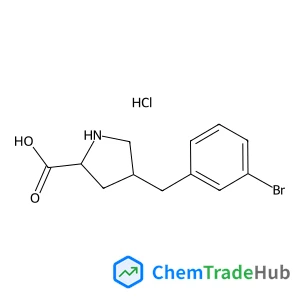
(2S,4R)-4-(3-Bromobenzyl)pyrrolidine-2-carboxylic acid hydrochloride
CAS番号:
1049734-10-2
分子式:
C12H15BrClNO2
![2-[(E)-(2-Methoxyphenyl)diazenyl]-3-oxo-N-(2-oxo-2,3-dihydro-1H-benzimidazol-5-yl)butanamide structure](https://static.chemtradehub.com/structs/821/82199-12-0-f1d0.webp "2-[(E)-(2-Methoxyphenyl)diazenyl]-3-oxo-N-(2-oxo-2,3-dihydro-1H-benzimidazol-5-yl)butanamide structure")
おすすめサプライヤー





免責事項
このページに表示される学術雑誌情報は、参考および研究目的のみを目的としています。当社は雑誌出版社とは提携しておらず、投稿の取り扱いも行っておりません。出版に関するお問い合わせは、各雑誌出版社に直接ご連絡ください。
表示されている情報に誤りがある場合は、support@chemtradehub.com までご連絡ください。迅速に確認し、対応いたします。