













Topology of the magnetically induced current density and proton magnetic shielding in hydrogen bonded systems
文献情報
出版日
2015-01-23
DOI
10.1039/C4CP05920D
インパクトファクター
3.676
著者
Guglielmo Monaco, Paolo Della Porta, Mirosław Jabłoński, Riccardo Zanasi
原文を見る
要旨
It is pointed out that a common feature of the current density induced in hydrogen bonded systems X–H⋯Y–Z by a magnetic field perpendicular to the H-bond is a continuous stagnation line made of (2,0) saddle points. The saddle line cuts the H-bond almost perpendicularly near the bond critical point (BCP). This implies the confinement of the current density within three basins of current delimited by two separatrices formed by all the asymptotic trajectories originating and terminating at the saddle points. Then, the perpendicular nuclear magnetic shielding (and magnetizability) is partitioned into three contributions: one for the X–H fragment, one for Y–Z, and an external one surrounding the former two. This permits us to ascertain that the largely decreased perpendicular proton magnetic shielding is determined by a local effect inside the X–H domain due, ultimately, to a minimal loss of electron charge density around the hydrogen. A drop as small as 2–3% of an electron within a restricted region around the hydrogen nucleus causes a deshielding effect as large as 4.5–5 ppm, namely 20% of the free-molecule shielding, thus making NMR a very sensitive technique for detecting hydrogen bond formation, as it is well-known experimentally.
関連文献
Bypassing the requirement for aminoacyl-tRNA by a cyclodipeptide synthase enzyme
Christopher J. Harding, Emmajay Sutherland, Jane G. Hanna, Douglas R. Houston, Clarissa M. Czekster
2021-01-15
Paper
DOI: 10.1039/D0CB00142B
The chemical biology of coronavirus host–cell interactions
Suprama Datta, Erik C. Hett, Kalpit A. Vora, Rob C. Oslund, Olugbeminiyi O. Fadeyi, Andrew Emili
2020-12-23
Review Article
DOI: 10.1039/D0CB00197J
Met80 and Tyr67 affect the chemical unfolding of yeast cytochrome c: comparing the solution vs. immobilized state
Alessandro Paradisi, Lidia Lancellotti, Marco Borsari, Marzia Bellei, Carlo Augusto Bortolotti, Giulia Di Rocco, Antonio Ranieri, Marco Sola, Gianantonio Battistuzzi
2020-09-09
Paper
DOI: 10.1039/D0CB00115E
Cyclic peptide drugs approved in the last two decades (2001–2021)
Huiya Zhang, Shiyu Chen
2021-11-05
Review Article
DOI: 10.1039/D1CB00154J
Inhibition of SC4MOL and HSD17B7 shifts cellular sterol composition and promotes oligodendrocyte formation
Matthew J Pleshinger, Ryan M. Friedrich, Zita Hubler, Adrianna M. Rivera-León, Farrah Gao, David Yan, Joel L. Sax, Ramya Srinivasan, Ilya Bederman, H. Elizabeth Shick, Paul J. Tesar, Drew J. Adams
2021-10-21
Paper
DOI: 10.1039/D1CB00145K
Faster, better, and cheaper: harnessing microfluidics and mass spectrometry for biotechnology
Markus de Raad
2021-07-20
Review Article
DOI: 10.1039/D1CB00112D
In vivo delivery of a fluorescent FPR2/ALX-targeted probe using focused ultrasound and microbubbles to image activated microglia
Sophie V. Morse, Tamara Boltersdorf, Felicity N. E. Gavins, James J. Choi, Nicholas J. Long
2020-09-23
Communication
DOI: 10.1039/D0CB00140F
こちらもおすすめ
化合物よくある質問
2-メトキシ-4-(メチルスルフィニル)アミンの主な用途は何ですか?
2-メトキシ-4-(メチルスルフィニル)アミンは、主に医薬品および農薬の製造に使用されます。また、合成化学の一部として研究用材料としても利用されます。
41608-73-52-Methoxy-4-(methyls...
118684-13-24-(Bromomethyl)-3-me...
化合物よくある質問
4,6-二氯-N-甲基ピラミジンアミンの代替品はありますか?
代替品としては、4,6-二クロロピラミジンアミンや他のピラミジン系化合物が考えられます。ただし、目的と用途によって最適な代替品は異なります。
10397-15-64,6-Dichloro-N-methy...
化合物よくある質問
6-氯-4-甲基-1H-吲哚を含む廃棄物はどのように処理すべきですか?
6-氯-4-甲基-1H-吲哚の廃棄物は、適切な容器に収集し、密閉して保管します。温度は常温、湿度は低く、直射日光を避けて保管することを推奨します。廃棄処理は専門...
885520-84-36-chloro-4-methyl-1H...
化合物よくある質問
2-フローユロ-4-(トリフルオロメチル)ベンゾイドについて「に適用される法規ガイドラインは何ですか」
2-フローユロ-4-(トリフルオロメチル)ベンゾイドのCAS番号は207974-08-1です。この化合物はGHS分類で毒性物質と有害な反応物質として分類されます...
207974-08-1[2-Fluoro-4-(trifluo...
化合物よくある質問
4-ニトロフェニルN-[(ベンゼルオキシルカーボンイル]グリシングリシングリシン酸はどのように保存すればよいですか?
4-ニトロフェニルN-[(ベンゼルオキシルカーボンイル]グリシングリシングリシン酸は、室温で暗所に保管し、乾燥した環境で保存することを推奨します。容器は密閉性の...
19811-64-44-Nitrophenyl N-[(be...
化合物よくある質問
イソデスロラタドリンの代替品はありますか?
イソデスロラタドリンの代替品としては、デスロラタドリンや他の抗ヒスタミン薬が挙げられます。具体的には、デスロラタドリン、ラセカミド、フェルタドリンなどが、症状や...
183198-49-4Iso Desloratadine
化合物よくある質問
5-甲氧基-1,2,3,4-四氢异喹啉盐酸盐はどのように合成されますか?
5-甲氧基-1,2,3,4-四氢异喹啉盐酸盐の一般的な合成方法は、メタノール中で5-メトキシ-1,2,3,4-四ヒュドロイソキシンを塩酸で塩化します。この反応で...
103030-69-95-Methoxy-1,2,3,4-te...
化合物よくある質問
4-アミノ-5-メトキシ-2-トルエンサルホニック酸についての法規ガイドラインは何ですか?
CAS番号6471-78-9の4-アミノ-5-メトキシ-2-トルエンサルホニック酸は、GHS分類では corrosive(腐食性)と識別されます。EUのREAC...
6471-78-94-Amino-5-Methoxy-2-...
化合物よくある質問
甲基孕酮を取り扱う際の実験室安全事項は何ですか?
甲基孕酮の取り扱いは、PPE(個人保護具)の使用が必要な重要な安全事項を伴います。防塵マスク、ゴーグル、手袋を着用することが推奨されます。ドラフトチャンバーを使...
204063-33-22-[(Diphenylmethyl)a...
掲載誌
Physical Chemistry Chemical Physics

CiteScore:
5.5
自己引用率:
10.3%
年間論文数:
3036
Physical Chemistry Chemical Physics (PCCP) is an international journal co-owned by 19 physical chemistry and physics societies from around the world. This journal publishes original, cutting-edge research in physical chemistry, chemical physics and biophysical chemistry. To be suitable for publication in PCCP, articles must include significant innovation and/or insight into physical chemistry; this is the most important criterion that reviewers and Editors will judge against when evaluating submissions. The journal has a broad scope and welcomes contributions spanning experiment, theory, computation and data science. Topical coverage includes spectroscopy, dynamics, kinetics, statistical mechanics, thermodynamics, electrochemistry, catalysis, surface science, quantum mechanics, quantum computing and machine learning. Interdisciplinary research areas such as polymers and soft matter, materials, nanoscience, energy, surfaces/interfaces, and biophysical chemistry are welcomed if they demonstrate significant innovation and/or insight into physical chemistry. Joined experimental/theoretical studies are particularly appreciated when complementary and based on up-to-date approaches.
おすすめ化合物
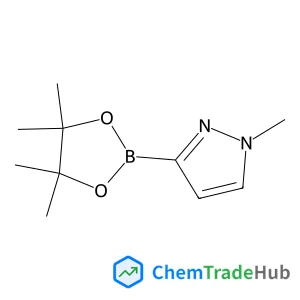
1-Methyl-3-(4,4,5,5-tetramethyl-1,3,2-dioxaborolan-2-yl)-1H-pyrazole
CAS番号:
1020174-04-2
分子式:
C10H17BN2O2
おすすめサプライヤー





免責事項
このページに表示される学術雑誌情報は、参考および研究目的のみを目的としています。当社は雑誌出版社とは提携しておらず、投稿の取り扱いも行っておりません。出版に関するお問い合わせは、各雑誌出版社に直接ご連絡ください。
表示されている情報に誤りがある場合は、support@chemtradehub.com までご連絡ください。迅速に確認し、対応いたします。