![Sodium 4-{[(2R,3R)-2-[(dichloroacetyl)amino]-3-hydroxy-3-(4-nitrophenyl)propyl]oxy}-4-oxobutanoate structure](https://static.chemtradehub.com/structs/982/982-57-0-e747.webp "Sodium 4-{[(2R,3R)-2-[(dichloroacetyl)amino]-3-hydroxy-3-(4-nitrophenyl)propyl]oxy}-4-oxobutanoate structure")
Sodium 4-{[(2R,3R)-2-[(dichloroacetyl)amino]-3-hydroxy-3-(4-nitrophenyl)propyl]oxy}-4-oxobutanoate
CAS番号:
982-57-0
分子式:
C15H15Cl2N2NaO8
Nono Arai, Toshihide Nabatame, Yoshiki Wada, Chung Vu Hoang
We report on measurements and simulations of the efficient sunlight-driven and visible-active photocatalysts composed of plasmonic metal nanoparticles and ZnO nanowire (NW) arrays fabricated via an all-wet-chemical route. Because of the coupling between the ZnO dielectric response and the excitation of the Ag or Au nanoparticles, efficient electronic excitation can be induced in the vicinity of the metal–ZnO interfaces because optically-excited plasmonic particles can not only concentrate the electromagnetic field at the ZnO/particle interface, but also act as efficient sources of plasmonic hot electrons to be injected into the conduction band of the ZnO catalyst. The catalytic activities of the fabricated ZnO NWs are examined by photodegradation of methylene blue and by photocurrent measurements in a photovoltaic configuration. Numerical electromagnetic simulations were used to understand the behavior of the light on the nanometer-scale to clarify the catalytic enhancement mechanisms in both the ultraviolet (UV) and visible (VIS) regions. In addition, simulation results indicated that a near-surface normal but slightly tilted ZnO NW array geometry would provide an increased optical path length and enhanced multiple scattering and absorption processes arising from the localized surface plasmon resonances of the nanoparticles. The results obtained here clarify the role of the plasmon resonance and provide us with useful knowledge for the development of metal-oxide nano-hybrid materials for solar energy conversion.
Brent R. Westbrook, Katelyn M. Dreux, Gregory S. Tschumper, Joseph S. Francisco, Ryan C. Fortenberry
DOI: 10.1039/C8CP05378B
Marcileia Zanatta, Víctor U. Antunes, Cláudio F. Tormena, Jairton Dupont, Francisco P. dos Santos
DOI: 10.1039/C8CP07071G
Dong Fan, Shaohua Lu, Chengke Chen, Meiyan Jiang, Xiao Li, Xiaojun Hu
DOI: 10.1039/C8CP06346J
Frank A. F. Winiberg, Carl J. Percival, M. Anwar H. Khan, Dudley E. Shallcross, Yingdi Liu, Stanley P. Sander
DOI: 10.1039/C8CP04193H
Bole Chen, Weiguo Sun, Xiaoyu Kuang, Xinxin Xia, Hongxiao Shi, Gennady L. Gutsev
DOI: 10.1039/C8CP05725G
Masahiro Sato, Akiko Kumada, Kunihiko Hidaka
DOI: 10.1039/C8CP05558K
Carolina G. Moreno, Oscar Gálvez, Vicente López-Arza Moreno, Eva María Espildora-García, María Teresa Baeza-Romero
DOI: 10.1039/C8CP04394A
Andrew C.-H. Sue
DOI: 10.1039/C8CP04770G
Ke Li, Lifen Liu, Hao Wu, Shanlong Li, Chunyang Yu, Yongfeng Zhou, Wei Huang, Deyue Yan
DOI: 10.1039/C8CP05825C
N,N-二乙基-4-ブロモナフサルレン-1-カルボニルアミドは、4-ブロモナフサルビンとN,N-ジエチルアミド基を有する反応物を用いて合成されます。触媒の使用は...
大黄酚-8-O-葡萄糖苷の市場は、医薬品、機能食品、研究化学物質としての需要が高まっています。特に、その抗炎症作用や抗ウイルス作用に関する研究が増えています。価...
アトラキュリウム不純物5塩酸塩のCAS番号は2048273-58-9です。この化合物は結晶性であり、分子量は約435.4 g/molです。水に溶けやすく、反応性...
2-イソブチルシクロヘキサン酮は、CAS番号39207-65-3の化合物で、化学式はC11H20Oです。この化合物は、有機合成化学において重要な原料として使用さ...
この化合物は毒性と刺激性があります。密閉されたドラフトチャンバー内で処理し、PPE(ゴーグル、手袋)を使用してください。漏洩時は即座に通気し、適切な漏洩処理材を...
6-アミノニコニタルデオキシド塩化水和物のCAS番号は1588441-31-9です。この化合物は結晶性粉末で、分子量は220.63 g/molです。水に溶けやす...
塩酸中毒藜碱は、ピペリジンとピリジンの反応により合成されます。具体的には、ピペリジンとピリジンを反応させ、塩基触媒を使用してピペリジン環内 enters 3-ピ...
この化合物はCAS番号834884-81-0で、GHS分類では高毒性の危険性を持つと見なされます。REACH規則では登録が求められ、FDA/EPAでは環境、健康...
CAS番号 866683-57-0の1-エチynyル-3-(三氟甲氧基)ベンゼンは、GHS分類では易燃性化学品が該当し、REACH規則では特定の危険性を評価する...
メチル2-ブロモイソニコネートの代替品には、メチルイソニコネートや他のブロモ化合物が含まれます。これらの代替物は、特定の用途に応じて選択されます。

Physical Chemistry Chemical Physics (PCCP) is an international journal co-owned by 19 physical chemistry and physics societies from around the world. This journal publishes original, cutting-edge research in physical chemistry, chemical physics and biophysical chemistry. To be suitable for publication in PCCP, articles must include significant innovation and/or insight into physical chemistry; this is the most important criterion that reviewers and Editors will judge against when evaluating submissions. The journal has a broad scope and welcomes contributions spanning experiment, theory, computation and data science. Topical coverage includes spectroscopy, dynamics, kinetics, statistical mechanics, thermodynamics, electrochemistry, catalysis, surface science, quantum mechanics, quantum computing and machine learning. Interdisciplinary research areas such as polymers and soft matter, materials, nanoscience, energy, surfaces/interfaces, and biophysical chemistry are welcomed if they demonstrate significant innovation and/or insight into physical chemistry. Joined experimental/theoretical studies are particularly appreciated when complementary and based on up-to-date approaches.
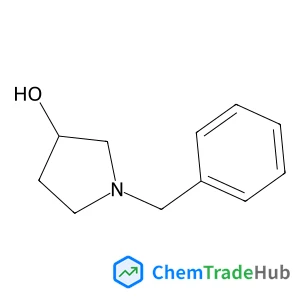
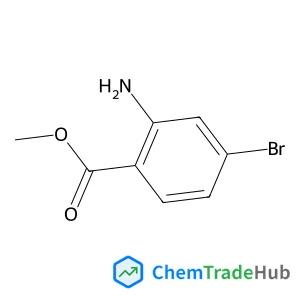
![[4-(Hydroxymethyl)phenyl]acetic acid structure](https://static.chemtradehub.com/structs/734/73401-74-8-5a54.webp "[4-(Hydroxymethyl)phenyl]acetic acid structure")