












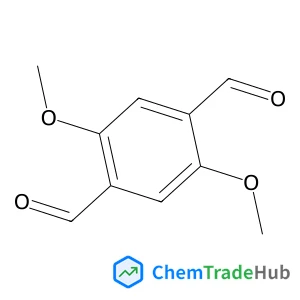
An alternative interpretation of the ultracold methylhydroxycarbene rearrangement mechanism: cooperative effects
文献情報
出版日
2015-02-11
DOI
10.1039/C4CP05842A
インパクトファクター
3.676
著者
Sara F. de A. Morais, Kleber C. Mundim, Daví A. C. Ferreira
原文を見る
要旨
Recent studies have reported surprising results related to the rearrangement of carbenes under ultracold conditions, making use of sophisticated models of quantum tunnelling to explain the observed phenomena. Here, we demonstrate that a methylhydroxycarbene (H3C–C–OH) rearrangement is possible by making changes in molecularity (i.e., through cooperative effects), owing to intermolecular hydrogen bond/H-transfer. The model used for accomplishing these changes in molecularity suggests the occurrence of two chemical species during the rearrangement and preferential formation of acetaldehyde. We propose an alternative interpretation for the methylhydroxycarbene rearrangement, as well as for a bimolecular isomerization mechanism for acetaldehyde formation with an activation barrier, Ea, of +0.25 kcal mol−1, relative to 1a′ (−8.06 kcal mol−1 relative to 1a); this barrier is lower than that required by H-tunnelling as proposed by Schreiner et al. We also note that the mechanism for obtaining vinyl alcohol leads to the simultaneous formation of acetaldehyde through an Ea of +13.53 kcal mol−1, relative to 1a (+0.93 kcal mol−1 relative to 1b), again confirming the predominant presence of acetaldehyde.
関連文献
Computation of accurate excitation energies for large organic molecules with double-hybrid density functionals
Jonas Moellmann, Stefan Grimme
2009-03-23
Paper
DOI: 10.1039/B902315A
Thermal expansivity of amyloid β16–22peptides and their aggregates in water
I. Brovchenko, R. R. Burri, A. Krukau, A. Oleinikova
2009-03-26
Paper
DOI: 10.1039/B820340G
Size effect on UV-Vis absorption properties of colloidal C60 particles in water
Haruhisa Kato, Ayako Nakamura, Kayori Takahashi, Shinichi Kinugasa
2009-04-16
Communication
DOI: 10.1039/B904593G
Chirality-dependent hydrogen bond direction in jet-cooled (S)-1,2,3,4-tetrahydro-3-isoquinoline methanol (THIQM): IR-ion dip vibrational spectroscopy of the neutral and the ion
Ahmed Mahjoub, Valeria Lepere, Katia Le Barbu-Debus, Nikhil Guchhait, Anne Zehnacker
2009-04-03
Paper
DOI: 10.1039/B822871J
Ultrasound-assisted synthesis of carbon materials
Sara E. Skrabalak
2009-03-18
Perspective
DOI: 10.1039/B823408F
Morphology and optical responses of SERS active π-conjugated poly(N-ethyl-2-ethynylpyridinium iodide)/Ag nanocomposite systems
Blanka Vlčková, Marek Procházka, Jan Sedláček, Jiří Vohlídal, Jiří Pfleger
2009-04-23
Paper
DOI: 10.1039/B817253F
Quasiclassical trajectory calculations of the HO2 + NO reaction on a global potential energy surface
Chao Chen, Benjamin C. Shepler, Bastiaan J. Braams, Joel M. Bowman
2009-04-21
Paper
DOI: 10.1039/B823031E
On the vibronic level structure in the NO3 radical Part III. Observation of intensity borrowing via ground state mixing
John F. Stanton, Mitchio Okumura
2009-05-18
Paper
DOI: 10.1039/B902252J
The energetics of allosteric regulation of ADP release from myosin heads
Del R. Jackson, Jr., Josh E. Baker
2009-05-08
Paper
DOI: 10.1039/B900998A
Stochastic bifurcation, slow fluctuations, and bistability as an origin of biochemical complexity
Hong Qian, Pei-Zhe Shi, Jianhua Xing
2009-04-08
Paper
DOI: 10.1039/B900335P
こちらもおすすめ
化合物よくある質問
N,N-二乙基-4-ブロモナフサルレン-1-カルボニルアミドはどのように合成されますか?
N,N-二乙基-4-ブロモナフサルレン-1-カルボニルアミドは、4-ブロモナフサルビンとN,N-ジエチルアミド基を有する反応物を用いて合成されます。触媒の使用は...
1199773-48-24-bromo-N,N-diethyl-...
化合物よくある質問
大黄酚-8-O-葡萄糖苷の市場動向や研究トレンドはどうですか?
大黄酚-8-O-葡萄糖苷の市場は、医薬品、機能食品、研究化学物質としての需要が高まっています。特に、その抗炎症作用や抗ウイルス作用に関する研究が増えています。価...
13241-28-68-Hydroxy-6-methyl-9...
化合物よくある質問
アトラキュリウム不純物5塩酸塩の物理化学的性質は何ですか?
アトラキュリウム不純物5塩酸塩のCAS番号は2048273-58-9です。この化合物は結晶性であり、分子量は約435.4 g/molです。水に溶けやすく、反応性...
2048273-58-9Atracurium Impurity ...
化合物よくある質問
2-イソブチルシクロヘキサン酮とは何ですか?
2-イソブチルシクロヘキサン酮は、CAS番号39207-65-3の化合物で、化学式はC11H20Oです。この化合物は、有機合成化学において重要な原料として使用さ...
39207-65-32-Isobutyrylcyclohex...
化合物よくある質問
2-溴-6-甲基烟酸を取り扱う際の実験室安全事項は何ですか?
この化合物は毒性と刺激性があります。密閉されたドラフトチャンバー内で処理し、PPE(ゴーグル、手袋)を使用してください。漏洩時は即座に通気し、適切な漏洩処理材を...
1060810-09-42-bromo-6-methylpyri...
化合物よくある質問
6-アミノニコニタルデオキシド塩化水和物の物理化学的性質は何ですか?
6-アミノニコニタルデオキシド塩化水和物のCAS番号は1588441-31-9です。この化合物は結晶性粉末で、分子量は220.63 g/molです。水に溶けやす...
1588441-31-96-Aminonicotinaldehy...
化合物よくある質問
塩酸中毒藜碱はどのように合成されますか?
塩酸中毒藜碱は、ピペリジンとピリジンの反応により合成されます。具体的には、ピペリジンとピリジンを反応させ、塩基触媒を使用してピペリジン環内 enters 3-ピ...
15251-47-52-(3-PYRIDINYL)PIPER...
化合物よくある質問
Methyl 4-(6-formyl-2-pyridinyl)benzoateに適用される法規ガイドラインは何ですか?
この化合物はCAS番号834884-81-0で、GHS分類では高毒性の危険性を持つと見なされます。REACH規則では登録が求められ、FDA/EPAでは環境、健康...
834884-81-0Methyl 4-(6-formyl-2...
化合物よくある質問
1-エチynyル-3-(三氟甲氧基)ベンゼンについて「に適用される法規ガイドラインは何ですか」
CAS番号 866683-57-0の1-エチynyル-3-(三氟甲氧基)ベンゼンは、GHS分類では易燃性化学品が該当し、REACH規則では特定の危険性を評価する...
866683-57-01-Ethynyl-3-(trifluo...
化合物よくある質問
メチル2-ブロモイソニコネートの代替品はありますか?
メチル2-ブロモイソニコネートの代替品には、メチルイソニコネートや他のブロモ化合物が含まれます。これらの代替物は、特定の用途に応じて選択されます。
26156-48-9Methyl 2-bromoisonic...
掲載誌
Physical Chemistry Chemical Physics

CiteScore:
5.5
自己引用率:
10.3%
年間論文数:
3036
Physical Chemistry Chemical Physics (PCCP) is an international journal co-owned by 19 physical chemistry and physics societies from around the world. This journal publishes original, cutting-edge research in physical chemistry, chemical physics and biophysical chemistry. To be suitable for publication in PCCP, articles must include significant innovation and/or insight into physical chemistry; this is the most important criterion that reviewers and Editors will judge against when evaluating submissions. The journal has a broad scope and welcomes contributions spanning experiment, theory, computation and data science. Topical coverage includes spectroscopy, dynamics, kinetics, statistical mechanics, thermodynamics, electrochemistry, catalysis, surface science, quantum mechanics, quantum computing and machine learning. Interdisciplinary research areas such as polymers and soft matter, materials, nanoscience, energy, surfaces/interfaces, and biophysical chemistry are welcomed if they demonstrate significant innovation and/or insight into physical chemistry. Joined experimental/theoretical studies are particularly appreciated when complementary and based on up-to-date approaches.
おすすめ化合物
![(2R)-2,7,8-Trimethyl-2-[(4R,8R)-4,8,12-trimethyltridecyl]-6-chromanol structure](https://static.chemtradehub.com/structs/54-/54-28-4-155c.webp "(2R)-2,7,8-Trimethyl-2-[(4R,8R)-4,8,12-trimethyltridecyl]-6-chromanol structure")
おすすめサプライヤー





免責事項
このページに表示される学術雑誌情報は、参考および研究目的のみを目的としています。当社は雑誌出版社とは提携しておらず、投稿の取り扱いも行っておりません。出版に関するお問い合わせは、各雑誌出版社に直接ご連絡ください。
表示されている情報に誤りがある場合は、support@chemtradehub.com までご連絡ください。迅速に確認し、対応いたします。