













Interaction of different prototropic species of an anticancer drug ellipticine with HSA and IgG proteins: multispectroscopic and molecular modeling studies
文献情報
出版日
2015-05-19
DOI
10.1039/C4CP05734A
インパクトファクター
3.676
著者
Raina Thakur, Anupam Das, Vandna Sharma, Chandan Adhikari, Kalyan Sundar Ghosh, Anjan Chakraborty
原文を見る
要旨
Studies on interactions between an anticancer alkaloid, ellipticine, and various carrier proteins in blood serum show tangible results to gain insight into the solubility and transport of the drug under physiological conditions. In this report, we extensively studied the interactions of different prototropic species of ellipticine with two prominent serum proteins namely human serum albumin (HSA) and immunoglobulin G (IgG) in their native and partially unfolded states using steady state and time resolved fluorescence spectroscopy, molecular docking and circular dichroism (CD). Both the fluorescence techniques and molecular modeling studies elucidate that only neutral species of ellipticine binds to HSA in the sudlow site II. Unlike HSA, IgG in the native state mostly binds to cationic species of ellipticine. However, in partially unfolded configuration, IgG binds to the neutral ellipticine molecules. Molecular docking studies indicate the prevalence of electrostatic interactions involving charged residues in the binding process of cationic species of ellipticine with native IgG in its Fab region. In native conformation, the hydrophobic residues of the Fab region are found to be buried completely by the ligand. This implies that the hydrophobic interaction will be favored by unfolding of IgG through which the hydrophobic pocket will be more accessible to neutral species of ellipticine. The circular dichroism measurements reveal that upon interaction with ellipticine, heat and acid treated HSA resumes its α-helical content. This conclusive comparative study on interactions of IgG and HSA with ellipticine yields the result that native HSA is responsible for transport of neutral species of ellipticine whereas IgG carries cationic ellipticine in its native form.
関連文献
Chemical modification of graphene with a thermotropic liquid crystalline polymer and its reinforcement effect in the polymer matrix
Ying Jing, Hui Tang, Guijun Yu, Peiyi Wu
2013-02-14
Paper
DOI: 10.1039/C3PY00126A
Nucleophilic thiol-Michael chemistry and hyperbranched (co)polymers: synthesis and ring-opening metathesis (co)polymerization of novel difunctional exo-7-oxanorbornenes with in situ inimer formation
Meina Liu, Beng Hoon Tan, Robert P. Burford, Andrew B. Lowe
2013-04-08
Paper
DOI: 10.1039/C3PY00110E
Organoselenium compounds: development of a universal “living” free radical polymerization mediator
Jindong Zeng, Jian Zhu, Xiangqiang Pan, Zhengbiao Zhang, Nianchen Zhou, Zhenping Cheng, Wei Zhang, Xiulin Zhu
2013-04-19
Communication
DOI: 10.1039/C3PY00285C
Synthesis and characterization of diazafluorene-based oligofluorenes and polyfluorene
Wei-Jie Li, Bin Liu, Yan Qian, Ling-Hai Xie, Jing Wang, Sheng-Biao Li, Wei Huang
2012-12-11
Paper
DOI: 10.1039/C2PY20971C
Fluorinated thienyl-quinoxaline-based D–π–A-type copolymer toward efficient polymer solar cells: synthesis, characterization, and photovoltaic properties
Chung-Hao Liu, Yen-Hao Hsu, Yun-Chen Chien, Chih-Yang Cheng
2013-03-20
Paper
DOI: 10.1039/C3PY00235G
Evaluation of pressure and temperature effects on hydropyrolysis of pine sawdust: pyrolysate composition and kinetics studies
Harshavardhan Choudhari, Dhairya Mehta
2020-06-16
Paper
DOI: 10.1039/D0RE00121J
Benzotrithiophene and benzodithiophene-based polymers for efficient polymer solar cells with high open-circuit voltage
Guobing Zhang, Jianyu Yuan, Jingxuan Ma, Hongbo Lu, Longzhen Qiu, Wanli Ma
2013-03-22
Paper
DOI: 10.1039/C3PY00251A
Polymerization behaviors and polymer branching structures in ATRP of monovinyl and divinyl monomers
Hongjun Yang, Xiaoqiang Xue, Bibiao Jiang, Jianhai Chen, Yang Yang, Hongting Pu, Yun Liu, Dongliang Zhang, Lizhi Kong, Guangqun Zhai
2013-04-03
Paper
DOI: 10.1039/C3PY00338H
Fluorescence turn-on detection of DNA based on the aggregation-induced emission of conjugated poly(pyridinium salt)s
Jingfen Sun, Yan Lu, Lei Wang, Dandan Cheng, Yujiao Sun, Xianshun Zeng
2013-05-09
Paper
DOI: 10.1039/C3PY00350G
Inorganic nanoparticle synthesis in flow reactors – applications and future directions
Olga Długosz, Marcin Banach
2020-08-06
Review Article
DOI: 10.1039/D0RE00188K
こちらもおすすめ
化合物よくある質問
2-ヒドロキシ-5-ニトロベンジンブロモイドの代替品はありますか?
2-ヒドロキシ-5-ニトロベンジンブロモイドは特定の化学反応に適しているため、代替品は限られています。しかし、同様の構造を持つ2-ヒドロキシ-4-ニトロベンジン...
772-33-82-(Bromomethyl)-4-ni...
化合物よくある質問
N-(2-ブロモフェニル)-1-チロール-3-オキソ-3-(ピペリジニル)プロペン-2-イル)ベンゼンアミドを取り扱う際の実験室安全事項は何ですか?
N-(2-ブロモフェニル)-1-チロール-3-オキソ-3-(ピペリジニル)プロペン-2-イル)ベンゼンアミドは有毒で、皮膚や粘膜に刺激を与える可能性があります。...
1800044-77-2N-[(1Z)-1-(2-Bromoph...
化合物よくある質問
1,3プロパンジオール,2-[2-(2アミノ-6クロロ-9Hピリミジン-9-イル)エチル-1,1,2,2-D4]-2,3-ジアセタートの市場動向や研究トレンドはどうですか?
この化合物は、新規治療薬の開発に注目されています。市場では、その有効性と安全性が評価され、研究分野では、分子生物学と医薬化学の新たな発見が期待されています。
1020718-81-31,3-Propanediol, 2-[...
579-44-2Ethanone, 2-hydroxy-...
化合物よくある質問
Succinimidyl-alanyl-phenylalanyl-prolyl-phenylalanine 4-nitroanilide はどの業界で使用されていますか?
Succinimidyl-alanyl-phenylalanyl-prolyl-phenylalanine 4-nitroanilide は主に医薬品開発やポ...
128802-73-3succinimidyl-alanyl-...
化合物よくある質問
メチル6-アミノ-5-クロロピリジン-2-カーボイル酸について、適用される法規ガイドラインは何ですか?
メチル6-アミノ-5-クロロピリジン-2-カーボイル酸(CAS番号: 1256794-05-4)の使用には、GHS( Globally Harmonized S...
1256794-05-4Methyl 6-amino-5-chl...
化合物よくある質問
エチル4-(シクロ Pentagonyl)アミノ-2-メチル硫化基ピリミジン-5-カルボキシレートを取り扱う際の実験室安全事項は何ですか?
取り扱いには、耐薬品性の容器を使用し、通気性の良い場所で操作することを推奨します。漏れ時は、SDS(安全データシート)を参照して適切な措置を取ること。手洗いと洗...
211245-62-4ethyl 4-(cyclopentyl...
化合物よくある質問
(S)-3-ベンZYルピペリジン塩酸塩とは何ですか?
(S)-3-ベンZYルピペリジン塩酸塩は、CAS番号1258940-00-9で表される化合物です。これは、(S)-3-苯基哌啶的盐酸盐であり、主に医薬品の原料と...
1258940-00-9(S)-3-Phenylpiperidi...
化合物よくある質問
3,5-二甲基金剛胺の主な用途は何ですか?
3,5-二甲基金剛胺は、主に医薬品の原料として使用され、また抗うつ薬や抗アルツハイマー薬の開発に利用されます。さらに、化粧品や食品添加物の製造でも重要な役割を果...
19988-45-52-(2,3-Dihydroxyphen...
化合物よくある質問
ビス(4-メチル-2-ペンチル)フェニルカルボン酸エステルの代替品はありますか?
ビス(4-メチル-2-ペンチル)フェニルカルボン酸エステル (CAS番号: 1398066-13-1) の代替品には、ビス(2-エチルヘキシル)フェノールカルボ...
1398066-13-1Bis(4-methyl-2-penty...
掲載誌
Physical Chemistry Chemical Physics

CiteScore:
5.5
自己引用率:
10.3%
年間論文数:
3036
Physical Chemistry Chemical Physics (PCCP) is an international journal co-owned by 19 physical chemistry and physics societies from around the world. This journal publishes original, cutting-edge research in physical chemistry, chemical physics and biophysical chemistry. To be suitable for publication in PCCP, articles must include significant innovation and/or insight into physical chemistry; this is the most important criterion that reviewers and Editors will judge against when evaluating submissions. The journal has a broad scope and welcomes contributions spanning experiment, theory, computation and data science. Topical coverage includes spectroscopy, dynamics, kinetics, statistical mechanics, thermodynamics, electrochemistry, catalysis, surface science, quantum mechanics, quantum computing and machine learning. Interdisciplinary research areas such as polymers and soft matter, materials, nanoscience, energy, surfaces/interfaces, and biophysical chemistry are welcomed if they demonstrate significant innovation and/or insight into physical chemistry. Joined experimental/theoretical studies are particularly appreciated when complementary and based on up-to-date approaches.
おすすめ化合物
![Pyrazolo[1,5-a]pyridine-3-carbothioamide structure](https://static.chemtradehub.com/structs/885/885275-44-5-aae0.webp "Pyrazolo[1,5-a]pyridine-3-carbothioamide structure")
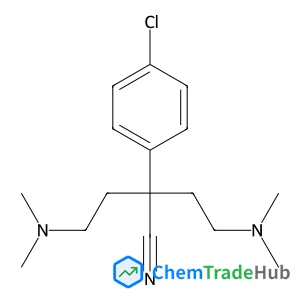
2-(4-Chlorophenyl)-4-(dimethylamino)-2-(2-(dimethylamino)ethyl)butanenitrile
CAS番号:
1246816-57-8
分子式:
C16H24ClN3
おすすめサプライヤー





免責事項
このページに表示される学術雑誌情報は、参考および研究目的のみを目的としています。当社は雑誌出版社とは提携しておらず、投稿の取り扱いも行っておりません。出版に関するお問い合わせは、各雑誌出版社に直接ご連絡ください。
表示されている情報に誤りがある場合は、support@chemtradehub.com までご連絡ください。迅速に確認し、対応いたします。