












![Ethyl thieno[3,2-f]quinoline-2-carboxylate structure](https://static.chemtradehub.com/structs/299/29948-26-3-f62b.webp "Ethyl thieno[3,2-f]quinoline-2-carboxylate structure")
Unequal effect of ethanol–water on the stability of ct-DNA, poly[(dA–dT)]2 and poly(rA)·poly(rU). Thermophysical properties
文献情報
出版日
2014-11-21
DOI
10.1039/C4CP03459G
インパクトファクター
3.676
著者
Rebeca Ruiz, Francisco J. Hoyuelos, Ana M. Navarro, José M. Leal, Begoña García
原文を見る
要旨
Ethanol affects unequally the thermal stability of DNA and RNA. It stabilizes RNA, while destabilizing DNA. The variation of the relative viscosity (η/η0) of [poly(dA–dT)]2 with temperature unveils transitions close to the respective denaturation temperature, calculated spectrophotometrically and calorimetrically. From the raw data densities and speeds of sound, the volumetric observables were calculated. In all cases studied, a change in sign from low to high ethanol content occurred for both partial molar volume (ϕV) and partial molar adiabatic compressibility (ϕKS). The minima, close to 10%, should correspond to the highest solvation and the maxima, close to 30%, to the lowest solvation. For 40–50% ethanol, the solvation increases again. The complex structure of ethanol–water, for which changes are observed in regions close to such critical concentrations, justifies the observed behaviour. The variation of ϕV and ϕKS was sharper for RNA compared with respect to DNA, indicating that the solvation sequence is poly(rA)·poly(rU) < ct-DNA < [poly(dA–dT)]2.
関連文献
Is ReO3 a mixed ionic–electronic conductor? A DFT study of defect formation and migration in a BVIO3 perovskite-type oxide
J. P. Parras, A. R. Genreith-Schriever, H. Zhang, T. Norby, R. A. De Souza
2018-02-27
Paper
DOI: 10.1039/C7CP08214B
Structure–composition trends in multicomponent borosilicate-based glasses deduced from molecular dynamics simulations with improved B–O and P–O force fields
Baltzar Stevensson, Yang Yu, Mattias Edén
2018-02-07
Paper
DOI: 10.1039/C7CP08593A
Electronic and optical properties of hydrogenated group-IV multilayer materials
Renato Borges Pontes, Rosana Rabelo Mançano, Rafael da Silva, Luiz Fernando Cótica, Roberto Hiroki Miwa, José Eduardo Padilha
2018-02-19
Paper
DOI: 10.1039/C7CP08471D
The ozonolysis of isoprene in a cryogenic buffer gas cell by high resolution microwave spectroscopy
Jessica P. Porterfield, Sandra Eibenberger, David Patterson, Michael C. McCarthy
2018-05-31
Paper
DOI: 10.1039/C8CP02055H
Adsorption of PAHs on interstellar ice viewed by classical molecular dynamics
Eric Michoulier, Aude Simon, Joëlle Mascetti, Céline Toubin
2018-03-06
Paper
DOI: 10.1039/C8CP00593A
Role of the (H2O)n (n = 1–3) cluster in the HO2 + HO → 3O2 + H2O reaction: mechanistic and kinetic studies
Tianlei Zhang, Xinguang Lan, Zhangyu Qiao, Rui Wang, Xiaohu Yu, Qiong Xu, Zhiyin Wang, Linxia Jin, ZhuQing Wang
2018-02-23
Paper
DOI: 10.1039/C8CP00020D
Electronic structure, optical and photocatalytic performance of SiC–MX2 (M = Mo, W and X = S, Se) van der Waals heterostructures
H. U. Din, M. Idrees, Chuong V. Nguyen, Li-Yong Gan, M. Maqbool, B. Amin
2018-08-29
Paper
DOI: 10.1039/C8CP03933J
Superatom chemistry: promising properties of near-spherical noble metal clusters
2018-08-28
Perspective
DOI: 10.1039/C8CP04651D
Spin coupling interactions in CC or B–B-cored porphyrin-mimetic graphene patch nitroxide diradicals
Meiyu Song, Xinyu Song
2018-02-20
Paper
DOI: 10.1039/C8CP00105G
こちらもおすすめ
化合物よくある質問
4'-ブロモビフェニル-3-メトークシーディ.ActionBarはどのように保存すればよいですか?
4'-ブロモビフェニル-3-メトークシーディ.ActionBarは、冷暗所で、直射日光を避け、密栓の容器に保存し、遠隔場所に保管してください。温度は常温(0〜2...
149506-25-24'-Bromo-biphenyl-3-...
2947-60-6(3-Methylphenyl)acet...
化合物よくある質問
2-異丙基フェニルヒドラジン塩酸塩とは何ですか?
2-異丙基フェニルヒドラジン塩酸塩は、CAS番号58928-82-8を有する化合物で、構造式はC11H14N2HClです。これは塩基性化合物であり、水に溶けやす...
58928-82-8(2-Isopropylphenyl)h...
化合物よくある質問
5-(4-クロロフェニル)-4H-1,2,4-三氮唑-3-アミンを取り扱う際の実験室安全事項は何ですか?
5-(4-クロロフェニル)-4H-1,2,4-三氮唑-3-アミンは取り扱いに注意が必要です。PPEとして防塵マスク、ゴーグル、手袋を使用し、ドラフトチャンバーを...
98554-00-85-(4-Chlorophenyl)-1...
化合物よくある質問
去甲基雷贝拉唑硫醚はどのように合成されますか?
去甲基雷贝拉唑硫醚は、ベンジミダゾール硫化物と3-メチル-4-ピリジノールの反応によって合成されます。具体的には、2-チオキシドベンジミダゾールと3-メチル-4...
117976-91-73-({2-[(1H-Benzimida...
化合物よくある質問
2-ブロモ-5-フロロ-N-(2-フェノールメチル)ベンゼンウレアは安全ですか?
2-ブロモ-5-フロロ-N-(2-フェノールメチル)ベンゼンウレアは、毒性や刺激性の実験データに基づき、適切な取扱いと防護措置を講じることで安全に使用できます。...
923722-86-52-Bromo-5-fluoro-N-(...
化合物よくある質問
対甲苯磺酸酯-四聚乙二醇-四氢吡喃醚の物理化学的性質は何ですか?
対甲苯磺酸酯-四聚乙二醇-四氢吡喃醚のCAS番号は86259-89-4です。この化合物は無色の液体で、分子量は約724.8です。高濃度では溶血性が報告されており...
86259-89-42-(2-{2-[2-(Tetrahyd...
化合物よくある質問
2-(3-(二氟甲基)-4-氟苯基)-4,4,5,5-四甲基-1,3,2-二噁硼戊環はどのように保存すればよいですか?
2-(3-(二氟甲基)-4-氟苯基)-4,4,5,5-四甲基-1,3,2-二噁硼戊環は、室温で暗い場所に保管し、直射日光から遠ざけ、容器は密閉状態で保存してくだ...
445303-65-12-[3-(difluoromethyl...
化合物よくある質問
6-アミノ-5-クロロ-2-シクロプロピルピリミジンカルボン酸の代替品はありますか?
この化合物の代替品には、ピロリミジン酸やその類似物、またピロリミジンカルボン酸の他の異性体があります。これらの代替品は、特定の化学反応や目的に応じて選択すること...
858956-08-86-Amino-5-chloro-2-c...
化合物よくある質問
5-クロロベンゾ[1,3]二オキセイン-4-アミンに適用される法規ガイドラインは何ですか?
5-クロロベンゾ[1,3]二オキセイン-4-アミンはCAS番号379228-45-2に該当します。この化合物はGHS分類でH314(接触により急性毒性がある)と...
379228-45-25-Chloro-1,3-benzodi...
掲載誌
Physical Chemistry Chemical Physics

CiteScore:
5.5
自己引用率:
10.3%
年間論文数:
3036
Physical Chemistry Chemical Physics (PCCP) is an international journal co-owned by 19 physical chemistry and physics societies from around the world. This journal publishes original, cutting-edge research in physical chemistry, chemical physics and biophysical chemistry. To be suitable for publication in PCCP, articles must include significant innovation and/or insight into physical chemistry; this is the most important criterion that reviewers and Editors will judge against when evaluating submissions. The journal has a broad scope and welcomes contributions spanning experiment, theory, computation and data science. Topical coverage includes spectroscopy, dynamics, kinetics, statistical mechanics, thermodynamics, electrochemistry, catalysis, surface science, quantum mechanics, quantum computing and machine learning. Interdisciplinary research areas such as polymers and soft matter, materials, nanoscience, energy, surfaces/interfaces, and biophysical chemistry are welcomed if they demonstrate significant innovation and/or insight into physical chemistry. Joined experimental/theoretical studies are particularly appreciated when complementary and based on up-to-date approaches.
おすすめ化合物
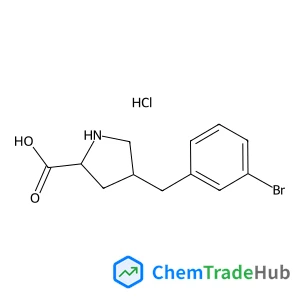
(2S,4R)-4-(3-Bromobenzyl)pyrrolidine-2-carboxylic acid hydrochloride
CAS番号:
1049734-10-2
分子式:
C12H15BrClNO2
![(1S)-1,5-Anhydro-2-O-alpha-L-arabinopyranosyl-1-[5-hydroxy-7-({6-O-[3-(4-hydroxy-3-methoxyphenyl)propanoyl]-beta-D-glucopyranosyl}oxy)-2-(4-hydroxyphenyl)-4-oxo-4H-chromen-6-yl]-D-glucitol structure](https://static.chemtradehub.com/structs/225/2252345-81-4-bcff.webp "(1S)-1,5-Anhydro-2-O-alpha-L-arabinopyranosyl-1-[5-hydroxy-7-({6-O-[3-(4-hydroxy-3-methoxyphenyl)propanoyl]-beta-D-glucopyranosyl}oxy)-2-(4-hydroxyphenyl)-4-oxo-4H-chromen-6-yl]-D-glucitol structure")
おすすめサプライヤー




免責事項
このページに表示される学術雑誌情報は、参考および研究目的のみを目的としています。当社は雑誌出版社とは提携しておらず、投稿の取り扱いも行っておりません。出版に関するお問い合わせは、各雑誌出版社に直接ご連絡ください。
表示されている情報に誤りがある場合は、support@chemtradehub.com までご連絡ください。迅速に確認し、対応いたします。