












Excluded volume effects on ionic partitioning in gels and microgels: a simulation study
文献情報
出版日
2014-10-16
DOI
10.1039/C4CP03314K
インパクトファクター
3.676
著者
Silvia Ahualli, Alberto Martín-Molina, Manuel Quesada-Pérez
原文を見る
要旨
In this work the effect of volume exclusion on ionic partitioning in swollen and moderately collapsed gels has been studied through coarse-grained simulations. Our results show that finite size effects yield deviations from the classical theory of Donnan exclusion. At low or moderate reservoir electrolyte concentration these discrepancies become important if one of the ions has diameters of just a few nanometers. When the reservoir electrolyte concentration grows, volume exclusion can lead to a drastic failure of the ideal Donnan exclusion even for conventional hydrated monoatomic ions. In addition, an approximate analytical expression for the partition coefficient of ionic species including the volume exclusion associated with the polymer network and the neutralizing counterions has been proposed and tested. This theoretical approach also provides an expression for the Donnan potential difference that takes such effects into account. Good agreement between theory and simulations is found for slightly and moderately charged gels (both at low and high reservoir electrolyte concentrations). The theory also works acceptably for highly charged gels at high salt concentrations or for electrolytes with large counterions.
関連文献
Thermoelectric performance of ZrNX (X = Cl, Br and I) monolayers
Nina Ge, Xinzhong Wang
2021-11-29
Paper
DOI: 10.1039/D1CP01928G
Combined first-principles statistical mechanics approach to sulfur structure in organic cathode hosts for polymer based lithium–sulfur (Li–S) batteries
Jörg Rappich, Victor G. Ruiz, Annika Bande
2021-11-26
Paper
DOI: 10.1039/D1CP04550D
Implementation of the interacting quantum atom energy decomposition using the CASPT2 method
Jesús Jara-Cortés, Edith Leal-Sánchez, Evelio Francisco, José A. Pérez-Pimienta, Ángel Martín Pendás, Jesús Hernández-Trujillo
2021-11-19
Paper
DOI: 10.1039/D1CP02837E
Molecular simulations on the stability and dynamics of bulk nanobubbles in aqueous environments
Yi Lu, Lei Yang, Yangmin Kuang, Yongchen Song, Jiafei Zhao, Amadeu K. Sum
2021-11-25
Paper
DOI: 10.1039/D1CP03325E
Exploring supercapacitance of solvothermally synthesized N-rGO sheet: role of N-doping and the insight mechanism
Ankit Yadav, Rajeev Kumar, Balaram Sahoo
2021-12-13
Paper
DOI: 10.1039/D1CP03694G
Rapid screening alloying elements for improved corrosion resistance on the Mg(0001) surface using first principles calculations
Chi Zhang, Xin Li, Shuo Wang, Shijie Zhu, Shaokang Guan
2021-11-15
Paper
DOI: 10.1039/D1CP03868K
Dual fluorescence of 2-(2′-hydroxyphenyl) benzoxazole derivatives via the branched decays from the upper excited-state
Zhe Tang, Haiyun Han, Junxia Ding, Panwang Zhou
2021-11-17
Paper
DOI: 10.1039/D1CP03546K
Polarized Raman spectroscopy in low-symmetry 2D materials: angle-resolved experiments and complex number tensor elements
Marcos A. Pimenta, Geovani C. Resende, Henrique B. Ribeiro, Bruno R. Carvalho
2021-10-16
Perspective
DOI: 10.1039/D1CP03626B
The lowest-energy structure of the gold cluster Au10: planar vs. nonplanar?
Pham Vu Nhat, Nguyen Thanh Si, Nguyen Thi Nhat Hang, Minh Tho Nguyen
2021-11-30
Communication
DOI: 10.1039/D1CP04440K
Excited-state structure of copper phenanthroline-based photosensitizers
Alexander Guda, Johannes Windisch, Benjamin Probst, Roger Alberto, Maarten Nachtegaal, Grigory Smolentsev
2021-11-15
Paper
DOI: 10.1039/D1CP02823E
こちらもおすすめ
化合物よくある質問
2-ヒドロキシ-5-ニトロベンジンブロモイドの代替品はありますか?
2-ヒドロキシ-5-ニトロベンジンブロモイドは特定の化学反応に適しているため、代替品は限られています。しかし、同様の構造を持つ2-ヒドロキシ-4-ニトロベンジン...
772-33-82-(Bromomethyl)-4-ni...
化合物よくある質問
N-(2-ブロモフェニル)-1-チロール-3-オキソ-3-(ピペリジニル)プロペン-2-イル)ベンゼンアミドを取り扱う際の実験室安全事項は何ですか?
N-(2-ブロモフェニル)-1-チロール-3-オキソ-3-(ピペリジニル)プロペン-2-イル)ベンゼンアミドは有毒で、皮膚や粘膜に刺激を与える可能性があります。...
1800044-77-2N-[(1Z)-1-(2-Bromoph...
化合物よくある質問
1,3プロパンジオール,2-[2-(2アミノ-6クロロ-9Hピリミジン-9-イル)エチル-1,1,2,2-D4]-2,3-ジアセタートの市場動向や研究トレンドはどうですか?
この化合物は、新規治療薬の開発に注目されています。市場では、その有効性と安全性が評価され、研究分野では、分子生物学と医薬化学の新たな発見が期待されています。
1020718-81-31,3-Propanediol, 2-[...
579-44-2Ethanone, 2-hydroxy-...
化合物よくある質問
Succinimidyl-alanyl-phenylalanyl-prolyl-phenylalanine 4-nitroanilide はどの業界で使用されていますか?
Succinimidyl-alanyl-phenylalanyl-prolyl-phenylalanine 4-nitroanilide は主に医薬品開発やポ...
128802-73-3succinimidyl-alanyl-...
化合物よくある質問
メチル6-アミノ-5-クロロピリジン-2-カーボイル酸について、適用される法規ガイドラインは何ですか?
メチル6-アミノ-5-クロロピリジン-2-カーボイル酸(CAS番号: 1256794-05-4)の使用には、GHS( Globally Harmonized S...
1256794-05-4Methyl 6-amino-5-chl...
化合物よくある質問
エチル4-(シクロ Pentagonyl)アミノ-2-メチル硫化基ピリミジン-5-カルボキシレートを取り扱う際の実験室安全事項は何ですか?
取り扱いには、耐薬品性の容器を使用し、通気性の良い場所で操作することを推奨します。漏れ時は、SDS(安全データシート)を参照して適切な措置を取ること。手洗いと洗...
211245-62-4ethyl 4-(cyclopentyl...
化合物よくある質問
(S)-3-ベンZYルピペリジン塩酸塩とは何ですか?
(S)-3-ベンZYルピペリジン塩酸塩は、CAS番号1258940-00-9で表される化合物です。これは、(S)-3-苯基哌啶的盐酸盐であり、主に医薬品の原料と...
1258940-00-9(S)-3-Phenylpiperidi...
化合物よくある質問
3,5-二甲基金剛胺の主な用途は何ですか?
3,5-二甲基金剛胺は、主に医薬品の原料として使用され、また抗うつ薬や抗アルツハイマー薬の開発に利用されます。さらに、化粧品や食品添加物の製造でも重要な役割を果...
19988-45-52-(2,3-Dihydroxyphen...
化合物よくある質問
ビス(4-メチル-2-ペンチル)フェニルカルボン酸エステルの代替品はありますか?
ビス(4-メチル-2-ペンチル)フェニルカルボン酸エステル (CAS番号: 1398066-13-1) の代替品には、ビス(2-エチルヘキシル)フェノールカルボ...
1398066-13-1Bis(4-methyl-2-penty...
掲載誌
Physical Chemistry Chemical Physics

CiteScore:
5.5
自己引用率:
10.3%
年間論文数:
3036
Physical Chemistry Chemical Physics (PCCP) is an international journal co-owned by 19 physical chemistry and physics societies from around the world. This journal publishes original, cutting-edge research in physical chemistry, chemical physics and biophysical chemistry. To be suitable for publication in PCCP, articles must include significant innovation and/or insight into physical chemistry; this is the most important criterion that reviewers and Editors will judge against when evaluating submissions. The journal has a broad scope and welcomes contributions spanning experiment, theory, computation and data science. Topical coverage includes spectroscopy, dynamics, kinetics, statistical mechanics, thermodynamics, electrochemistry, catalysis, surface science, quantum mechanics, quantum computing and machine learning. Interdisciplinary research areas such as polymers and soft matter, materials, nanoscience, energy, surfaces/interfaces, and biophysical chemistry are welcomed if they demonstrate significant innovation and/or insight into physical chemistry. Joined experimental/theoretical studies are particularly appreciated when complementary and based on up-to-date approaches.
おすすめ化合物
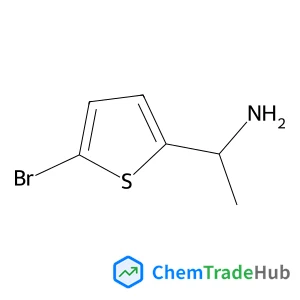
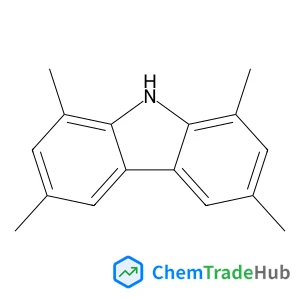
![1-[3-(4-Morpholinylsulfonyl)phenyl]methanamine structure](https://static.chemtradehub.com/structs/933/933989-32-3-51af.webp "1-[3-(4-Morpholinylsulfonyl)phenyl]methanamine structure")
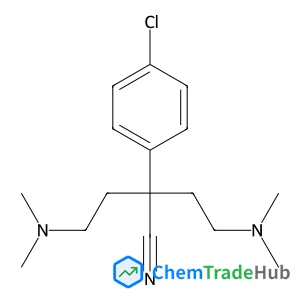
2-(4-Chlorophenyl)-4-(dimethylamino)-2-(2-(dimethylamino)ethyl)butanenitrile
CAS番号:
1246816-57-8
分子式:
C16H24ClN3
おすすめサプライヤー







免責事項
このページに表示される学術雑誌情報は、参考および研究目的のみを目的としています。当社は雑誌出版社とは提携しておらず、投稿の取り扱いも行っておりません。出版に関するお問い合わせは、各雑誌出版社に直接ご連絡ください。
表示されている情報に誤りがある場合は、support@chemtradehub.com までご連絡ください。迅速に確認し、対応いたします。