












Chemical design of a smart chitosan–polypyrrole–magnetite nanocomposite toward efficient water treatment
文献情報
出版日
2014-09-09
DOI
10.1039/C4CP03062A
インパクトファクター
3.676
著者
Mohamad Ayad, Nehal Salahuddin, Aya Fayed, Bishnu Prasad Bastakoti, Norihiro Suzuki
原文を見る
要旨
A magnetic chitosan–polypyrrole–magnetite (Cs–PPy–Fe3O4) nanocomposite is prepared in a simple one-step method via in situ chemical polymerization of pyrrole using anhydrous FeCl3 as an oxidant in the presence of Cs. Magnetic Fe3O4 nanoparticles of size in the range of 10–20 nm are successfully introduced into the Cs–PPy matrix. Adsorption of an anionic dye (acid green 25, AG) from aqueous solution into the Cs–PPy–Fe3O4 nanocomposite is investigated. The nanocomposite exhibits high adsorption capacity compared to PPy and Cs themselves. After the adsorption, the Cs–PPy–Fe3O4 nanocomposite is easily separated from the reaction solution using an external magnet, which is very useful for practical applications.
関連文献
Effective N2 capture by aryl cations at ambient temperature and pressure
Xia Xu, Jianxiong Dai, Xing Guo, Cheng Qian, Pei Zhang, Yixiang Duan, Yonghui Tian
2021-04-16
Communication
DOI: 10.1039/D1CP00903F
Anatomy of a deep eutectic solvent: structural properties of choline chloride : sesamol 1 : 3 compared to reline
Matteo Busato, Valentina Migliorati, Alessandra Del Giudice, Valerio Di Lisio, Pierpaolo Tomai, Alessandra Gentili, Paola D'Angelo
2021-05-05
Paper
DOI: 10.1039/D1CP01105G
Polarization-resolved single-molecule tracking reveals strange dynamics of fluorescent tracers through a deep rubbery polymer network
Jaladhar Mahato, Sukanya Bhattacharya, Dharmendar K. Sharma, Arindam Chowdhury
2021-04-08
Paper
DOI: 10.1039/D0CP05864E
ReaxFF reactive molecular dynamics simulations to study the interfacial dynamics between defective h-BN nanosheets and water nanodroplets
Weiwei Zhang, Adri C. T. van Duin
2021-04-13
Paper
DOI: 10.1039/D1CP00546D
The O K−2V spectrum of CO: the influence of the second core-hole
S. Carniato, R. Püttner, J. B. Martins, D. Céolin, R. Feifel
2021-04-22
Paper
DOI: 10.1039/D1CP00607J
Interaction topologies of the S⋯O chalcogen bond: the conformational equilibrium of the cyclohexanol⋯SO2 cluster
Rizalina T. Saragi, Marcos Juanes, Gang Feng, Alberto Lesarri
2021-04-14
Paper
DOI: 10.1039/D1CP00997D
Bond-forming and electron-transfer reactivity between Ar2+ and N2
Sam Armenta Butt, Stephen D. Price
2021-04-26
Paper
DOI: 10.1039/D1CP00918D
CO2 activation and dissociation on In2O3(110) supported PdnPt(4−n) (n = 0–4) catalysts: a density functional theory study
Xiaowen Wang, Jiaying Pan, Haiqiao Wei, Wenjia Li, Jun Zhao, Zhen Hu
2021-05-04
Paper
DOI: 10.1039/D1CP01015H
こちらもおすすめ
化合物よくある質問
2-メトキシ-4-(メチルスルフィニル)アミンの主な用途は何ですか?
2-メトキシ-4-(メチルスルフィニル)アミンは、主に医薬品および農薬の製造に使用されます。また、合成化学の一部として研究用材料としても利用されます。
41608-73-52-Methoxy-4-(methyls...
118684-13-24-(Bromomethyl)-3-me...
化合物よくある質問
4,6-二氯-N-甲基ピラミジンアミンの代替品はありますか?
代替品としては、4,6-二クロロピラミジンアミンや他のピラミジン系化合物が考えられます。ただし、目的と用途によって最適な代替品は異なります。
10397-15-64,6-Dichloro-N-methy...
化合物よくある質問
6-氯-4-甲基-1H-吲哚を含む廃棄物はどのように処理すべきですか?
6-氯-4-甲基-1H-吲哚の廃棄物は、適切な容器に収集し、密閉して保管します。温度は常温、湿度は低く、直射日光を避けて保管することを推奨します。廃棄処理は専門...
885520-84-36-chloro-4-methyl-1H...
化合物よくある質問
2-フローユロ-4-(トリフルオロメチル)ベンゾイドについて「に適用される法規ガイドラインは何ですか」
2-フローユロ-4-(トリフルオロメチル)ベンゾイドのCAS番号は207974-08-1です。この化合物はGHS分類で毒性物質と有害な反応物質として分類されます...
207974-08-1[2-Fluoro-4-(trifluo...
化合物よくある質問
4-ニトロフェニルN-[(ベンゼルオキシルカーボンイル]グリシングリシングリシン酸はどのように保存すればよいですか?
4-ニトロフェニルN-[(ベンゼルオキシルカーボンイル]グリシングリシングリシン酸は、室温で暗所に保管し、乾燥した環境で保存することを推奨します。容器は密閉性の...
19811-64-44-Nitrophenyl N-[(be...
化合物よくある質問
イソデスロラタドリンの代替品はありますか?
イソデスロラタドリンの代替品としては、デスロラタドリンや他の抗ヒスタミン薬が挙げられます。具体的には、デスロラタドリン、ラセカミド、フェルタドリンなどが、症状や...
183198-49-4Iso Desloratadine
化合物よくある質問
5-甲氧基-1,2,3,4-四氢异喹啉盐酸盐はどのように合成されますか?
5-甲氧基-1,2,3,4-四氢异喹啉盐酸盐の一般的な合成方法は、メタノール中で5-メトキシ-1,2,3,4-四ヒュドロイソキシンを塩酸で塩化します。この反応で...
103030-69-95-Methoxy-1,2,3,4-te...
化合物よくある質問
4-アミノ-5-メトキシ-2-トルエンサルホニック酸についての法規ガイドラインは何ですか?
CAS番号6471-78-9の4-アミノ-5-メトキシ-2-トルエンサルホニック酸は、GHS分類では corrosive(腐食性)と識別されます。EUのREAC...
6471-78-94-Amino-5-Methoxy-2-...
化合物よくある質問
甲基孕酮を取り扱う際の実験室安全事項は何ですか?
甲基孕酮の取り扱いは、PPE(個人保護具)の使用が必要な重要な安全事項を伴います。防塵マスク、ゴーグル、手袋を着用することが推奨されます。ドラフトチャンバーを使...
204063-33-22-[(Diphenylmethyl)a...
掲載誌
Physical Chemistry Chemical Physics

CiteScore:
5.5
自己引用率:
10.3%
年間論文数:
3036
Physical Chemistry Chemical Physics (PCCP) is an international journal co-owned by 19 physical chemistry and physics societies from around the world. This journal publishes original, cutting-edge research in physical chemistry, chemical physics and biophysical chemistry. To be suitable for publication in PCCP, articles must include significant innovation and/or insight into physical chemistry; this is the most important criterion that reviewers and Editors will judge against when evaluating submissions. The journal has a broad scope and welcomes contributions spanning experiment, theory, computation and data science. Topical coverage includes spectroscopy, dynamics, kinetics, statistical mechanics, thermodynamics, electrochemistry, catalysis, surface science, quantum mechanics, quantum computing and machine learning. Interdisciplinary research areas such as polymers and soft matter, materials, nanoscience, energy, surfaces/interfaces, and biophysical chemistry are welcomed if they demonstrate significant innovation and/or insight into physical chemistry. Joined experimental/theoretical studies are particularly appreciated when complementary and based on up-to-date approaches.
おすすめ化合物
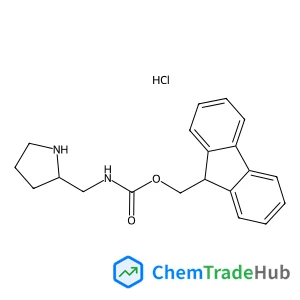
(S)-(9H-Fluoren-9-yl)methyl (pyrrolidin-2-ylmethyl)carbamate hydrochloride
CAS番号:
1217813-15-4
分子式:
C20H23ClN2O2
おすすめサプライヤー







免責事項
このページに表示される学術雑誌情報は、参考および研究目的のみを目的としています。当社は雑誌出版社とは提携しておらず、投稿の取り扱いも行っておりません。出版に関するお問い合わせは、各雑誌出版社に直接ご連絡ください。
表示されている情報に誤りがある場合は、support@chemtradehub.com までご連絡ください。迅速に確認し、対応いたします。