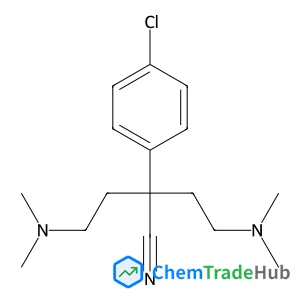
2-(4-Chlorophenyl)-4-(dimethylamino)-2-(2-(dimethylamino)ethyl)butanenitrile
CAS番号:
1246816-57-8
分子式:
C16H24ClN3
Zico Alaia Akbar, Jinhyeon Kang, Han-Ik Joh, Sung-Yeon Jang
Highly conductive carbon nanosheets (CNSs) are fabricated using a polymeric carbon source and subsequently applied as the counter electrodes (CNS-CEs) for dye-sensitized solar cells (DSSCs). The CNSs have a similar structure to multilayered graphene, and their high electrical conductivity and electrocatalytic activity enable them to have a dual-function as both CEs and charge supporting electrodes. CNSs form a unique CE material that functions successfully while being metal- and fluorine doped tin oxide (FTO)-free and allowing DSSCs to achieve ∼5% power conversion efficiency. The chemical structure, electrical properties, electrocatalytic activity, and work function of the CNS-CEs prepared under various conditions of carbonization are investigated, and their effects on the performance of the corresponding DSSCs are discussed. Carbonization temperature is shown to have influenced the size of graphitic domains and the presence of heteroatoms and functional groups in CNS-CEs. The change in the graphitic domain size has a marginal influence on the work function of the CNS-CEs and the overpotential for the reduction of the redox couples (I−/I3−). However, the electrical conductivity of CNS-CEs and the charge transfer resistance at CE/electrolyte interfaces in the DSSCs are considerably influenced by the carbonization condition. Our study shows that CNSs serve as efficient, FTO-free CE materials for DSSCs, and they are appropriate materials with which the effects of the chemical/physical properties of graphene-based materials on the electrode performance of various electrochemical devices may be studied.

Advanced Engineering Materials

Angewandte Chemie International Edition

Photochemical & Photobiological Sciences

Journal of Enzyme inhibition and Medicinal Chemistry

Journal of Medical Biochemistry

Current Pharmaceutical Biotechnology

Contact Lens & Anterior Eye

Foundations of Chemistry

Molecular Diversity

Coloration Technology
J. Benedikt, A. Shaw, B. R. Buckley, F. Iza, S. Schäkermann, J. E. Bandow
DOI: 10.1039/C8CP00197A
Alexander Alijah, Thibaud Cours, Nejm-Eddine Jaidane, Najoua Derbel
DOI: 10.1039/C7CP08659H
Mantas Šimėnas, Aneta Ciupa, Gediminas Usevičius, Kęstutis Aidas, Daniel Klose, Gunnar Jeschke, Mirosław Mączka, Georg Völkel, Andreas Pöppl, Jūras Banys
DOI: 10.1039/C8CP01426D
Katharina Kohse-Höinghaus, Jürgen Troe, Jens-Uwe Grabow, Matthias Olzmann, Gernot Friedrichs, Klaus-Dieter Hungenberg
DOI: 10.1039/C8CP90054J
TaeGi Lee, Kunio Shimura, DaeGwi Kim
DOI: 10.1039/C7CP07812A
Andrey A. Kistanov, Yongqing Cai, Kun Zhou, Yong-Wei Zhang
DOI: 10.1039/C8CP01146J
Jinshi Dong, Jun Wang, Jianqiang Wang, Guanghao Cheng, Tianming Huang
DOI: 10.1039/C8CP00111A
Alexander Schmid, Ghislain M. Rupp, Jürgen Fleig
DOI: 10.1039/C7CP07845E
F. B. Haffner, N. Canilho, B. Medronho, C. Gardiennet, A. Gansmüller, A. Pasc
DOI: 10.1039/C8CP00073E
2-ヒドロキシ-5-ニトロベンジンブロモイドは特定の化学反応に適しているため、代替品は限られています。しかし、同様の構造を持つ2-ヒドロキシ-4-ニトロベンジン...
N-(2-ブロモフェニル)-1-チロール-3-オキソ-3-(ピペリジニル)プロペン-2-イル)ベンゼンアミドは有毒で、皮膚や粘膜に刺激を与える可能性があります。...
この化合物は、新規治療薬の開発に注目されています。市場では、その有効性と安全性が評価され、研究分野では、分子生物学と医薬化学の新たな発見が期待されています。
Succinimidyl-alanyl-phenylalanyl-prolyl-phenylalanine 4-nitroanilide は主に医薬品開発やポ...
メチル6-アミノ-5-クロロピリジン-2-カーボイル酸(CAS番号: 1256794-05-4)の使用には、GHS( Globally Harmonized S...
取り扱いには、耐薬品性の容器を使用し、通気性の良い場所で操作することを推奨します。漏れ時は、SDS(安全データシート)を参照して適切な措置を取ること。手洗いと洗...
(S)-3-ベンZYルピペリジン塩酸塩は、CAS番号1258940-00-9で表される化合物です。これは、(S)-3-苯基哌啶的盐酸盐であり、主に医薬品の原料と...
3,5-二甲基金剛胺は、主に医薬品の原料として使用され、また抗うつ薬や抗アルツハイマー薬の開発に利用されます。さらに、化粧品や食品添加物の製造でも重要な役割を果...
ビス(4-メチル-2-ペンチル)フェニルカルボン酸エステル (CAS番号: 1398066-13-1) の代替品には、ビス(2-エチルヘキシル)フェノールカルボ...

Physical Chemistry Chemical Physics (PCCP) is an international journal co-owned by 19 physical chemistry and physics societies from around the world. This journal publishes original, cutting-edge research in physical chemistry, chemical physics and biophysical chemistry. To be suitable for publication in PCCP, articles must include significant innovation and/or insight into physical chemistry; this is the most important criterion that reviewers and Editors will judge against when evaluating submissions. The journal has a broad scope and welcomes contributions spanning experiment, theory, computation and data science. Topical coverage includes spectroscopy, dynamics, kinetics, statistical mechanics, thermodynamics, electrochemistry, catalysis, surface science, quantum mechanics, quantum computing and machine learning. Interdisciplinary research areas such as polymers and soft matter, materials, nanoscience, energy, surfaces/interfaces, and biophysical chemistry are welcomed if they demonstrate significant innovation and/or insight into physical chemistry. Joined experimental/theoretical studies are particularly appreciated when complementary and based on up-to-date approaches.
![6-Benzyl-4,5,6,7-tetrahydro-1H-pyrazolo[3,4-c]pyridin-3(2H)-one structure](https://static.chemtradehub.com/structs/909/909187-64-0-f54f.webp "6-Benzyl-4,5,6,7-tetrahydro-1H-pyrazolo[3,4-c]pyridin-3(2H)-one structure")
![2,6-Di(thiophen-2-yl)dithieno[3,2-b:2',3'-d]thiophene structure](https://static.chemtradehub.com/structs/910/910788-24-8-5b70.webp "2,6-Di(thiophen-2-yl)dithieno[3,2-b:2',3'-d]thiophene structure")