


H2 production through electro-oxidation of SO2: identifying the fundamental limitations
文献情報
出版日
2014-04-02
DOI
10.1039/C4CP00705K
インパクトファクター
3.676
著者
Roelof J. Kriek, Jan Rossmeisl, Samira Siahrostami, Mårten E. Björketun
原文を見る
要旨
Sulphur dioxide (SO2), a known industrial pollutant and pulmonary irritant, is emitted to the atmosphere in excess of 120 Mt per annum. Great strides have been taken to reduce SO2 emissions, but with the growth of specifically China, and to a lesser extent India, it is on the rise again. The electrolysis of aqueous solutions of dissolved SO2 holds huge environmental potential in that SO2 is converted to sulphuric acid (H2SO4) and at the same time hydrogen gas is produced. A further benefit or incentive is that a sulphur depolarised electrolyser (SDE) operates at an applied potential that is about one volt lower than that of a regular water electrolyser. In taking this technology forward the greatest improvement to be made is in developing a suitable electrocatalyst, which is also the ‘lowest hanging fruit’ in that very limited research and development has been conducted on the electrocatalyst for this process. In this work, density functional theory is employed to model the electro-oxidation of SO2 on single crystal planes of the 4d and 5d transition metals. Two reaction mechanisms are considered, a HSO3 intermediate pathway and a SO3 intermediate pathway. The binding energies of all intermediates are found to scale with the surface reactivity (measured as the adsorption of OH). Irrespective of the pathway water needs to be activated and reduction of SO2 to elemental sulphur must be avoided. This requirement alone calls for an electrode potential of at least 0.7–0.8 V for all the investigated transition metals and thus challenges the proclaimed goal to operate the SDE at 0.6 V. A high chemical barrier is further found to severely limit the oxidation reaction on reactive metals. A much higher catalytic activity can be obtained on precious metals but at the cost of running the reaction at high overpotentials.
おすすめジャーナル

Topics in Catalysis

Herald of the Russian Academy of Sciences

Acta Metallurgica Sinica-English Letters

Electroanalysis

Colloid Journal

Bioorganic & Medicinal Chemistry Letters

Chinese Journal of Chemistry

Journal of Chemical Sciences

Critical Reviews in Solid State and Materials Sciences

Biocatalysis and Biotransformation
関連文献
Elevated reaction order of 1,3,5-tri-tert-butylbenzene bromination as evidence of a clustered polybromide transition state: a combined kinetic and computational study
Alexander M. Genaev, Vyacheslav G. Shubin, Henry S. Rzepa
2019-03-20
Paper
DOI: 10.1039/C9OB00607A
Arginine mimetic appended peptide-based probes for fluorescence turn-on detection of 14-3-3 proteins
Debabrata Maity, Alba Gigante, Pedro A. Sánchez-Murcia, Eline Sijbesma, Mao Li, David Bier, Stefanie Mosel, Shirley Knauer, Carsten Schmuck
2019-04-02
Paper
DOI: 10.1039/C9OB00620F
Fluorescence-labeled neopeltolide derivatives for subcellular localization imaging
Shota Yanagi, Tomoya Sugai, Takuma Noguchi, Masato Kawakami, Makoto Sasaki, Shinsuke Niwa, Asako Sugimoto, Haruhiko Fuwa
2019-06-25
Communication
DOI: 10.1039/C9OB01276A
Direct access to benzofuro[2,3-b]quinoline and 6H-chromeno[3,4-b]quinoline cores through gold-catalyzed annulation of anthranils with arenoxyethynes and aryl propargyl ethers
Manoj D. Patil, Rai-Shung Liu
2019-04-09
Communication
DOI: 10.1039/C9OB00468H
Mechanistic investigation and further optimization of the aqueous Glaser−Hay bioconjugation
Christopher R. Travis, Lauren E. Mazur, Emily M. Peairs, Gillian H. Gaunt, Douglas D. Young
2019-03-06
Paper
DOI: 10.1039/C9OB00327D
Planarized B,N-phenylated dibenzoazaborine with a carbazole substructure: electronic impact of the structural constraint
Mikinori Ando, Mika Sakai, Naoki Ando, Masato Hirai
2019-05-14
Communication
DOI: 10.1039/C9OB00934E
Decarboxylative acylation of N-free indoles enabled by a catalytic amount of copper catalyst and liquid-assisted grinding
Jingbo Yu, Chao Zhang, Xinjie Yang, Weike Su
2019-04-06
Communication
DOI: 10.1039/C9OB00622B
Questioning the γ-gauche effect: stereoassignment of 1,3-disubstituted-tetrahydro-β-carbolines using 1H–1H coupling constants
Kristýna Cagašová, Maryam Ghavami, Zhong-Ke Yao, Paul R. Carlier
2019-06-17
Paper
DOI: 10.1039/C9OB01139K
こちらもおすすめ
化合物よくある質問
カルボニル基が付いた5-氰基-1-{[(2-メチル-2-プロpanyl)オキシ]カーボンイル}1H-吲哚-2-イリド-2-ボリン酸はどのように保存すればよいですか?
カルボニル基が付いた5-氰基-1-{[(2-メチル-2-プロpanyl)オキシ]カーボンイル}1H-吲哚-2-イリド-2-ボリン酸は、直射日光を避けて室温(15...
475102-15-9(5-Cyano-1-{[(2-meth...
化合物よくある質問
tert-ブチル2-クロロメチルピリジン-3-基炭酸エステルの市場動向や研究トレンドはどうですか?
この化合物は合成化学分野において、特にピリジン化合物の合成や改良に用いられます。最近の研究では、ピリジン化合物の新規合成法や特性の改良が注目されています。市場動...
1203498-98-9tert-Butyl 2-chloro-...
化合物よくある質問
聚二季戊四醇六丙烯酸酯はどの業界で使用されていますか?
聚二季戊四醇六丙烯酸酯は、医薬品、ポリマー、センサー、半導体などの業界で広く使用されています。特にポリマー業界では硬化剤として、医薬分野では医療機器の製造に使用...
29570-58-93-(Acryloyloxy)-2-({...
化合物よくある質問
1-氯-5-硝基异喹啉の市場動向や研究トレンドはどうですか?
1-氯-5-硝基异喹啉は、薬理学や合成化学の研究分野で注目されています。市場動向としては、その生物学的な活性や合成可能性を評価する研究が増えています。また、代替...
58142-97-51-Chloro-5-nitroisoq...
化合物よくある質問
2-チロール-5-メチルスルフェニル-3-trifルオルメチルベンゼンはどのように合成されますか?
2-チロール-5-メチルスルフェニル-3-trifルオルメチルベンゼンは、トリフルオロメチル化反応と硫化反応を経て合成されます。通常、トリフルオロメチル化剤と硫...
957066-04-51-Chloro-4-(methylsu...
化合物よくある質問
p-トールイルマグネシウムブロミドの物理化学的性質は何ですか?
p-トールイルマグネシウムブロミドのCAS番号は4294-57-9です。この化合物は白色の結晶性粉末で、分子量は204.32です。溶剤中で良好に溶解しますが、水...
4294-57-9p-Tolylmagnesium bro...
化合物よくある質問
1-(5-甲基-2-硫化素基)プロパン-1-酮の市場動向や研究トレンドはどうですか?
1-(5-甲基-2-硫化素基)プロパン-1-酮の市場動向は、化学産業全体の需要に影響を受けますが、最近では pharmaceutical 分野での応用が注目され...
59303-13-81-(5-Methyl-2-thieny...
化合物よくある質問
十一碳烯酰甘氨酸を取り扱う際の実験室安全事項は何ですか?
十一碳烯酰甘氨酸は吸入や皮膚から吸収されることがあり、取り扱う際には防塵マスクと手袋を使用してください。ドラフトチャンバーを用いて漏洩を処理し、適切なSDS(S...
54301-26-7N-10-Undecenoylglyci...
化合物よくある質問
1H,1H-全氟-3,6-二氧杂葵-1-醇を取り扱う際の実験室安全事項は何ですか?
この化合物は吸入や皮膚吸収による毒性があるため、防塵マスク、ゴーグル、防護手袋を使用する必要があります。ドラフトチャンバーでの操作が必要です。漏洩時には即座に換...
152914-73-32,2-Difluoro-2-[1,1,...
化合物よくある質問
3-(4-(フルオロメチルオキシ)フェニル)-1,2,4-オキサジアゾール-5-カルボハイドライドは安全ですか?
安全性は化合物の使用方法によります。直接的な毒性は報告されていませんが、吸入や皮膚接触には注意が必要です。適切な防護服を着用し、換気を図ることを推奨します。
883028-82-83-(4-(Trifluorometho...
掲載誌
Physical Chemistry Chemical Physics

CiteScore:
5.5
自己引用率:
10.3%
年間論文数:
3036
Physical Chemistry Chemical Physics (PCCP) is an international journal co-owned by 19 physical chemistry and physics societies from around the world. This journal publishes original, cutting-edge research in physical chemistry, chemical physics and biophysical chemistry. To be suitable for publication in PCCP, articles must include significant innovation and/or insight into physical chemistry; this is the most important criterion that reviewers and Editors will judge against when evaluating submissions. The journal has a broad scope and welcomes contributions spanning experiment, theory, computation and data science. Topical coverage includes spectroscopy, dynamics, kinetics, statistical mechanics, thermodynamics, electrochemistry, catalysis, surface science, quantum mechanics, quantum computing and machine learning. Interdisciplinary research areas such as polymers and soft matter, materials, nanoscience, energy, surfaces/interfaces, and biophysical chemistry are welcomed if they demonstrate significant innovation and/or insight into physical chemistry. Joined experimental/theoretical studies are particularly appreciated when complementary and based on up-to-date approaches.
おすすめ化合物
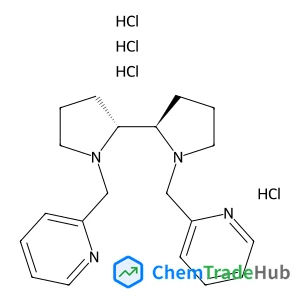
(2R,2'R)-1,1'-Bis(2-pyridinylmethyl)-2,2'-bipyrrolidine tetrahydrochloride
CAS番号:
1228077-88-0
分子式:
C20H30Cl4N4
![(3E)-3-[4-Hydroxy-3,5-bis(2-methyl-2-propanyl)benzylidene]dihydro-2(3H)-furanone structure](https://static.chemtradehub.com/structs/102/102271-49-8-cba7.webp "(3E)-3-[4-Hydroxy-3,5-bis(2-methyl-2-propanyl)benzylidene]dihydro-2(3H)-furanone structure")
おすすめサプライヤー





免責事項
このページに表示される学術雑誌情報は、参考および研究目的のみを目的としています。当社は雑誌出版社とは提携しておらず、投稿の取り扱いも行っておりません。出版に関するお問い合わせは、各雑誌出版社に直接ご連絡ください。
表示されている情報に誤りがある場合は、support@chemtradehub.com までご連絡ください。迅速に確認し、対応いたします。