












Dissecting the steps of CO2 reduction: 2. The interaction of CO and CO2 with Pd/γ-Al2O3: an in situ FTIR study
文献情報
出版日
2014-05-23
DOI
10.1039/C4CP00617H
インパクトファクター
3.676
著者
János Szanyi, Ja Hun Kwak
原文を見る
要旨
Alumina supported Pd catalysts with metal loadings of 0.5, 2.5 and 10 wt% were investigated by in situ FTIR spectroscopy in order to understand the nature of adsorbed species formed during their exposure to CO2 and CO. Exposing the annealed samples to CO2 at 295 K resulted in the formation of alumina support-bound surface species only: linear adsorbed CO2, bidentate carbonates and bicarbonates. Room temperature exposure of all three samples to CO produced IR features characteristic of both ionic and metallic Pd, as well as bands we observed upon CO2 adsorption (alumina support-bound species). Low temperature (100 K) adsorption of CO on the three samples provided information about the state of Pd after oxidation and reduction. Oxidized samples contained exclusively ionic Pd, while mostly metallic Pd was present in the reduced samples. Subsequent annealing of the CO-saturated samples revealed the facile (low temperature) reduction of PdOx species by adsorbed CO. This process was evidenced by the variations in IR bands characteristic of ionic and metallic Pd-bound CO, as well as by the appearance of IR bands associated with CO2 adsorption as a function of annealing temperature. Samples containing oxidized Pd species (oxidized, annealed or reduced) always produced CO2 upon their exposure to CO, while no CO2-related surface entities were observed on samples having only fully reduced (metallic) Pd.
関連文献
Combining experiment and energy landscapes to explore anaerobic heme breakdown in multifunctional hemoproteins
Alasdair D. Keith, Elizabeth B. Sawyer, Desmond C. Y. Choy, Yuhang Xie, George S. Biggs, Oskar James Klein, Paul D. Brear, David J. Wales, Paul D. Barker
2023-11-29
Perspective
DOI: 10.1039/D3CP03897A
Energy transfer from two luteins to chlorophylls in light-harvesting complex II study by using exciton models with phase correction
Jiarui Li, Tao Zeng, Zexing Qu, Yu Zhai, Hui Li
2023-12-04
Paper
DOI: 10.1039/D3CP05278H
Growth mechanism prediction for nanoparticles via structure matching polymerization
Yi-Rong Liu, Yan Jiang
2023-12-06
Paper
DOI: 10.1039/D3CP04702D
X-ray induced ultrafast charge transfer in thiophene-based conjugated polymers controlled by core-hole clock spectroscopy
Nicolas Velasquez, Fernanda B. Nunes, Jessica B. Martins, Denis Céolin, Laure Fillaud, Ralph Püttner, Maria Novella Piancastelli, Michael Odelius, Marcella Iannuzzi
2023-12-15
Paper
DOI: 10.1039/D3CP04303G
Charge doping and electric field tunable ferromagnetism and Curie temperature of the MnS2 monolayer
Jing Xie, Dongni Wu, Yangfang Liao, Xiaolong Cao, Shiyou Zhou
2023-11-14
Paper
DOI: 10.1039/D3CP04382G
Designed fabrication of MoS2 hollow structures with different geometries and the comparative investigation toward capacitive properties
Yuandong Xu, Haoyang Feng, Chaoyang Dong, Yuqing Yang, Meng Zhou, Yajun Wei, Hui Guo, Yaqing Wei, Jishan Su, Yingying Ben, Xia Zhang
2023-11-25
Paper
DOI: 10.1039/D3CP05196J
Enhancing FAPbI3 perovskite solar cell performance with a methanesulfonate-based additive
Japheth Joseph Yeow Wan Foong, Herlina Arianita Dewi, Ayan A. Zhumekenov, Benny Febriansyah, Annalisa Bruno, Teddy Salim, Hesham R. Abuzeid, Teck Ming Koh
2024-01-08
Communication
DOI: 10.1039/D3SE01369C
Solvent effects on the intramolecular charge transfer excited state of 3CzClIPN: a broadband transient absorption study
Meixin Cheng
2023-12-04
Paper
DOI: 10.1039/D3CP04975B
The single metal atom (Ni, Pd, Pt) anchored on defective hexagonal boron nitride for oxidative desulfurization
Naixia Lv, Hongshun Ran, Jinrui Zhang, Jie Yin, Yuan Zhang, Hongping Li, Linhua Zhu
2023-12-19
Paper
DOI: 10.1039/D3CP04963A
こちらもおすすめ
化合物よくある質問
2-メトキシ-4-(メチルスルフィニル)アミンの主な用途は何ですか?
2-メトキシ-4-(メチルスルフィニル)アミンは、主に医薬品および農薬の製造に使用されます。また、合成化学の一部として研究用材料としても利用されます。
41608-73-52-Methoxy-4-(methyls...
118684-13-24-(Bromomethyl)-3-me...
化合物よくある質問
4,6-二氯-N-甲基ピラミジンアミンの代替品はありますか?
代替品としては、4,6-二クロロピラミジンアミンや他のピラミジン系化合物が考えられます。ただし、目的と用途によって最適な代替品は異なります。
10397-15-64,6-Dichloro-N-methy...
化合物よくある質問
6-氯-4-甲基-1H-吲哚を含む廃棄物はどのように処理すべきですか?
6-氯-4-甲基-1H-吲哚の廃棄物は、適切な容器に収集し、密閉して保管します。温度は常温、湿度は低く、直射日光を避けて保管することを推奨します。廃棄処理は専門...
885520-84-36-chloro-4-methyl-1H...
化合物よくある質問
2-フローユロ-4-(トリフルオロメチル)ベンゾイドについて「に適用される法規ガイドラインは何ですか」
2-フローユロ-4-(トリフルオロメチル)ベンゾイドのCAS番号は207974-08-1です。この化合物はGHS分類で毒性物質と有害な反応物質として分類されます...
207974-08-1[2-Fluoro-4-(trifluo...
化合物よくある質問
4-ニトロフェニルN-[(ベンゼルオキシルカーボンイル]グリシングリシングリシン酸はどのように保存すればよいですか?
4-ニトロフェニルN-[(ベンゼルオキシルカーボンイル]グリシングリシングリシン酸は、室温で暗所に保管し、乾燥した環境で保存することを推奨します。容器は密閉性の...
19811-64-44-Nitrophenyl N-[(be...
化合物よくある質問
イソデスロラタドリンの代替品はありますか?
イソデスロラタドリンの代替品としては、デスロラタドリンや他の抗ヒスタミン薬が挙げられます。具体的には、デスロラタドリン、ラセカミド、フェルタドリンなどが、症状や...
183198-49-4Iso Desloratadine
化合物よくある質問
5-甲氧基-1,2,3,4-四氢异喹啉盐酸盐はどのように合成されますか?
5-甲氧基-1,2,3,4-四氢异喹啉盐酸盐の一般的な合成方法は、メタノール中で5-メトキシ-1,2,3,4-四ヒュドロイソキシンを塩酸で塩化します。この反応で...
103030-69-95-Methoxy-1,2,3,4-te...
化合物よくある質問
4-アミノ-5-メトキシ-2-トルエンサルホニック酸についての法規ガイドラインは何ですか?
CAS番号6471-78-9の4-アミノ-5-メトキシ-2-トルエンサルホニック酸は、GHS分類では corrosive(腐食性)と識別されます。EUのREAC...
6471-78-94-Amino-5-Methoxy-2-...
化合物よくある質問
甲基孕酮を取り扱う際の実験室安全事項は何ですか?
甲基孕酮の取り扱いは、PPE(個人保護具)の使用が必要な重要な安全事項を伴います。防塵マスク、ゴーグル、手袋を着用することが推奨されます。ドラフトチャンバーを使...
204063-33-22-[(Diphenylmethyl)a...
掲載誌
Physical Chemistry Chemical Physics

CiteScore:
5.5
自己引用率:
10.3%
年間論文数:
3036
Physical Chemistry Chemical Physics (PCCP) is an international journal co-owned by 19 physical chemistry and physics societies from around the world. This journal publishes original, cutting-edge research in physical chemistry, chemical physics and biophysical chemistry. To be suitable for publication in PCCP, articles must include significant innovation and/or insight into physical chemistry; this is the most important criterion that reviewers and Editors will judge against when evaluating submissions. The journal has a broad scope and welcomes contributions spanning experiment, theory, computation and data science. Topical coverage includes spectroscopy, dynamics, kinetics, statistical mechanics, thermodynamics, electrochemistry, catalysis, surface science, quantum mechanics, quantum computing and machine learning. Interdisciplinary research areas such as polymers and soft matter, materials, nanoscience, energy, surfaces/interfaces, and biophysical chemistry are welcomed if they demonstrate significant innovation and/or insight into physical chemistry. Joined experimental/theoretical studies are particularly appreciated when complementary and based on up-to-date approaches.
おすすめ化合物
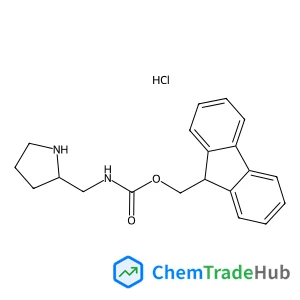
(S)-(9H-Fluoren-9-yl)methyl (pyrrolidin-2-ylmethyl)carbamate hydrochloride
CAS番号:
1217813-15-4
分子式:
C20H23ClN2O2
おすすめサプライヤー





免責事項
このページに表示される学術雑誌情報は、参考および研究目的のみを目的としています。当社は雑誌出版社とは提携しておらず、投稿の取り扱いも行っておりません。出版に関するお問い合わせは、各雑誌出版社に直接ご連絡ください。
表示されている情報に誤りがある場合は、support@chemtradehub.com までご連絡ください。迅速に確認し、対応いたします。