












![4-Chloro-3-(trifluoromethyl)-1H-pyrrolo[2,3-b]pyridine structure](https://static.chemtradehub.com/structs/869/869335-75-1-a9d0.webp "4-Chloro-3-(trifluoromethyl)-1H-pyrrolo[2,3-b]pyridine structure")
Magnetic exchange in {GdIII–radical} complexes: method assessment, mechanism of coupling and magneto-structural correlations
文献情報
出版日
2014-02-20
DOI
10.1039/C4CP00214H
インパクトファクター
3.676
著者
Tulika Gupta, Thayalan Rajeshkumar, Gopalan Rajaraman
原文を見る
要旨
Density functional studies have been performed on ten different {GdIII–radical} complexes exhibiting both ferro and antiferromagnetic exchange interaction with an aim to assess a suitable exchange–correlation functional within DFT formalism. This study has also been extended to probe the mechanism of magnetic coupling and to develop suitable magneto-structural correlations for this pair. Our method assessments reveal the following order of increasing accuracy for the evaluation of J values compared to experimental coupling constants: B(40HF)LYP < BHandHLYP < TPSSH < PW91 < PBE < BP86 < OLYP < BLYP < PBE0 < X3LYP < B3LYP < B2PLYP. Grimme's double-hybrid functional is found to be superior compared to other functionals tested and this is followed very closely by the conventional hybrid B3LYP functional. At the basis set front, our calculations reveal that the incorporation of relativistic effect is important in these calculations and the relativistically corrected effective core potential (ECP) basis set is found to yield better Js compared to other methods. The supposedly empty 5d/6s/6p orbitals of GdIII are found to play an important role in the mechanism of magnetic coupling and different contributions to the exchange terms are probed using Molecular Orbital (MO) and Natural Bond Orbital (NBO) analysis. Magneto-structural correlations for Gd–O distances, Gd–O–N angles and Gd–O–N–C dihedral angles are developed where the bond angles as well as dihedral angle parameters are found to dictate the sign and strength of the magnetic coupling in this series.
関連文献
O-Acetylated sugars in the gas phase: stability, migration, positional isomers and conformation
Oznur Yeni, Amira Gharbi, Stéphane Chambert, Jean Rouillon, Abdul-Rahman Allouche, Baptiste Schindler, Isabelle Compagnon
2021-11-25
Paper
DOI: 10.1039/D1CP04837F
Uptake and hydration of sulfur dioxide on dry and wet hydroxylated silica surfaces: a computational study
Ivan Gladich, Chen Lin, Alessandro Sinopoli, Joseph S. Francisco
2021-11-17
Paper
DOI: 10.1039/D1CP04747G
Emergence of carbon nanoscrolls from single walled carbon nanotubes: an oxidative route
S. Reshmi, Girish M. Gouda
2021-11-10
Paper
DOI: 10.1039/D1CP03945H
Surface potentials of acceptor- and donor-doped CeO2 thin films and their relation to oxygen surface exchange
Hans F. Wardenga, Katharina N. S. Schuldt, Stephan Waldow, Roger A. De Souza, Andreas Klein
2021-12-10
Paper
DOI: 10.1039/D1CP03776E
Excited-state structure of copper phenanthroline-based photosensitizers
Alexander Guda, Johannes Windisch, Benjamin Probst, Roger Alberto, Maarten Nachtegaal, Grigory Smolentsev
2021-11-15
Paper
DOI: 10.1039/D1CP02823E
Thermoelectric performance of ZrNX (X = Cl, Br and I) monolayers
Nina Ge, Xinzhong Wang
2021-11-29
Paper
DOI: 10.1039/D1CP01928G
How does excess phenylalanine affect the packing density and fluidity of a lipid membrane?
Shakkira Erimban, Snehasis Daschakraborty
2021-11-16
Paper
DOI: 10.1039/D1CP05004D
Structured light using carbon nanostructures driven by Kerr nonlinearities and a magnetic field
Eric Abraham Hurtado-Aviles, Juan José Vilatela, Hilario Martines-Arano, Jhovani Bornacelli, Felipe Cervantes-Sodi, Carlos Torres-Torres
2021-12-15
Paper
DOI: 10.1039/D1CP05195D
Facet-dependent CO2 reduction reactions on kesterite Cu2ZnSnS4 photo-electro-integrated electrodes
Ruifen Zhang, Xin Wen, Hongliang Peng, Yongpeng Xia, Fen Xu, Lixian Sun
2021-09-09
Paper
DOI: 10.1039/D1CP03595A
Graphene quantum dots obstruct the membrane axis of Alzheimer's amyloid beta
Huayuan Tang, Aleksandr Kakinen, Nicholas Andrikopoulos, Yunxiang Sun, Feng Ding
2021-11-23
Paper
DOI: 10.1039/D1CP04246G
こちらもおすすめ
化合物よくある質問
2-ヒドロキシ-5-ニトロベンジンブロモイドの代替品はありますか?
2-ヒドロキシ-5-ニトロベンジンブロモイドは特定の化学反応に適しているため、代替品は限られています。しかし、同様の構造を持つ2-ヒドロキシ-4-ニトロベンジン...
772-33-82-(Bromomethyl)-4-ni...
化合物よくある質問
N-(2-ブロモフェニル)-1-チロール-3-オキソ-3-(ピペリジニル)プロペン-2-イル)ベンゼンアミドを取り扱う際の実験室安全事項は何ですか?
N-(2-ブロモフェニル)-1-チロール-3-オキソ-3-(ピペリジニル)プロペン-2-イル)ベンゼンアミドは有毒で、皮膚や粘膜に刺激を与える可能性があります。...
1800044-77-2N-[(1Z)-1-(2-Bromoph...
化合物よくある質問
1,3プロパンジオール,2-[2-(2アミノ-6クロロ-9Hピリミジン-9-イル)エチル-1,1,2,2-D4]-2,3-ジアセタートの市場動向や研究トレンドはどうですか?
この化合物は、新規治療薬の開発に注目されています。市場では、その有効性と安全性が評価され、研究分野では、分子生物学と医薬化学の新たな発見が期待されています。
1020718-81-31,3-Propanediol, 2-[...
579-44-2Ethanone, 2-hydroxy-...
化合物よくある質問
Succinimidyl-alanyl-phenylalanyl-prolyl-phenylalanine 4-nitroanilide はどの業界で使用されていますか?
Succinimidyl-alanyl-phenylalanyl-prolyl-phenylalanine 4-nitroanilide は主に医薬品開発やポ...
128802-73-3succinimidyl-alanyl-...
化合物よくある質問
メチル6-アミノ-5-クロロピリジン-2-カーボイル酸について、適用される法規ガイドラインは何ですか?
メチル6-アミノ-5-クロロピリジン-2-カーボイル酸(CAS番号: 1256794-05-4)の使用には、GHS( Globally Harmonized S...
1256794-05-4Methyl 6-amino-5-chl...
化合物よくある質問
エチル4-(シクロ Pentagonyl)アミノ-2-メチル硫化基ピリミジン-5-カルボキシレートを取り扱う際の実験室安全事項は何ですか?
取り扱いには、耐薬品性の容器を使用し、通気性の良い場所で操作することを推奨します。漏れ時は、SDS(安全データシート)を参照して適切な措置を取ること。手洗いと洗...
211245-62-4ethyl 4-(cyclopentyl...
化合物よくある質問
(S)-3-ベンZYルピペリジン塩酸塩とは何ですか?
(S)-3-ベンZYルピペリジン塩酸塩は、CAS番号1258940-00-9で表される化合物です。これは、(S)-3-苯基哌啶的盐酸盐であり、主に医薬品の原料と...
1258940-00-9(S)-3-Phenylpiperidi...
化合物よくある質問
3,5-二甲基金剛胺の主な用途は何ですか?
3,5-二甲基金剛胺は、主に医薬品の原料として使用され、また抗うつ薬や抗アルツハイマー薬の開発に利用されます。さらに、化粧品や食品添加物の製造でも重要な役割を果...
19988-45-52-(2,3-Dihydroxyphen...
化合物よくある質問
ビス(4-メチル-2-ペンチル)フェニルカルボン酸エステルの代替品はありますか?
ビス(4-メチル-2-ペンチル)フェニルカルボン酸エステル (CAS番号: 1398066-13-1) の代替品には、ビス(2-エチルヘキシル)フェノールカルボ...
1398066-13-1Bis(4-methyl-2-penty...
掲載誌
Physical Chemistry Chemical Physics

CiteScore:
5.5
自己引用率:
10.3%
年間論文数:
3036
Physical Chemistry Chemical Physics (PCCP) is an international journal co-owned by 19 physical chemistry and physics societies from around the world. This journal publishes original, cutting-edge research in physical chemistry, chemical physics and biophysical chemistry. To be suitable for publication in PCCP, articles must include significant innovation and/or insight into physical chemistry; this is the most important criterion that reviewers and Editors will judge against when evaluating submissions. The journal has a broad scope and welcomes contributions spanning experiment, theory, computation and data science. Topical coverage includes spectroscopy, dynamics, kinetics, statistical mechanics, thermodynamics, electrochemistry, catalysis, surface science, quantum mechanics, quantum computing and machine learning. Interdisciplinary research areas such as polymers and soft matter, materials, nanoscience, energy, surfaces/interfaces, and biophysical chemistry are welcomed if they demonstrate significant innovation and/or insight into physical chemistry. Joined experimental/theoretical studies are particularly appreciated when complementary and based on up-to-date approaches.
おすすめ化合物
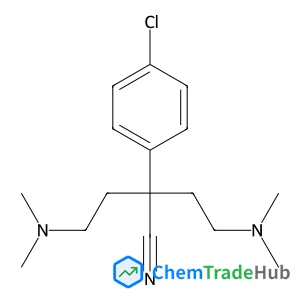
2-(4-Chlorophenyl)-4-(dimethylamino)-2-(2-(dimethylamino)ethyl)butanenitrile
CAS番号:
1246816-57-8
分子式:
C16H24ClN3
![1-[3-(4-Morpholinylsulfonyl)phenyl]methanamine structure](https://static.chemtradehub.com/structs/933/933989-32-3-51af.webp "1-[3-(4-Morpholinylsulfonyl)phenyl]methanamine structure")

おすすめサプライヤー



免責事項
このページに表示される学術雑誌情報は、参考および研究目的のみを目的としています。当社は雑誌出版社とは提携しておらず、投稿の取り扱いも行っておりません。出版に関するお問い合わせは、各雑誌出版社に直接ご連絡ください。
表示されている情報に誤りがある場合は、support@chemtradehub.com までご連絡ください。迅速に確認し、対応いたします。