











A sensitive and microscale method for drug screening combining affinity probes and single molecule fluorescence correlation spectroscopy
文献情報
出版日
2014-12-05
DOI
10.1039/C4AN01816H
インパクトファクター
4.616
著者
Lingao Ruan, Di Su, Chang Shao, Jinjie Wang, Chaoqing Dong, Xiangyi Huang, Jicun Ren
原文を見る
要旨
In this paper, a sensitive and microscale method for drug screening is described using single molecule spectroscopy fluorescence correlation spectroscopy (FCS). The principle of this method is mainly based on the competition of candidate drugs to the fluorescent probe–target complexes and the excellent capacity of FCS for sensitively distinguishing the free fluorescent probes and the fluorescent probe–target complexes in solution. In this study, the screening of protein kinase inhibitors was used as a model, tyrosine-protein kinase ABL1 was used as a target and a known inhibitor dasatinib derivative labeled with a fluorescent dye was used as a fluorescent affinity probe. We firstly established the theoretical model of drug screening based on the binding process of fluorescent probes and targets, the competition of candidate drugs to the fluorescent probe–target complexes and FCS theory. Then, the dasatinib derivatives were synthesized and labeled with the fluorescent dye Alexa 488, and the binding and dissociation processes of Alexa 488-dasatinib and ABL1 were systematically investigated. The dissociation constant and the dissociation rate for the Alexa 488-dasatinib–ABL1 complex were determined. Finally, the established method was used to screen candidate drugs. The dissociation constants of ABL1 kinase to six known drugs for treating chronic myeloid leukemia (CML) were evaluated and the results obtained are well consistent with the reported values. Furthermore, a homemade chip with micro-wells was successfully utilized in FCS measurements as the carrier of samples, and the sample requirements were only 1–2 μL in this case. Our results demonstrated that the drug screening method described here is universal, sensitive and shows small sample and reagent quantity requirements. We believe that this method will become a high throughput platform for screening of small molecule drugs.
関連文献
Polydipyrrole- and polydicarbazole-nanorods as new nanosized supports for DNA hybridization
Jean-Paul Lellouche, Senthil Govindaraji, Augustine Joseph, Jyongsik Jang, Kyung Jin Lee
2005-07-14
Communication
DOI: 10.1039/B502483H
Gold supported on a mesoporous CeO2matrix as an efficient catalyst in the selective aerobic oxidation of aldehydes in the liquid phase
Avelino Corma, Marcelo E. Domine
2005-07-19
Communication
DOI: 10.1039/B506685A
Layer-by-layer assembly of charged poly(phenylacetylene)s with induced macromolecular helicity
Katsuhiro Maeda, Yasuaki Matsushita, Muneyoshi Ezaka
2005-07-26
Communication
DOI: 10.1039/B507863F
Thio[2-(benzoylamino)ethylamino]-β-CD fragment modified gold nanoparticles as recycling extractors for [60]fullerene
Yu Liu, Ying-Wei Yang, Yong Chen
2005-07-21
Communication
DOI: 10.1039/B507650A
Injectable biodegradable hydrogels composed of hyaluronic acid–tyramine conjugates for drug delivery and tissue engineering
Motoichi Kurisawa, Joo Eun Chung, Yi Yan Yang, Shu Jun Gao, Hiroshi Uyama
2005-07-28
Communication
DOI: 10.1039/B506989K
MCuB7O12·nH2O (M = Na, K ): A new copper borate with 14-ring channels
Tao Yang, Guobao Li, Liping You, Jing Ju, Fuhui Liao, Jianhua Lin
2005-07-26
Communication
DOI: 10.1039/B506901G
Precise synthesis of poly(macromonomer)s containing sugars by repetitive ring-opening metathesis polymerisation
James J. Murphy, Kotohiro Nomura
2005-07-13
Communication
DOI: 10.1039/B506877K
Solvolytic routes to new nonabismuth hydroxy- and alkoxy-oxo complexes: synthesis, characterization and solid-state structures of novel nonabismuth polyoxo cations Bi9(μ3-O)8(μ3-OR)65+ (R = H, Et)
John H. Thurston, Dale C. Swenson, Louis Messerle
2005-07-27
Communication
DOI: 10.1039/B504864H
Click-chemistry as an efficient synthetic tool for the preparation of novel conjugated polymers
Dirk Jan V. C. van Steenis, Olivier R. P. David, Gino P. F. van Strijdonck, Jan H. van Maarseveen, Joost N. H. Reek
2005-07-19
Communication
DOI: 10.1039/B507776A
こちらもおすすめ
化合物よくある質問
2-メトキシ-4-(メチルスルフィニル)アミンの主な用途は何ですか?
2-メトキシ-4-(メチルスルフィニル)アミンは、主に医薬品および農薬の製造に使用されます。また、合成化学の一部として研究用材料としても利用されます。
41608-73-52-Methoxy-4-(methyls...
118684-13-24-(Bromomethyl)-3-me...
化合物よくある質問
4,6-二氯-N-甲基ピラミジンアミンの代替品はありますか?
代替品としては、4,6-二クロロピラミジンアミンや他のピラミジン系化合物が考えられます。ただし、目的と用途によって最適な代替品は異なります。
10397-15-64,6-Dichloro-N-methy...
化合物よくある質問
6-氯-4-甲基-1H-吲哚を含む廃棄物はどのように処理すべきですか?
6-氯-4-甲基-1H-吲哚の廃棄物は、適切な容器に収集し、密閉して保管します。温度は常温、湿度は低く、直射日光を避けて保管することを推奨します。廃棄処理は専門...
885520-84-36-chloro-4-methyl-1H...
化合物よくある質問
2-フローユロ-4-(トリフルオロメチル)ベンゾイドについて「に適用される法規ガイドラインは何ですか」
2-フローユロ-4-(トリフルオロメチル)ベンゾイドのCAS番号は207974-08-1です。この化合物はGHS分類で毒性物質と有害な反応物質として分類されます...
207974-08-1[2-Fluoro-4-(trifluo...
化合物よくある質問
4-ニトロフェニルN-[(ベンゼルオキシルカーボンイル]グリシングリシングリシン酸はどのように保存すればよいですか?
4-ニトロフェニルN-[(ベンゼルオキシルカーボンイル]グリシングリシングリシン酸は、室温で暗所に保管し、乾燥した環境で保存することを推奨します。容器は密閉性の...
19811-64-44-Nitrophenyl N-[(be...
化合物よくある質問
イソデスロラタドリンの代替品はありますか?
イソデスロラタドリンの代替品としては、デスロラタドリンや他の抗ヒスタミン薬が挙げられます。具体的には、デスロラタドリン、ラセカミド、フェルタドリンなどが、症状や...
183198-49-4Iso Desloratadine
化合物よくある質問
5-甲氧基-1,2,3,4-四氢异喹啉盐酸盐はどのように合成されますか?
5-甲氧基-1,2,3,4-四氢异喹啉盐酸盐の一般的な合成方法は、メタノール中で5-メトキシ-1,2,3,4-四ヒュドロイソキシンを塩酸で塩化します。この反応で...
103030-69-95-Methoxy-1,2,3,4-te...
化合物よくある質問
4-アミノ-5-メトキシ-2-トルエンサルホニック酸についての法規ガイドラインは何ですか?
CAS番号6471-78-9の4-アミノ-5-メトキシ-2-トルエンサルホニック酸は、GHS分類では corrosive(腐食性)と識別されます。EUのREAC...
6471-78-94-Amino-5-Methoxy-2-...
化合物よくある質問
甲基孕酮を取り扱う際の実験室安全事項は何ですか?
甲基孕酮の取り扱いは、PPE(個人保護具)の使用が必要な重要な安全事項を伴います。防塵マスク、ゴーグル、手袋を着用することが推奨されます。ドラフトチャンバーを使...
204063-33-22-[(Diphenylmethyl)a...
掲載誌
Analyst

CiteScore:
7.8
自己引用率:
5.6%
年間論文数:
653
Analyst publishes analytical and bioanalytical research that reports premier fundamental discoveries and inventions, and the applications of those discoveries, unconfined by traditional discipline barriers.
おすすめ化合物

![tert-Butyl 6-chloro-4-oxospiro[chroman-2,4'-piperidine]-1'-carboxylate structure](https://static.chemtradehub.com/structs/101/1011482-37-3-88a5.webp "tert-Butyl 6-chloro-4-oxospiro[chroman-2,4'-piperidine]-1'-carboxylate structure")
tert-Butyl 6-chloro-4-oxospiro[chroman-2,4'-piperidine]-1'-carboxylate
CAS番号:
1011482-37-3
分子式:
C18H22ClNO4

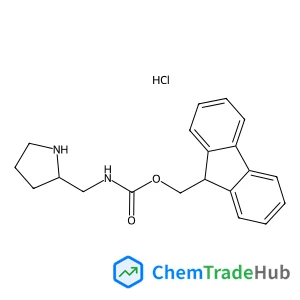
(S)-(9H-Fluoren-9-yl)methyl (pyrrolidin-2-ylmethyl)carbamate hydrochloride
CAS番号:
1217813-15-4
分子式:
C20H23ClN2O2
おすすめサプライヤー




免責事項
このページに表示される学術雑誌情報は、参考および研究目的のみを目的としています。当社は雑誌出版社とは提携しておらず、投稿の取り扱いも行っておりません。出版に関するお問い合わせは、各雑誌出版社に直接ご連絡ください。
表示されている情報に誤りがある場合は、support@chemtradehub.com までご連絡ください。迅速に確認し、対応いたします。