












Injectable in situ-forming hydrogel for cartilage tissue engineering
文献情報
出版日
2013-04-29
DOI
10.1039/C3TB20105H
インパクトファクター
6.331
著者
Jin Seon Kwon, So Mi Yoon, Doo Yeon Kwon, Da Yeon Kim, Guo Zhe Tai, Ling Mei Jin, Boram Song, Bong Lee, Jae Ho Kim, Dong Keun Han, Byoung Hyun Min, Moon Suk Kim
原文を見る
要旨
Methoxy polyethylene glycol–poly(ε-caprolactone) (MPEG–PCL; MP) diblock copolymers undergo a solution-to-gel phase transition at body temperature and serve as ideal biomaterials for drug delivery and tissue engineering. Here, we examined the potential use of a chondrocyte-loaded MP solution as an injectable, in situ-forming hydrogel for cartilage regeneration. The chondrocyte-MP solution underwent a temperature-dependent solution-to-gel phase transition in vitro, as shown by an increase in viscosity from 1 cP at 20–30 °C to 1.6 × 10⁵ cP at 37 °C. The chondrocytes readily attached to and proliferated on the MP hydrogel in vitro. The chondrocyte-MP solution transitioned to a hydrogel immediately after subcutaneous injection into mice, and formed an interconnected pore structure required to support the growth, proliferation, and differentiation of the chondrocytes. The chondrocyte-MP hydrogels formed cartilage in vivo, as shown by the histological and immunohistochemical staining of glycosaminoglycans, proteoglycans, and type II collagen, the major components of cartilage. Cartilage formation increased with hydrogel implantation time, and the expression of glycosaminoglycans, and type II collagen reached maximal levels at 6 weeks post-implantation. Collectively, these data suggest that in situ-forming chondrocyte-MP hydrogels have potential as non-invasive alternatives for tissue-engineered cartilage formation.
関連文献
Elucidating the structure and dynamics of CO ad-layers on MgO surfaces
Jefferson Maul, Giuseppe Spoto, Lorenzo Mino, Alessandro Erba
2019-10-29
Communication
DOI: 10.1039/C9CP05418A
Combined density functional theory and molecular dynamics study of Sm0.75A0.25Co1−xMnxO2.88 (A = Ca, Sr; x = 0.125, 0.25) cathode material for next generation solid oxide fuel cell
Emilia Olsson, Jonathon Cottom, Xavier Aparicio-Anglès
2019-12-12
Paper
DOI: 10.1039/C9CP04892H
Structural properties of the evolution of CTAB/NaSal micelles investigated by SANS and rheometry
Christopher N. Lam, Changwoo Do, Yangyang Wang, Guan-Rong Huang, Wei-Ren Chen
2019-08-07
Paper
DOI: 10.1039/C9CP02868D
About the origin of the large Stokes shift in aminoalkyl substituted heptamethine cyanine dyes
Cristina Sissa, Anna Painelli, Francesca Terenziani, Massimo Trotta, Roberta Ragni
2019-12-10
Paper
DOI: 10.1039/C9CP05473A
Understanding deep dehydrogenation and cracking of n-butane on Ni(111) by a DFT study
Li Wang, Zhourong Xiao, Guozhu Li, Lichang Wang
2019-11-22
Paper
DOI: 10.1039/C9CP05022A
Sublimation thermodynamics of nucleobases derived from fast scanning calorimetry
A. V. Buzyurov
2019-12-10
Paper
DOI: 10.1039/C9CP04761A
First-principles study on screening doped TiO2(B) as an anode material with high conductivity and low lithium transport resistance for lithium-ion batteries
Yanlei Wang, Jing Kong, Feng Huo, Sufan Wang, Hongyan He, Suojiang Zhang
2019-07-25
Paper
DOI: 10.1039/C9CP01885A
Effect of solvent environment on excited state intramolecular proton transfer in 2-(4-(dimethylamino)phenyl)-3-hydroxy-6,7-dimethoxy-4h-chromen-4-one
Yunfan Yang, Yu Zhao, Shixing Liu, Yongqing Li
2019-07-24
Paper
DOI: 10.1039/C9CP03752G
A comparative study on modeling of the ferromagnetic and paramagnetic states of uranium hydride using a DFT+U method
Jae-Uk Lee, Min Ho Chang, Takuji Oda
2019-07-23
Paper
DOI: 10.1039/C9CP03188J
こちらもおすすめ
化合物よくある質問
4-アミノフェノール酸ナトリウム水和物とは何ですか?
4-アミノフェノール酸ナトリウム水和物は、CAS番号206557-08-6の化合物で、4-アミノフェノールとナトリウムが結合した塩と水和物です。この化合物は、白...
206557-08-64-Aminobenzoic acid ...
化合物よくある質問
Methyl 3-methyl-N-{[(2-methyl-2-propanyl)oxy]carbonyl}-L-histidinateの代替品はありますか?
この化合物は特定の合成プロセスに使用される可能性がありますが、代替品として、他の类似的な化合物、例えばMethyl 3-methyl-N-{[(2-methyl...
72212-51-2Methyl 3-methyl-N-{[...
化合物よくある質問
4-Boc-2-哌嗪甲酸の市場動向や研究トレンドはどうですか?
4-Boc-2-哌嗪甲酸は、薬品開発や合成化学分野で広く使用されており、その需要は継続的に推移しています。特に、新薬開発における合成化学分野での需要が高まってい...
192330-11-3(2R)-4-[(tert-butoxy...
化合物よくある質問
4,4'-二羟甲基联苯の物理化学的性質は何ですか?
4,4'-二羟甲基联苯のCAS番号は1667-12-5です。この化合物は白色の結晶粉末で、分子量は154.20です。水にわずかに溶けますが、アルコールや有機溶媒...
1667-12-54,4'-Biphenyldiyldim...
化合物よくある質問
5-甲硫基戊腈はどの業界で使用されていますか?
5-甲硫基戊腈は医薬品産業で使用される可能性があります。また、ポリマー合成の触媒として、センサー製造の一部として、半導体製造のプロセス改善に使用される可能性があ...
59121-25-45-(Methylsulfanyl)pe...
化合物よくある質問
CAS番号1311961-50-8の化合物はどのように合成されますか?
この化合物は、1-abieta-8,11,13-trien-19-イルと6'-メトキシシンコナナン-9-基を含有する窒素含有化合物から合成されます。一般的な合成...
1311961-50-81-Abieta-8,11,13-tri...
化合物よくある質問
6-ブロモベンジジミダゾール-2-カルビルデオキシドはどのように保存すればよいですか?
6-ブロモベンジジミダゾール-2-カルビルデオキシドは、避光・乾燥した容器(密閉容器)で-20℃~4℃の低温で保存してください。高温や直射日光、湿気は避けてくだ...
885280-26-25-Bromo-1H-benzimida...
化合物よくある質問
Boc-N-甲基氨甲环酸とは何ですか?
621-65-8のCAS番号を持つBoc-N-甲基氨甲环酸は、化学式C7H13NO5を有する化合物です。この化合物は白色の結晶性粉末で、吸湿性があります。
621-65-83-Hydroxy-1,2-propan...
化合物よくある質問
乙基三氟硼酸钾はどのように合成されますか?
乙基三氟硼酸钾は、トリフLUオール酸カリウムとエチルブロミドを反応させて合成されます。この反応は高い選択性と収率を持ち、触媒を用いることで効率的に進行します。
882871-21-8Potassium ethyltrifl...
化合物よくある質問
2-フロウロ-5-クロロ-4-アミノフェノールはどのように保存すればよいですか?
2-フロウロ-5-クロロ-4-アミノフェノールは、直射日光を避けて冷却された暗所で保存し、密閉容器に保管してください。温度は常温か低温が適しています。
847872-10-04-Amino-5-chloro-2-f...
掲載誌
Journal of Materials Chemistry B
CiteScore:
12
自己引用率:
4.9%
年間論文数:
831
Journal of Materials Chemistry A, B & C cover high quality studies across all fields of materials chemistry. The journals focus on those theoretical or experimental studies that report new understanding, applications, properties and synthesis of materials. The journals have a strong history of publishing quality reports of interest to interdisciplinary communities and providing an efficient and rigorous service through peer review and publication. The journals are led by an international team of Editors-in-Chief and Associate Editors who are all active researchers in their fields. Journal of Materials Chemistry A, B & C are separated by the intended application of the material studied. Broadly, applications in energy and sustainability are of interest to Journal of Materials Chemistry A, applications in biology and medicine are of interest to Journal of Materials Chemistry B, and applications in optical, magnetic and electronic devices are of interest to Journal of Materials Chemistry C. More than one Journal of Materials Chemistry journal may be suitable for certain fields and researchers are encouraged to submit their paper to the journal that they feel best fits for their particular article. Example topic areas within the scope of Journal of Materials Chemistry B are listed below. This list is neither exhaustive nor exclusive. Antifouling coatings Biocompatible materials Bioelectronics Bioimaging Biomimetics Biomineralisation Bionics Biosensors Diagnostics Drug delivery Gene delivery Immunobiology Nanomedicine Regenerative medicine & Tissue engineering Scaffolds Soft robotics Stem cells Therapeutic devices image block All articles published in Journal of Materials Chemistry B from 2019 onwards will be indexed in MEDLINE®. Articles that primarily focus on providing insight into the underlying science and performance of biomaterials within a biological environment are more suited to our companion journal, Biomaterials Science.
おすすめ化合物
![2-[(5Z,8Z,11Z,14Z)-5,8,11,14-Icosatetraen-1-yloxy]-1,3-propanediol structure](https://static.chemtradehub.com/structs/222/222723-55-9-0348.webp "2-[(5Z,8Z,11Z,14Z)-5,8,11,14-Icosatetraen-1-yloxy]-1,3-propanediol structure")
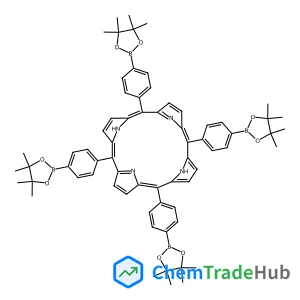
5,10,15,20-tetrakis(4-boronic acid pinacol ester phenyl) porphyrin
CAS番号:
1332748-00-1
分子式:
C68H74B4N4O8
![(4aR,5S,6R,8aS)-5-[2-(3-Furyl)ethyl]-8a-(hydroxymethyl)-5,6-dimethyl-3,4,4a,5,6,7,8,8a-octahydro-1-naphthalenecarboxylic acid structure](https://static.chemtradehub.com/structs/184/18411-75-1-d4cd.webp "(4aR,5S,6R,8aS)-5-[2-(3-Furyl)ethyl]-8a-(hydroxymethyl)-5,6-dimethyl-3,4,4a,5,6,7,8,8a-octahydro-1-naphthalenecarboxylic acid structure")
おすすめサプライヤー




免責事項
このページに表示される学術雑誌情報は、参考および研究目的のみを目的としています。当社は雑誌出版社とは提携しておらず、投稿の取り扱いも行っておりません。出版に関するお問い合わせは、各雑誌出版社に直接ご連絡ください。
表示されている情報に誤りがある場合は、support@chemtradehub.com までご連絡ください。迅速に確認し、対応いたします。