












A novel cyclodextrin-containing pH-responsive star polymer for nanostructure fabrication and drug delivery
文献情報
出版日
2013-07-05
DOI
10.1039/C3PY00656E
インパクトファクター
5.582
著者
Mingming Zhang, Qingqing Xiong, Jinqian Chen, Yinsong Wang
原文を見る
要旨
A novel cyclodextrin-containing star polymer was synthesized by atom transfer radical polymerization using the arm-first approach. Copolymerization of a mixture of mono- and multi-methacrylate substituted cyclodextrin and 2-(dimethylamino) ethyl methacrylate initiated by poly(ethylene glycol) macroinitiator produced a core cross-linked star polymer. The star polymer could self-assemble into nanostructures via host–guest interactions between the cyclodextrin polymer and hydrophobic guest molecules. The morphologies of these nanostructures showed regular transitions by altering the type of guest molecule, the ratio of star polymer to guest, and the pH of the solution. Furthermore, doxorubicin (DOX) was entrapped into the star polymer for the purpose of drug delivery. In vitro experiments demonstrated that the DOX-loaded nanoparticles could release their payload in response to the endosomal-pH after being internalized by HeLa cell via endocytosis. At high DOX concentration, DOX-loaded nanoparticles showed significantly higher cell cytotoxicity compared to the free drug. The results indicate that the star polymer has great promise for potential anticancer treatment.
関連文献
Insights into the unprecedented epoxidation mechanism of fumitremorgin B endoperoxidase (FtmOx1) from Aspergillus fumigatus by QM/MM calculations
Xiya Wang, Hao Su, Yongjun Liu
2017-02-17
Paper
DOI: 10.1039/C7CP00313G
Probing the charge distribution at the electrochemical interface
Yvonne Gründer, Christopher A. Lucas
2017-02-27
Paper
DOI: 10.1039/C7CP00244K
Determinants of the efficiency of photon upconversion by triplet–triplet annihilation in the solid state: zinc porphyrin derivatives in PVA
Ranjana Rautela, Neeraj K. Joshi, Sacha Novakovic, Wallace W. H. Wong, Jonathan M. White, Kenneth P. Ghiggino, Matthew F. Paige, Ronald P. Steer
2017-08-15
Paper
DOI: 10.1039/C7CP04746K
A structural study on the excimer state of an isolated benzene dimer using infrared spectroscopy in the skeletal vibration region
Masaaki Fujii
2017-07-18
Paper
DOI: 10.1039/C7CP03480F
First-principles computation of electron transfer and reaction rate at a perovskite cathode for hydrogen production
C. T. Liu, J. F. Chu, C. K. Lin, C. W. Hong
2017-02-24
Paper
DOI: 10.1039/C7CP00541E
Exciton transport in π-conjugated polymers with conjugation defects
Ruixuan Meng, Yuan Li, Chong Li, Kun Gao, Sun Yin, Luxia Wang
2017-07-31
Paper
DOI: 10.1039/C7CP02626A
Statistical thermodynamics unveils the dissolution mechanism of cellobiose
Noriyuki Isobe, James H. Clark, Seishi Shimizu
2017-08-18
Paper
DOI: 10.1039/C7CP04647B
CO2 electroreduction performance of a single transition metal atom supported on porphyrin-like graphene: a computational study
Zhongxu Wang
2017-08-08
Paper
DOI: 10.1039/C7CP04299J
Near-infrared photochemistry at interfaces based on upconverting nanoparticles
Si Wu, Hans-Jürgen Butt
2017-05-03
Perspective
DOI: 10.1039/C7CP01838J
Correction: Elucidation of transport mechanism and enhanced alkali ion transference numbers in mixed alkali metal–organic ionic molten salts
Fangfang Chen
2017-09-11
Correction
DOI: 10.1039/C7CP90203D
こちらもおすすめ
化合物よくある質問
3-(2-オキサプロピル)ベンzoic酸はどのように合成されますか?
3-(2-オキサプロピル)ベンzoic酸は、ベンzoic酸とプロパノ酸をヒドロキシム化合物として反応させて生成します。具体的には、ベンzoic酸とプロパノ酸を反...
205927-63-53-(2-Oxopropyl)benzo...
114873-01-73-Fluoro-N-{[(2-meth...
化合物よくある質問
4-メチル-4-ピペリジニル-1-ピロリドイン甲酸の主な用途は何ですか?
4-メチル-4-ピペリジニル-1-ピロリドイン甲酸は、主に医薬品の合成材料や研究用物質として使用されます。さらに、一部の薬理学的研究にも応用されています。
885523-47-7(4-Methyl-4-piperidi...
化合物よくある質問
Biotin-PEG3-oxyamine HCl塩について、適切な化合物名称に適用される法規ガイドラインは何ですか?
Biotin-PEG3-oxyamine HCl塩は、GHS( Globally Harmonized System of Classification and...
1786206-22-1Biotin-PEG3-oxyamine...
化合物よくある質問
N-(4-イソチオシアネートフェニル)-2-メトキシアリニンはどのように合成されますか?
N-(4-イソチオシアネートフェニル)-2-メトキシアリニンは、4-イソチオシアノフェノールと2-メトキシアリニルアミンのアミニド反応を用いて合成されます。この...
915919-57-2N-(4-Isothiocyanatop...
化合物よくある質問
金粉蕨亭2'-O-葡萄糖甙の主な用途は何ですか?
金粉蕨亭2'-O-葡萄糖甙は主に薬理研究や医薬品製造に使用され、抗炎症作用や抗がん作用などがあります。また、その構造や性質から、合成化学や化学生理学の研究にも用...
76947-60-92-(7-Hydroxy-2,2,4,6...
化合物よくある質問
2-(2-ニトロフェニル)酢酸ヒドライドの物理化学的性質は何ですか?
2-(2-ニトロフェニル)酢酸ヒドライドのCAS番号は114953-81-0です。この化合物は白色結晶性粉末で、分子量は244.12です。水溶性は限られており、...
114953-81-02-(2-Nitrophenyl)ace...
化合物よくある質問
5-(ヒドロキシメチル)-2-チオキソ-2,3-ジヒドロピリミジン-4(1H)-オンを取り扱う際の実験室安全事項は何ですか?
この化合物は高活性のため、取り扱いには注意が必要です。PPE(個人保護具)としてゴーグル、ガントリー、および防滴シールドを着用することが推奨されます。ドラフトチ...
93185-31-05-(Hydroxymethyl)-2-...
化合物よくある質問
11-脱氢血栓烷 b2の市場動向や研究トレンドはどうですか?
11-脱氢血栓烷 b2は、血栓溶解・抗凝固作用に関する研究で注目を集めています。特に心血管疾患の治療法開発において、市場の需要が高まっています。研究トレンドとし...
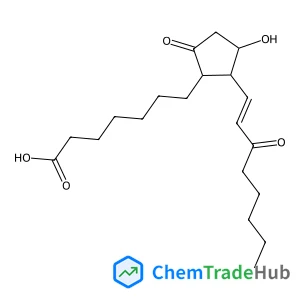
67910-12-77-{(2R,3S,4S)-4-Hydr...
化合物よくある質問
3,3-二甲基哌啶-4-酮はどのように保存すればよいですか?
3,3-二甲基哌啶-4-酮は避光、常温、乾燥した場所で保存してください。容器は密閉し、遠くから火源を離して保管することを確認してください。
150668-82-93,3-Dimethyl-4-piper...
掲載誌
Polymer Chemistry

CiteScore:
8.6
自己引用率:
7.3%
年間論文数:
457
Polymer Chemistry welcomes submissions in all areas of polymer science that have a strong focus on macromolecular chemistry. Manuscripts may cover a broad range of fields, yet no direct application focus is required.
おすすめ化合物
![Benzyl spiro[indole-3,4'-piperidine]-1(2H)-carboxylate hydrochloride (1:1) structure](https://static.chemtradehub.com/structs/159/159635-46-8-8de0.webp "Benzyl spiro[indole-3,4'-piperidine]-1(2H)-carboxylate hydrochloride (1:1) structure")
Benzyl spiro[indole-3,4'-piperidine]-1(2H)-carboxylate hydrochloride (1:1)
CAS番号:
159635-46-8
分子式:
C20H23ClN2O2
![[4-Chloro-3-(diethylcarbamoyl)phenyl]boronic acid structure](https://static.chemtradehub.com/structs/871/871332-68-2-0e3b.webp "[4-Chloro-3-(diethylcarbamoyl)phenyl]boronic acid structure")
おすすめサプライヤー




免責事項
このページに表示される学術雑誌情報は、参考および研究目的のみを目的としています。当社は雑誌出版社とは提携しておらず、投稿の取り扱いも行っておりません。出版に関するお問い合わせは、各雑誌出版社に直接ご連絡ください。
表示されている情報に誤りがある場合は、support@chemtradehub.com までご連絡ください。迅速に確認し、対応いたします。