












Helix oscillation of polyacetylene esters detected by dynamic 1H NMR, IR, and UV-vis methods in solution
文献情報
出版日
2013-03-18
DOI
10.1039/C3PY00295K
インパクトファクター
5.582
著者
Yoshiaki Yoshida, Yasuteru Mawatari, Asahi Motoshige, Ranko Motodshige, Toshifumi Hiraoki, Masayoshi Tabata
原文を見る
要旨
An aliphatic substituted acetylene, n-heptyl propiolate, was stereoregularly polymerised using a catalyst, [Rh(nbd)Cl]2, at 40 °C in methanol to obtain the corresponding helical polymer, PnHepP. The changes in the line shapes and splitting patterns of the 1H NMR spectra were interpreted consistently as representing restricted rotation around the ester O–Cε bond in –O–CεHε2(R)– (R = n-hexyl alkyl chains), rather than helix inversion, with the aid of a 3-site jump model. A two-line peak corresponding to the ester methylene protons of –O–CH2– observed at 30 °C suggested the formation of three rotamers designated as A, B, and C based on the presence of contracted helix and stretched helix forms, each of which has an intrinsic helical pitch with a helical cis–cisoid structure. Furthermore, an accordion-like helix oscillation (HELIOS) along the main chain axis was proposed to explain the temperature dependence of spectral changes observed in the 1H NMR, UV-vis, and IR spectra. The temperature dependence of the UV-vis and 1H NMR spectra of PnHepP corroborated the presence of contracted and stretched one-handed helix sense polymers in solution.
関連文献
Using molecular vibrations to probe exciton delocalization in films of perylene diimides with ultrafast mid-IR spectroscopy
Eric R. Kennehan, Christopher Grieco, Alyssa N. Brigeman, Adam Rimshaw, Kayla Bisgaier, Noel C. Giebink
2017-08-29
Paper
DOI: 10.1039/C7CP04819J
Trapping and sensing of hazardous insecticides by chemically modified single walled carbon nanotubes
Arkamita Bandyopadhyay, Dibyajyoti Ghosh
2017-08-16
Paper
DOI: 10.1039/C7CP04980C
First-principles computation of electron transfer and reaction rate at a perovskite cathode for hydrogen production
C. T. Liu, J. F. Chu, C. K. Lin, C. W. Hong
2017-02-24
Paper
DOI: 10.1039/C7CP00541E
Quantum dots in photocatalytic applications: efficiently enhancing visible light photocatalytic activity by integrating CdO quantum dots as sensitizers
2017-08-25
Paper
DOI: 10.1039/C7CP05312F
Proteins at air–water and oil–water interfaces in an all-atom model
Yani Zhao, Marek Cieplak
2017-09-04
Paper
DOI: 10.1039/C7CP03829A
Constructing accurate interaction potentials to describe the microsolvation of protonated methane by helium atoms
Felix Uhl, Harald Forbert, Dominik Marx
2017-03-03
Paper
DOI: 10.1039/C7CP00652G
Tuning interfacial complexation in aqueous two phase systems with polyelectrolytes and nanoparticles for compound all water emulsion bodies (AWE-somes)
Sarah D. Hann, Daeyeon Lee, Kathleen J. Stebe
2017-06-20
Paper
DOI: 10.1039/C7CP02809A
Magnetic trapping of SH radicals
J. S. Eardley, N. Warner, L. Z. Deng, E. Wrede
2017-03-02
Paper
DOI: 10.1039/C7CP00458C
Temperature dependence of ion diffusion coefficients in NaCl electrolyte confined within graphene nanochannels
Jing Kong, Zheng Bo, Huachao Yang, Jinyuan Yang, Xiaorui Shuai, Jianhua Yan, Kefa Cen
2017-02-20
Paper
DOI: 10.1039/C6CP08752C
こちらもおすすめ
化合物よくある質問
3-(2-オキサプロピル)ベンzoic酸はどのように合成されますか?
3-(2-オキサプロピル)ベンzoic酸は、ベンzoic酸とプロパノ酸をヒドロキシム化合物として反応させて生成します。具体的には、ベンzoic酸とプロパノ酸を反...
205927-63-53-(2-Oxopropyl)benzo...
114873-01-73-Fluoro-N-{[(2-meth...
化合物よくある質問
4-メチル-4-ピペリジニル-1-ピロリドイン甲酸の主な用途は何ですか?
4-メチル-4-ピペリジニル-1-ピロリドイン甲酸は、主に医薬品の合成材料や研究用物質として使用されます。さらに、一部の薬理学的研究にも応用されています。
885523-47-7(4-Methyl-4-piperidi...
化合物よくある質問
Biotin-PEG3-oxyamine HCl塩について、適切な化合物名称に適用される法規ガイドラインは何ですか?
Biotin-PEG3-oxyamine HCl塩は、GHS( Globally Harmonized System of Classification and...
1786206-22-1Biotin-PEG3-oxyamine...
化合物よくある質問
N-(4-イソチオシアネートフェニル)-2-メトキシアリニンはどのように合成されますか?
N-(4-イソチオシアネートフェニル)-2-メトキシアリニンは、4-イソチオシアノフェノールと2-メトキシアリニルアミンのアミニド反応を用いて合成されます。この...
915919-57-2N-(4-Isothiocyanatop...
化合物よくある質問
金粉蕨亭2'-O-葡萄糖甙の主な用途は何ですか?
金粉蕨亭2'-O-葡萄糖甙は主に薬理研究や医薬品製造に使用され、抗炎症作用や抗がん作用などがあります。また、その構造や性質から、合成化学や化学生理学の研究にも用...
76947-60-92-(7-Hydroxy-2,2,4,6...
化合物よくある質問
2-(2-ニトロフェニル)酢酸ヒドライドの物理化学的性質は何ですか?
2-(2-ニトロフェニル)酢酸ヒドライドのCAS番号は114953-81-0です。この化合物は白色結晶性粉末で、分子量は244.12です。水溶性は限られており、...
114953-81-02-(2-Nitrophenyl)ace...
化合物よくある質問
5-(ヒドロキシメチル)-2-チオキソ-2,3-ジヒドロピリミジン-4(1H)-オンを取り扱う際の実験室安全事項は何ですか?
この化合物は高活性のため、取り扱いには注意が必要です。PPE(個人保護具)としてゴーグル、ガントリー、および防滴シールドを着用することが推奨されます。ドラフトチ...
93185-31-05-(Hydroxymethyl)-2-...
化合物よくある質問
11-脱氢血栓烷 b2の市場動向や研究トレンドはどうですか?
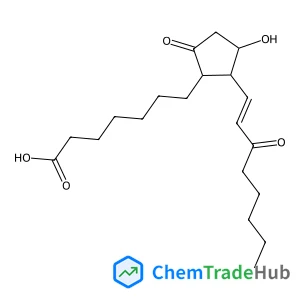
11-脱氢血栓烷 b2は、血栓溶解・抗凝固作用に関する研究で注目を集めています。特に心血管疾患の治療法開発において、市場の需要が高まっています。研究トレンドとし...
67910-12-77-{(2R,3S,4S)-4-Hydr...
化合物よくある質問
3,3-二甲基哌啶-4-酮はどのように保存すればよいですか?
3,3-二甲基哌啶-4-酮は避光、常温、乾燥した場所で保存してください。容器は密閉し、遠くから火源を離して保管することを確認してください。
150668-82-93,3-Dimethyl-4-piper...
掲載誌
Polymer Chemistry

CiteScore:
8.6
自己引用率:
7.3%
年間論文数:
457
Polymer Chemistry welcomes submissions in all areas of polymer science that have a strong focus on macromolecular chemistry. Manuscripts may cover a broad range of fields, yet no direct application focus is required.
おすすめ化合物
おすすめサプライヤー






免責事項
このページに表示される学術雑誌情報は、参考および研究目的のみを目的としています。当社は雑誌出版社とは提携しておらず、投稿の取り扱いも行っておりません。出版に関するお問い合わせは、各雑誌出版社に直接ご連絡ください。
表示されている情報に誤りがある場合は、support@chemtradehub.com までご連絡ください。迅速に確認し、対応いたします。