












Dissociative electron attachment to gas phase thiothymine: experimental and theoretical approaches
文献情報
出版日
2014-01-20
DOI
10.1039/C3CP54966F
インパクトファクター
3.676
著者
J. Kopyra, S. Freza, M. Marchaj, P. Skurski
原文を見る
要旨
In this contribution we have investigated experimentally and theoretically the interaction of low energy electrons with gas phase thiothymine (a sulphur containing analogue of thymine). We observe that the presence of the sulphur atom within thiothymine strongly controls the fragmentation dynamics. With the exception of the (M − H)− anion formation, the most favorable reaction channels are associated with a loss of sulphur containing negative fragments (i.e., the formation of S−, SCN− and (M − S)−) suggesting that these resonances are localized at the CS group. Hence the present results demonstrate that certain reactions can be controlled by substitution of the sulphur atom at specific molecular sites within nucleobases. Our study thus represents a starting point for a physicochemical understanding of the action of sulphur-containing antimetabolites when used in chemoradiotherapy.
関連文献
Correction: Extracting accurate information from triplet–triplet annihilation upconversion data with a mass-conserving kinetic model
Abhishek Kalpattu, Tristan Dilbeck, Kenneth Hanson
2023-12-14
Correction
DOI: 10.1039/D3CP90241B
Effects of surface chemistry on the mechanochemical decomposition of tricresyl phosphate
Fakhrul H. Bhuiyan, Ashlie Martini
2023-11-30
Paper
DOI: 10.1039/D3CP05320B
Low-cost transition metal–nitrogen–carbon electrocatalysts for the oxygen reduction reaction: operating conditions from aqueous electrolytes to fuel cells
Li-Ting Cui, Wen-Feng Lin, Shi-Gang Sun
2023-12-05
Perspective
DOI: 10.1039/D3SE01275A
Heat-transfer enhancement and optimization design of a roadway with typical angles using field synergy theory
Yongliang Zhang, Xilong Zhang, Mingjie Li, Yunfei Liu, Zhen Hu
2023-11-21
Paper
DOI: 10.1039/D3SE00989K
Observation of the possible magnetic correction above the Curie temperature in Cr2Si2Te6 single crystals
Yan Sun, Zhongzhu Jiang, Yang Li, Lanxin Liu, Hui Liang, Yiyan Wang, Dandan Wu, Na Li, Ying Zhou, Qiuju Li, Xiaoyu Yue, Wei Tong, Xuan Luo, Jianghe Lan, Xuefeng Sun
2023-11-28
Paper
DOI: 10.1039/D3CP03854H
Exploiting the photophysical features of DMAN template in ITQ-51 zeotype in the search for FRET energy transfer
Ainhoa Oliden-Sánchez, Rebeca Sola-Llano, Joaquín Pérez-Pariente, Luis Gómez-Hortigüela, Virginia Martínez-Martínez
2023-12-07
Paper
DOI: 10.1039/D3CP02625F
Theoretical investigation on the ligands constructed from phenanthroline and five-membered N-heterocyclic rings for bonding and separation properties of Am(iii) and Eu(iii)
Shouqiang Wu, An Yong Li
2023-12-12
Paper
DOI: 10.1039/D3CP05101C
Band inversion and switchable magnetic properties of two-dimensional RuClF/WSe2 van der Waals heterostructures
Ziyu Liu, Baozeng Zhou, Xiaocha Wang, Wenbo Mi
2023-12-05
Paper
DOI: 10.1039/D3CP05545K
Dense arrangement of crown ethers in graphene: novel graphitic carbon oxides with enhanced optoelectronic properties
Hongyan Li, Jiang Xiang, Jing Xu, Wei Liu
2023-12-12
Paper
DOI: 10.1039/D3CP03902A
Peroxidase activity of a Cu–Fe bimetallic hydrogel and applications for colorimetric detection of ascorbic acid
Xiao-Juan Wang, Yan Long, Chuan-Wan Wei, Shu-Qin Gao
2023-12-05
Paper
DOI: 10.1039/D3CP05403A
こちらもおすすめ
化合物よくある質問
2-メトキシ-4-(メチルスルフィニル)アミンの主な用途は何ですか?
2-メトキシ-4-(メチルスルフィニル)アミンは、主に医薬品および農薬の製造に使用されます。また、合成化学の一部として研究用材料としても利用されます。
41608-73-52-Methoxy-4-(methyls...
118684-13-24-(Bromomethyl)-3-me...
化合物よくある質問
4,6-二氯-N-甲基ピラミジンアミンの代替品はありますか?
代替品としては、4,6-二クロロピラミジンアミンや他のピラミジン系化合物が考えられます。ただし、目的と用途によって最適な代替品は異なります。
10397-15-64,6-Dichloro-N-methy...
化合物よくある質問
6-氯-4-甲基-1H-吲哚を含む廃棄物はどのように処理すべきですか?
6-氯-4-甲基-1H-吲哚の廃棄物は、適切な容器に収集し、密閉して保管します。温度は常温、湿度は低く、直射日光を避けて保管することを推奨します。廃棄処理は専門...
885520-84-36-chloro-4-methyl-1H...
化合物よくある質問
2-フローユロ-4-(トリフルオロメチル)ベンゾイドについて「に適用される法規ガイドラインは何ですか」
2-フローユロ-4-(トリフルオロメチル)ベンゾイドのCAS番号は207974-08-1です。この化合物はGHS分類で毒性物質と有害な反応物質として分類されます...
207974-08-1[2-Fluoro-4-(trifluo...
化合物よくある質問
4-ニトロフェニルN-[(ベンゼルオキシルカーボンイル]グリシングリシングリシン酸はどのように保存すればよいですか?
4-ニトロフェニルN-[(ベンゼルオキシルカーボンイル]グリシングリシングリシン酸は、室温で暗所に保管し、乾燥した環境で保存することを推奨します。容器は密閉性の...
19811-64-44-Nitrophenyl N-[(be...
化合物よくある質問
イソデスロラタドリンの代替品はありますか?
イソデスロラタドリンの代替品としては、デスロラタドリンや他の抗ヒスタミン薬が挙げられます。具体的には、デスロラタドリン、ラセカミド、フェルタドリンなどが、症状や...
183198-49-4Iso Desloratadine
化合物よくある質問
5-甲氧基-1,2,3,4-四氢异喹啉盐酸盐はどのように合成されますか?
5-甲氧基-1,2,3,4-四氢异喹啉盐酸盐の一般的な合成方法は、メタノール中で5-メトキシ-1,2,3,4-四ヒュドロイソキシンを塩酸で塩化します。この反応で...
103030-69-95-Methoxy-1,2,3,4-te...
化合物よくある質問
4-アミノ-5-メトキシ-2-トルエンサルホニック酸についての法規ガイドラインは何ですか?
CAS番号6471-78-9の4-アミノ-5-メトキシ-2-トルエンサルホニック酸は、GHS分類では corrosive(腐食性)と識別されます。EUのREAC...
6471-78-94-Amino-5-Methoxy-2-...
化合物よくある質問
甲基孕酮を取り扱う際の実験室安全事項は何ですか?
甲基孕酮の取り扱いは、PPE(個人保護具)の使用が必要な重要な安全事項を伴います。防塵マスク、ゴーグル、手袋を着用することが推奨されます。ドラフトチャンバーを使...
204063-33-22-[(Diphenylmethyl)a...
掲載誌
Physical Chemistry Chemical Physics

CiteScore:
5.5
自己引用率:
10.3%
年間論文数:
3036
Physical Chemistry Chemical Physics (PCCP) is an international journal co-owned by 19 physical chemistry and physics societies from around the world. This journal publishes original, cutting-edge research in physical chemistry, chemical physics and biophysical chemistry. To be suitable for publication in PCCP, articles must include significant innovation and/or insight into physical chemistry; this is the most important criterion that reviewers and Editors will judge against when evaluating submissions. The journal has a broad scope and welcomes contributions spanning experiment, theory, computation and data science. Topical coverage includes spectroscopy, dynamics, kinetics, statistical mechanics, thermodynamics, electrochemistry, catalysis, surface science, quantum mechanics, quantum computing and machine learning. Interdisciplinary research areas such as polymers and soft matter, materials, nanoscience, energy, surfaces/interfaces, and biophysical chemistry are welcomed if they demonstrate significant innovation and/or insight into physical chemistry. Joined experimental/theoretical studies are particularly appreciated when complementary and based on up-to-date approaches.
おすすめ化合物

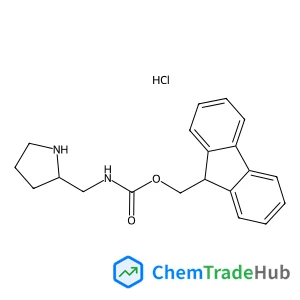
(S)-(9H-Fluoren-9-yl)methyl (pyrrolidin-2-ylmethyl)carbamate hydrochloride
CAS番号:
1217813-15-4
分子式:
C20H23ClN2O2

![2-Methylbenzo[h]quinoline structure](https://static.chemtradehub.com/structs/605/605-88-9-ac43.webp "2-Methylbenzo[h]quinoline structure")
おすすめサプライヤー






免責事項
このページに表示される学術雑誌情報は、参考および研究目的のみを目的としています。当社は雑誌出版社とは提携しておらず、投稿の取り扱いも行っておりません。出版に関するお問い合わせは、各雑誌出版社に直接ご連絡ください。
表示されている情報に誤りがある場合は、support@chemtradehub.com までご連絡ください。迅速に確認し、対応いたします。