













Diversification of EPR signatures in site directed spin labeling using a β-phosphorylated nitroxide
文献情報
出版日
2014-01-02
DOI
10.1039/C3CP54816C
インパクトファクター
3.676
著者
Nolwenn Le Breton, Marlène Martinho, Kuanysh Kabytaev, Jérémie Topin, Elisabetta Mileo, David Blocquel, Johnny Habchi, Sonia Longhi, Antal Rockenbauer, Jérôme Golebiowski, Bruno Guigliarelli, Sylvain R. A. Marque, Valérie Belle
原文を見る
要旨
Site Directed Spin Labeling (SDSL) combined with EPR spectroscopy is a very powerful approach to investigate structural transitions in proteins in particular flexible or even disordered ones. Conventional spin labels are based on nitroxide derivatives leading to classical 3-line spectra whose spectral shapes are indicative of the environment of the labels and thus constitute good reporters of structural modifications. However, the similarity of these spectral shapes precludes probing two regions of a protein or two partner proteins simultaneously. To overcome the limitation due to the weak diversity of nitroxide label EPR spectral shapes, we designed a new spin label based on a β-phosphorylated nitroxide giving 6-line spectra. This paper describes the synthesis of this new spin label, its grafting at four different positions of a model disordered protein able to undergo an induced α-helical folding and its characterization by EPR spectroscopy. For comparative purposes, a classical nitroxide has been grafted at the same positions of the model protein. The ability of the new label to report on structural transitions was evaluated by analyzing the spectral shape modifications induced either by the presence of a secondary structure stabilizer (trifluoroethanol) or by the presence of a partner protein. Taken together the results demonstrate that the new phosphorylated label gives a very distinguishable signature which is able to report from subtle to larger structural transitions, as efficiently as the classical spin label. As a complementary approach, molecular dynamics (MD) calculations were performed to gain further insights into the binding process between the labeled NTAIL and PXD. MD calculations revealed that the new label does not disturb the interaction between the two partner proteins and reinforced the conclusion on its ability to probe different local environments in a protein. Taken together this study represents an important step forward in the extension of the panoply of SDSL-EPR approaches.
関連文献
Green, scalable, low cost and reproducible flow synthesis of biocompatible PEG-functionalized iron oxide nanoparticles
Julien Mahin, Christoph O. Franck, Luise Fanslau, Hirak K. Patra, Michael D. Mantle, Ljiljana Fruk, Laura Torrente-Murciano
2021-07-29
Paper
DOI: 10.1039/D1RE00239B
Living spontaneous gradient copolymers of acrylic acid and styrene: one-pot synthesis of pH-responsive amphiphiles
Simon Harrisson, Francesca Ercole, Benjamin W. Muir
2009-12-22
Paper
DOI: 10.1039/B9PY00301K
Rapid formation of 2-lithio-1-(triphenylmethyl)imidazole and substitution reactions in flow
Simeng Wang, Jenny-Lee Panayides, Darren Riley, Christopher J. Tighe, Klaus Hellgardt, King Kuok (Mimi) Hii, Philip W. Miller
2021-09-23
Communication
DOI: 10.1039/D1RE00343G
Investigation of the effect of microflow reactor diameter on condensation reactions in l-proline-immobilized polymer monoliths
Seiya Nonaka, Hikaru Matsumoto, Masanori Nagao, Yu Hoshino, Yoshiko Miura
2021-11-23
Communication
DOI: 10.1039/D1RE00386K
Efficient continuous-flow synthesis of long-chain alkylated naphthalene catalyzed by ionic liquids in a microreaction system
Tian Yang, Fajun Wang, Jinpei Huang, Si Da Ling, Suli Liu, Angui Zhang, Yundong Wang, Jianhong Xu
2021-07-14
Paper
DOI: 10.1039/D1RE00223F
Direct RAFT polymerization of an unprotected isocyanate-containing monomer and subsequent structopendant functionalization using “click”-type reactions
Joel D. Flores, Junghwan Shin
2009-12-22
Paper
DOI: 10.1039/B9PY00294D
One-flow upscaling neutralization of an organophosphonate-derived pesticide/nerve agent simulant to value-added chemicals in a novel Teflon microreactor platform
Brijesh M. Sharma, Se-Jun Yim, Arun Nikam, Gwang-Noh Ahn, Dong-Pyo Kim
2021-06-06
Paper
DOI: 10.1039/D1RE00147G
Rxn Rover: automation of chemical reactions with user-friendly, modular software
Long Qi
2021-11-29
Paper
DOI: 10.1039/D1RE00265A
こちらもおすすめ
化合物よくある質問
3-イチチルビフェニルはどのように合成されますか?
3-イチチルビフェニルは、ビフェニルとイチプロピオニトリルを回収率約90%で反応させて合成されます。触媒は通常、亜リチウムホウ素を用います。
5668-93-93-Ethylbiphenyl
化合物よくある質問
8-溴-5-三氟甲基喹啉はどのように合成されますか?
8-溴-5-三氟甲基喹啉は、5-トリフルオロメチル-2-メチル-1,3-ベンゼンジオールをブロモエタノールと反応させて生成します。この反応は塩基性条件下で行われ...
917251-92-48-Bromo-5-(trifluoro...
化合物よくある質問
ジメチル4-(4,4,5,5-テトラメチル-1,3,2-ドioxaborolan-2-基)-2,6-ピリジンジカルボイル酸フェニルアミニドの代替品はありますか?
ジメチル4-(4,4,5,5-テトラメチル-1,3,2-ドioxaborolan-2-基)-2,6-ピリジンジカルボイル酸フェニルアミニドの代替品としては、4-...
741709-66-0Dimethyl 4-(4,4,5,5-...
化合物よくある質問
N-(3,5-ヘキサクロロ-4-ピリドインイル)-8-メチオキシ-5-キノリンカーボン酸の市場動向や研究トレンドはどのようなものでしょうか?
N-(3,5-ヘキサクロロ-4-ピリドインイル)-8-メチオキシ-5-キノリンカーボン酸の市場動向は、主に産業用途での需要により影響を受けます。研究トレンドとし...
199871-63-1N-(3,5-Dichloro-4-py...
化合物よくある質問
イソステアロイルグリセリルは安全ですか?
イソステアロイルグリセリルは一般的に安全性が高いとされていますが、過度な使用や個人差により皮�owsん炎などの反応が起こる可能性があります。使用前に医師に相談す...
222723-55-92-[(5Z,8Z,11Z,14Z)-5...
化合物よくある質問
1-(二苯甲基)-3,3-二氟-氮杂环丁烷の市場動向や研究トレンドはどうですか?
1-(二苯甲基)-3,3-二氟-氮杂环丁烷の市場動向は、医薬品や合成化学の研究分野で注目を集めています。新興研究は、該当化合物の合成改良と生体内での作用メカニズ...
288315-02-61-Benzhydryl-3,3-dif...
化合物よくある質問
3-チオフェンスチオールの物理化学的性質は何ですか?
3-チオフェンスチオールのCAS番号は7774-73-4です。結晶性の白色粉末で、分子量は122.17です。この化合物は水に微溶解し、エタノールやジクロロメタン...
7774-73-43-Thiophenethiol
化合物よくある質問
2-Methyl-2-propanyl (2S)-2-(aminomethyl)-1-piperidinecarboxylateは安全ですか?
2-Methyl-2-propanyl (2S)-2-(aminomethyl)-1-piperidinecarboxylateは一定の安全性基準を満たしていま...
475105-35-22-Methyl-2-propanyl ...
化合物よくある質問
CAS番号1316822-90-8の化合物は安全ですか?
CAS番号1316822-90-8の化合物は安全性に関しては評価が不足していますが、一般的には生物学的に活性な物質であり、取り扱いには適切な安全防護措置が必要で...
1316822-90-8Gal beta(1-3)[Neu5Ac...
化合物よくある質問
Tert-butyl 2-(2-羟基乙基)哌嗪-1-羧酸はどのように保存すればよいですか?
Tert-butyl 2-(2-羟基乙基)哌嗪-1-羧酸は、冷暗所で保存し、直射日光から遠ざけてください。容器は密閉し、高湿度や高温を避けて保管してください。
517866-79-4Tert-butyl 2-(2-hydr...
掲載誌
Physical Chemistry Chemical Physics

CiteScore:
5.5
自己引用率:
10.3%
年間論文数:
3036
Physical Chemistry Chemical Physics (PCCP) is an international journal co-owned by 19 physical chemistry and physics societies from around the world. This journal publishes original, cutting-edge research in physical chemistry, chemical physics and biophysical chemistry. To be suitable for publication in PCCP, articles must include significant innovation and/or insight into physical chemistry; this is the most important criterion that reviewers and Editors will judge against when evaluating submissions. The journal has a broad scope and welcomes contributions spanning experiment, theory, computation and data science. Topical coverage includes spectroscopy, dynamics, kinetics, statistical mechanics, thermodynamics, electrochemistry, catalysis, surface science, quantum mechanics, quantum computing and machine learning. Interdisciplinary research areas such as polymers and soft matter, materials, nanoscience, energy, surfaces/interfaces, and biophysical chemistry are welcomed if they demonstrate significant innovation and/or insight into physical chemistry. Joined experimental/theoretical studies are particularly appreciated when complementary and based on up-to-date approaches.
おすすめ化合物
![(2R,6S)-6-[(Benzyloxy)methyl]-4-{[(2-methyl-2-propanyl)oxy]carbonyl}-2-morpholinecarboxylic acid structure](https://static.chemtradehub.com/structs/109/1093085-91-6-3382.webp "(2R,6S)-6-[(Benzyloxy)methyl]-4-{[(2-methyl-2-propanyl)oxy]carbonyl}-2-morpholinecarboxylic acid structure")
![1-oxaspiro[4.4]nonan-6-one structure](https://static.chemtradehub.com/structs/134/134179-01-4-e051.webp "1-oxaspiro[4.4]nonan-6-one structure")
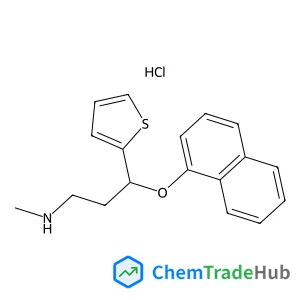
N-Methyl-3-(1-naphthyloxy)-3-(2-thienyl)-1-propanamine hydrochloride (1:1)
CAS番号:
1188266-11-6
分子式:
C18H20ClNOS
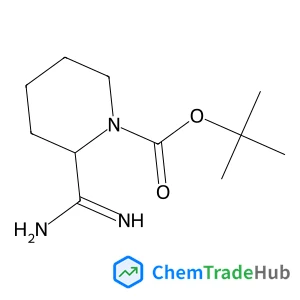
おすすめサプライヤー






免責事項
このページに表示される学術雑誌情報は、参考および研究目的のみを目的としています。当社は雑誌出版社とは提携しておらず、投稿の取り扱いも行っておりません。出版に関するお問い合わせは、各雑誌出版社に直接ご連絡ください。
表示されている情報に誤りがある場合は、support@chemtradehub.com までご連絡ください。迅速に確認し、対応いたします。